

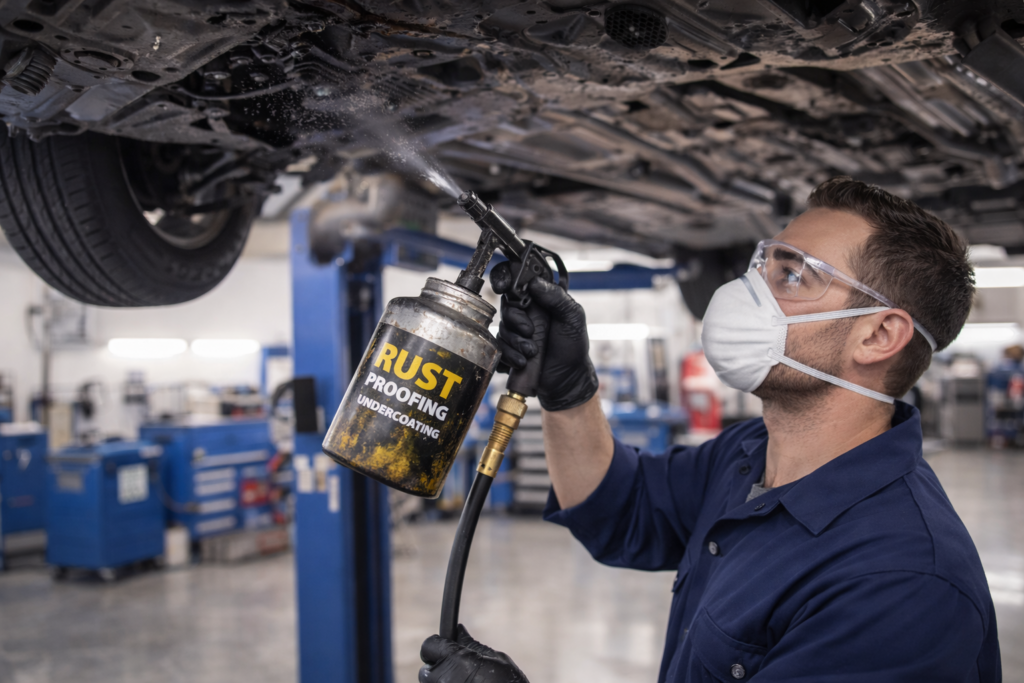
Rust is a common cause of long-term vehicle damage—especially in regions with frequent rain, coastal air, humidity, or road salt exposure. Professional rust protection services help reduce corrosion, protect structural components, and extend the lifespan of your vehicle.
Understanding how professional rust-proofing works helps you know what to expect before booking a service and why proper preparation and application matter.
This guide explains the typical process behind professional car rust protection services, including inspection, preparation, treatment methods, and long-term maintenance.
Most professional rust-proofing services begin with a detailed inspection of corrosion-prone areas underneath and around the vehicle.
Technicians commonly inspect:
If corrosion is already visible, additional rust treatment may be recommended before applying protective coatings.
These common rust warning signs can help identify early corrosion before major damage develops.
Proper preparation is one of the most important parts of any rust-proofing service.
Protective coatings bond best to clean, dry surfaces free from dirt, grease, salt, and loose corrosion.
Poor preparation can trap moisture underneath coatings and reduce long-term protection effectiveness.
If corrosion is already developing, this guide explains how to detect corrosion before it becomes expensive.
If technicians find existing surface corrosion, they may apply rust converters or rust-neutralising products before sealing the area.
Rust treatment helps:
However, severe structural rust may require repairs before rust-proofing can be effective.
If corrosion has already started spreading, read how to repair car corrosion before it becomes a major problem.
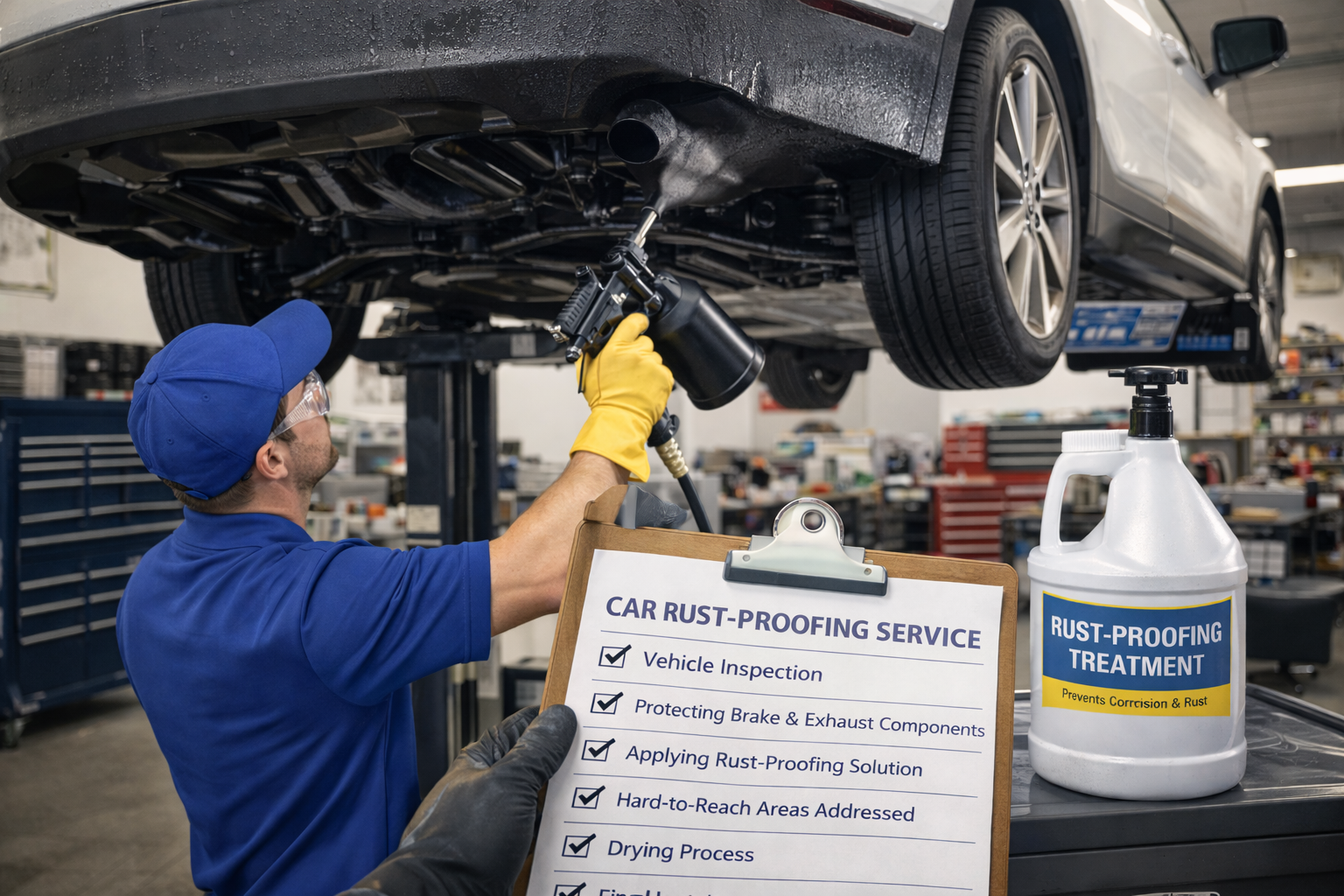
Once preparation is complete, technicians apply rust-proofing products using professional spray systems designed to reach both exposed metal and hidden cavities.
If you’re comparing different protection options, this guide explains professional rust-proofing vs DIY coatings.
Professional rust-proofing usually focuses on the areas most vulnerable to moisture and corrosion.
Professional equipment such as cavity wands and extension nozzles allows technicians to reach areas many DIY kits cannot access properly.
This guide also explains how underbody rust-proofing protects vulnerable vehicle areas.
After application, the vehicle may need time for the protective coating to settle and cure.
You may be advised to:
Most providers will explain any post-treatment care requirements clearly.
Rust-proofing isn’t always a one-time treatment. Long-term protection depends on:
Maintenance may include:
Long-term maintenance dramatically improves rust-proofing effectiveness. Learn more about how long rust-proofing typically lasts.
Professional rust-proofing can be extremely valuable for vehicles exposed to:
Professional treatments generally provide:
These are some of the biggest reasons many drivers consider rust-proofing a worthwhile investment.
Professional rust-proofing services involve far more than simply spraying a coating underneath the car. Proper inspection, preparation, rust treatment, and professional application all play a major role in long-term corrosion protection.
Whether you drive near the coast, through wet conditions, or simply plan to keep your vehicle long-term, rust-proofing can help protect structural integrity, reduce repair costs, and preserve resale value.
If you want to protect your vehicle from corrosion before rust becomes expensive, professional treatment can help extend vehicle life and improve long-term reliability.
Visit SuperCool Southport for expert rust-proofing and corrosion protection services.
