

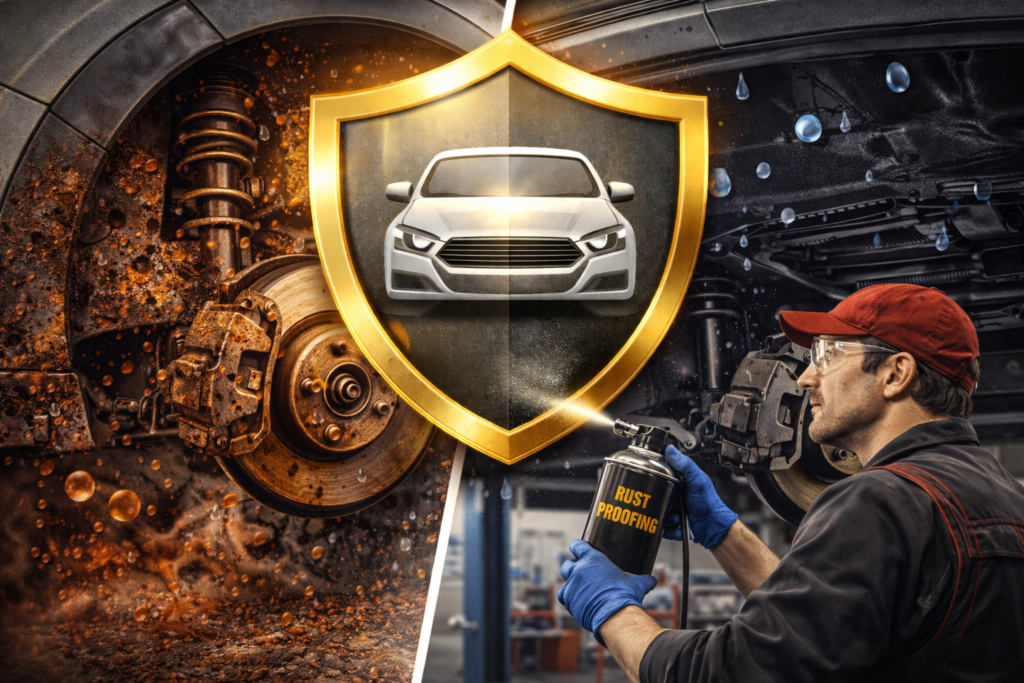
Rust-proofing is one of the most effective ways to protect your vehicle from corrosion, but no rust protection system lasts forever. Exposure to moisture, road debris, salt, humidity, and daily driving gradually wears down protective coatings over time.
How long rust-proofing lasts depends on the type of treatment used, local driving conditions, maintenance habits, and the overall environment your vehicle is exposed to. Understanding these factors can help you maximize protection and avoid costly rust repairs.
If you’re considering long-term corrosion protection, professional rust-proofing services can help preserve your vehicle’s structural integrity and resale value.
The lifespan of rust-proofing varies significantly depending on the protection method used.
| Rust Protection Method | Typical Lifespan |
|---|---|
| Oil-Based Rust Proofing | Approximately 1 year |
| Dripless/Tar-Based Undercoating | Approximately 2–5 years |
| Electronic Rust Protection | Continuous while functioning |
Each method offers different benefits, maintenance requirements, and protection levels.
Typical lifespan: Around 12 months.
Oil-based treatments remain one of the most popular rust-proofing options because they penetrate deeply into:
These products help displace moisture and continue migrating into small gaps over time.
For drivers near the coast, this approach is often recommended because of its ability to protect hidden cavities from moisture intrusion.
Learn more about rust protection options for coastal driving conditions.
Typical lifespan: Approximately 2–5 years.
These treatments create a thicker protective barrier over exposed metal surfaces and underbody components.
Because underbody protection plays a major role in corrosion prevention, many owners combine these treatments with cavity protection products.
For more information, read everything you need to know about underbody rust-proofing.
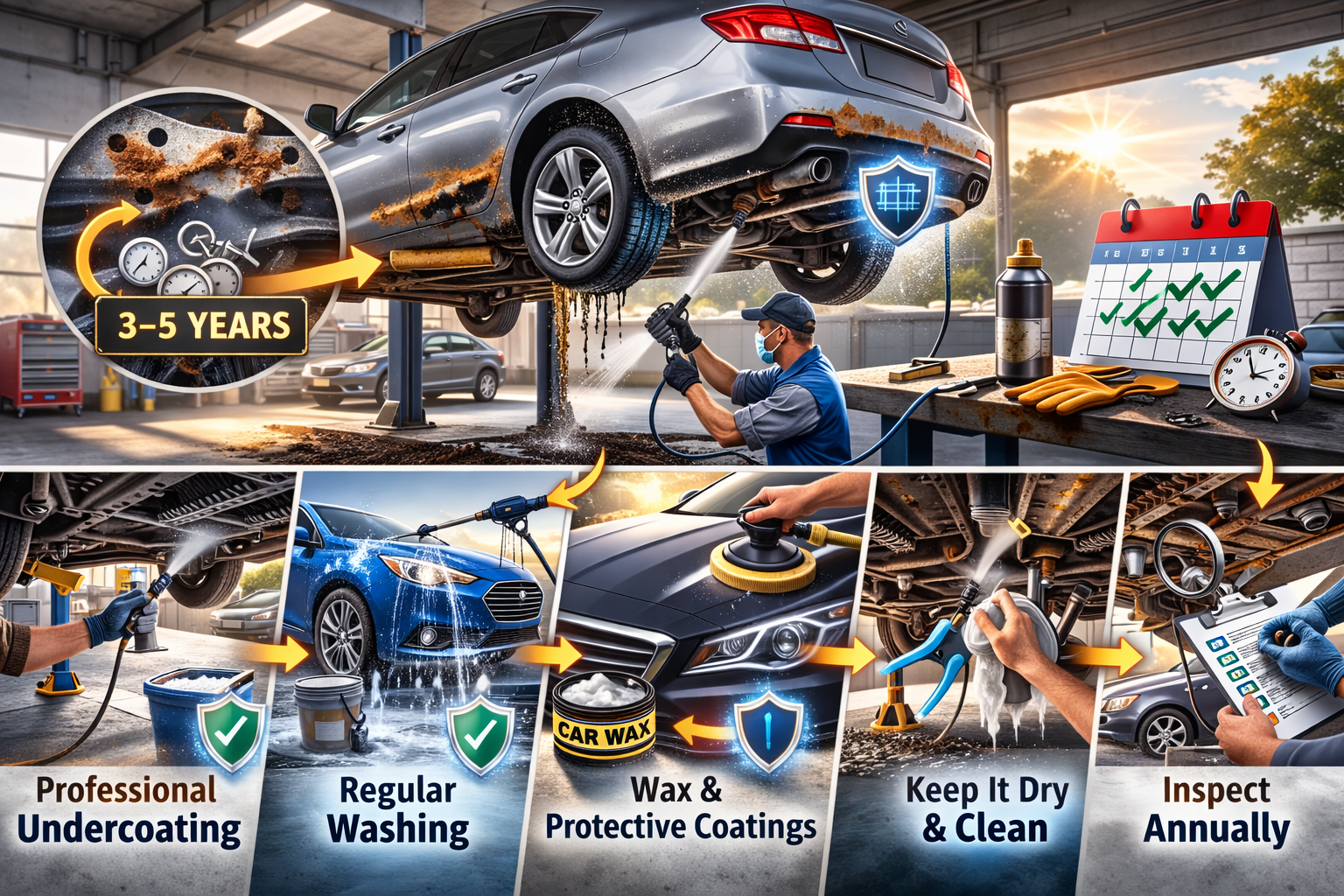
Typical lifespan: Continuous while properly installed and operational.
Electronic rust protection systems use low-voltage electrical currents designed to reduce corrosion.
While opinions vary regarding effectiveness, these systems are often used alongside traditional rust-proofing rather than as a standalone solution.
Even the best rust-proofing products can wear out faster under certain conditions.
Rust-proofing generally degrades faster when vehicles are exposed to:
Understanding car corrosion risks and prevention methods can help you determine how often protection should be inspected.
Vehicles driven on:
typically experience faster wear of protective coatings.
Regular cleaning helps remove contaminants that accelerate corrosion.
Pay particular attention to:
Vehicles parked in garages or covered areas generally experience slower corrosion than vehicles constantly exposed to rain, dew, and coastal air.
Watch for these warning signs:
If you notice any of these issues, early inspection can prevent larger problems.
Review these common rust warning signs to identify corrosion early.
A few simple habits can dramatically increase the lifespan of your rust protection.
These DIY rust prevention tips can help maintain protection between professional services.
The best time to rust-proof a vehicle is before corrosion begins.
Many professionals recommend applying protection:
Early protection provides the greatest long-term benefit because coatings are applied before rust has a chance to develop.
You can also learn about the long-term benefits of rust-proofing.
Rust-proofing lifespan depends on the treatment type, environmental conditions, maintenance habits, and driving conditions. Oil-based systems typically require yearly reapplication, while underbody coatings may last several years with proper maintenance and inspections.
Regardless of the method used, routine inspections and preventative maintenance remain the key to long-term corrosion protection.
If you want long-lasting corrosion protection tailored to local driving conditions, professional rust-proofing can help preserve your vehicle’s appearance, safety, and value.
Visit SuperCool Southport for expert rust-proofing and corrosion protection services.
