10 DIY Rust Prevention Tips to Keep Your Car Looking New
Rust is one of the biggest threats to your vehicle’s longevity. It starts small — often invisible — and gradually spreads beneath the surface, weakening metal panels and structural components. The good news? With consistent maintenance and a few simple DIY habits, you can dramatically reduce the risk of corrosion.
Below are practical, cost-effective rust prevention tips you can do at home to protect your car year-round.
1. Wash Your Car Regularly (Especially in Winter)
Dirt, road salt, and grime don’t just make your car look dull — they trap moisture against the metal. In winter, salt used for de-icing roads accelerates oxidation and speeds up corrosion.
What to do:
-
Wash your car every 1–2 weeks
-
Pay close attention to wheel wells and the underbody
-
Use a pressure washer to remove stubborn buildup
If you live in an area with heavy rain, snow, or coastal air, increase your washing frequency. Salt and humidity are two of the biggest contributors to rust formation.
Pro tip: Many car washes offer an undercarriage cleaning option — it’s worth it during winter months.
2. Apply a Protective Wax Coating
A quality wax coating acts as a protective barrier between your car’s paint and environmental moisture. It also shields against contaminants like bird droppings, tree sap, and road debris that can compromise your paint over time.
How often: Every 3–4 months
Waxing helps:
For even better protection, consider synthetic sealants or ceramic sprays that last longer than traditional carnauba wax.
3. Fix Paint Chips Immediately
Paint isn’t just cosmetic — it protects the metal underneath. Even small paint chips or scratches can expose bare steel, allowing rust to form quickly.
Simple DIY repair steps:
-
Clean the damaged area thoroughly
-
Lightly sand the chipped spot
-
Apply matching touch-up paint
-
Seal with a clear coat
This quick fix can prevent a small blemish from turning into costly bodywork. Keep a factory-matched touch-up paint pen in your garage for easy maintenance.
4. Keep the Undercarriage Clean
The underbody is the most vulnerable part of your vehicle when it comes to rust. It constantly faces water, salt, gravel, and mud — all of which contribute to corrosion.
DIY prevention tips:
-
Use an undercarriage spray after winter
-
Consider applying a rubberized undercoating for added protection
-
Inspect annually for early signs of rust
Catching surface rust early allows you to sand and treat it before it spreads to structural components.
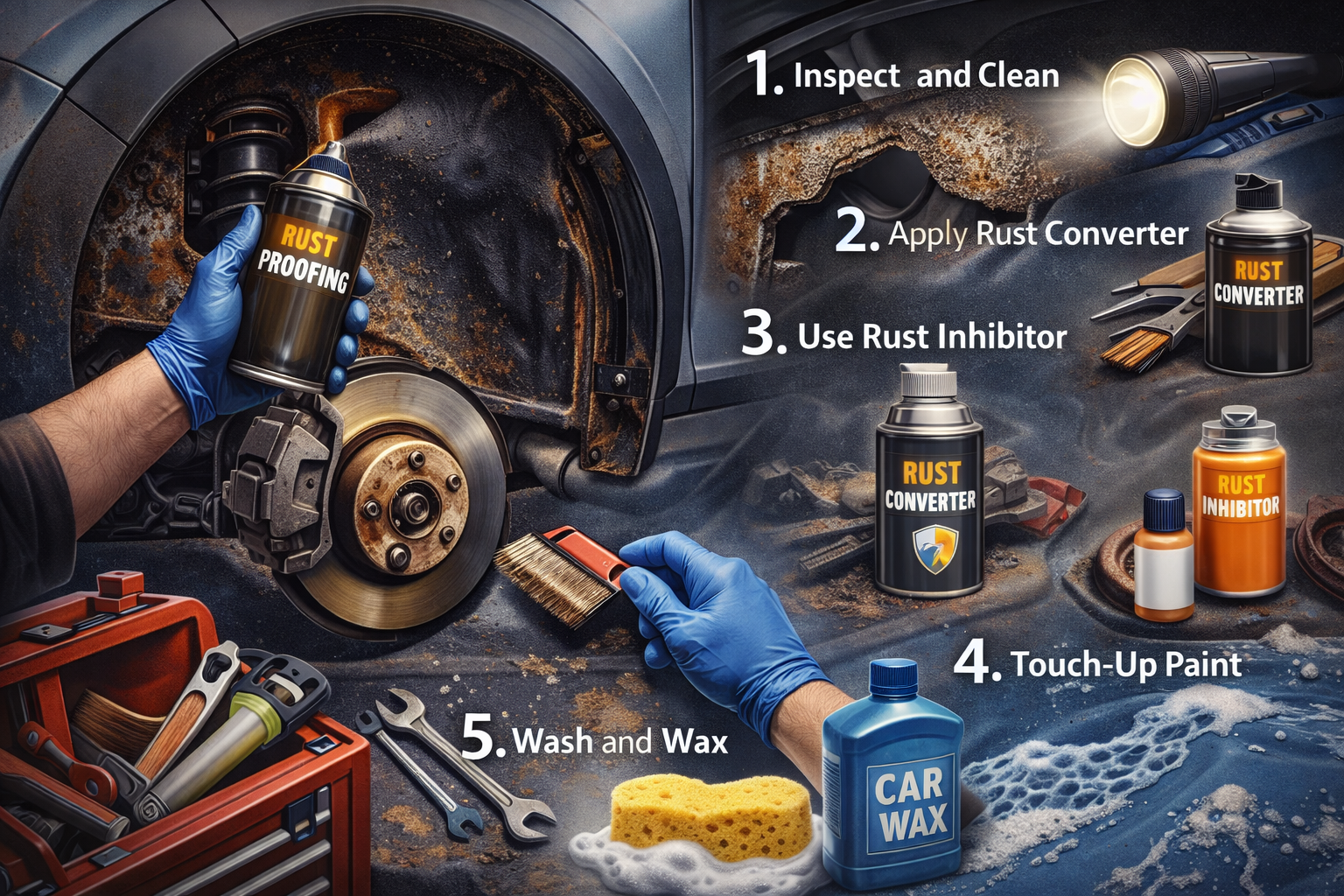
5. Apply Rustproofing Spray
Rust inhibitor sprays are widely available at auto parts stores and are easy to apply at home. These sprays displace moisture and create a thin protective film over exposed metal surfaces.
Best areas to treat:
-
Door panels
-
Frame sections
-
Inside wheel arches
-
Hidden metal surfaces
Annual application is typically sufficient, especially before winter begins.
6. Park in a Garage or Covered Area
Limiting exposure to rain, snow, and morning dew significantly reduces corrosion risk. If you don’t have access to a garage, consider a breathable car cover designed to prevent moisture buildup.
Avoid plastic tarps — they can trap condensation underneath.
7. Keep Drain Holes Clear
Modern vehicles have small drain holes in doors and body panels to prevent water from pooling inside. When these become clogged with debris, moisture remains trapped and rust develops internally.
Check and clear drain holes periodically using compressed air or a thin plastic tool.
8. Dry Your Car After Washing
Air drying can leave water sitting in seams and crevices. Use microfiber towels or a car dryer to remove excess moisture, especially around:
-
Door edges
-
Trunk seals
-
Side mirrors
-
Trim pieces
Reducing lingering moisture is one of the simplest ways to prevent surface rust.
9. Inspect Weather Seals and Trim
Damaged rubber seals around windows, doors, and the trunk can allow water to seep into hidden areas. Replace cracked or loose seals promptly to prevent internal corrosion.
A small investment in new weather stripping can save significant repair costs later.
10. Address Surface Rust Early
If you notice bubbling paint or small rust spots, act quickly.
DIY surface rust repair:
Early intervention prevents structural damage and extends your vehicle’s lifespan.
Why Rust Prevention Matters
Corrosion doesn’t just affect appearance — it can weaken frame components, suspension parts, brake lines, and other safety-critical systems. Consistent preventative maintenance protects your investment and improves resale value.
By following these DIY rust prevention tips, you can keep your vehicle looking better, lasting longer, and staying structurally sound — no professional rustproofing package required.
A little routine care goes a long way.
Bonus: Signs Your Car Already Has Rust
Even with preventative care, rust can still develop — especially in older vehicles or cars regularly exposed to harsh weather. Identifying corrosion early can help you limit damage and reduce repair costs.
Here are common warning signs your car may already have rust:
-
Flaking or bubbling paint – Paint that appears blistered or cracked often indicates corrosion forming underneath.
-
Visible holes in body panels – Advanced rust eats through metal, creating perforations in doors, fenders, or rocker panels.
-
Structural weakening – If the frame or underbody components show corrosion, it can compromise safety and vehicle stability.
-
Squeaky or stiff door hinges – Rust buildup in hinges and joints can restrict movement and create noise.
If rust has penetrated deeply into structural areas, professional assessment and repair may be required. Surface rust is manageable; structural rust is a safety concern.
How Much Does Rust Repair Cost?
Rust repair costs vary depending on severity, location, and whether structural components are affected. Addressing corrosion early is significantly more affordable than waiting until the damage spreads.
Here’s a general cost breakdown:
| Repair Type |
Estimated Cost |
| Minor Surface Rust |
$50–$150 (DIY repair kits) |
| Small Panel Repair |
$200–$800 |
| Major Rust Damage |
$1,000+ |
Severe cases that require welding or panel replacement can cost even more, especially if rust affects the vehicle’s frame.
Preventative maintenance and early intervention can save thousands in long-term repair bills.
How Often Should You Rust-Proof Your Car?
Consistency is key when it comes to corrosion protection. Rust prevention isn’t a one-time task — it’s part of routine vehicle maintenance.
Recommended schedule:
-
Basic wax application: Every 3–4 months
-
Professional rustproofing treatment: Every 1–2 years
-
Undercarriage inspection: At least once per year (ideally before and after winter)
If you live in coastal regions or areas with heavy snowfall and road salt, more frequent inspections may be necessary.
Final Thoughts
Rust prevention isn’t complicated — but ignoring it can become expensive very quickly. Regular washing, protective wax coatings, quick paint chip repairs, and proper storage all play a major role in extending your vehicle’s lifespan.
A small investment of time today can prevent major structural repairs tomorrow. Staying proactive protects not only your car’s appearance, but also its safety, resale value, and long-term reliability.
Take care of your car, and it will take care of you. 🚗
Keep Your Car Rust-Free with Expert Help
While DIY rust prevention goes a long way, professional inspections and treatments offer an added layer of protection — especially in harsh Australian conditions. If you’re in the Gold Coast region and want expert advice, servicing, or rust protection solutions, visit Supercool Southport.
Their experienced automotive team can assess early corrosion, provide preventative treatments, and help extend the life of your vehicle.
👉 Learn more or book a service today:
https://supercool-southport.com.au/