

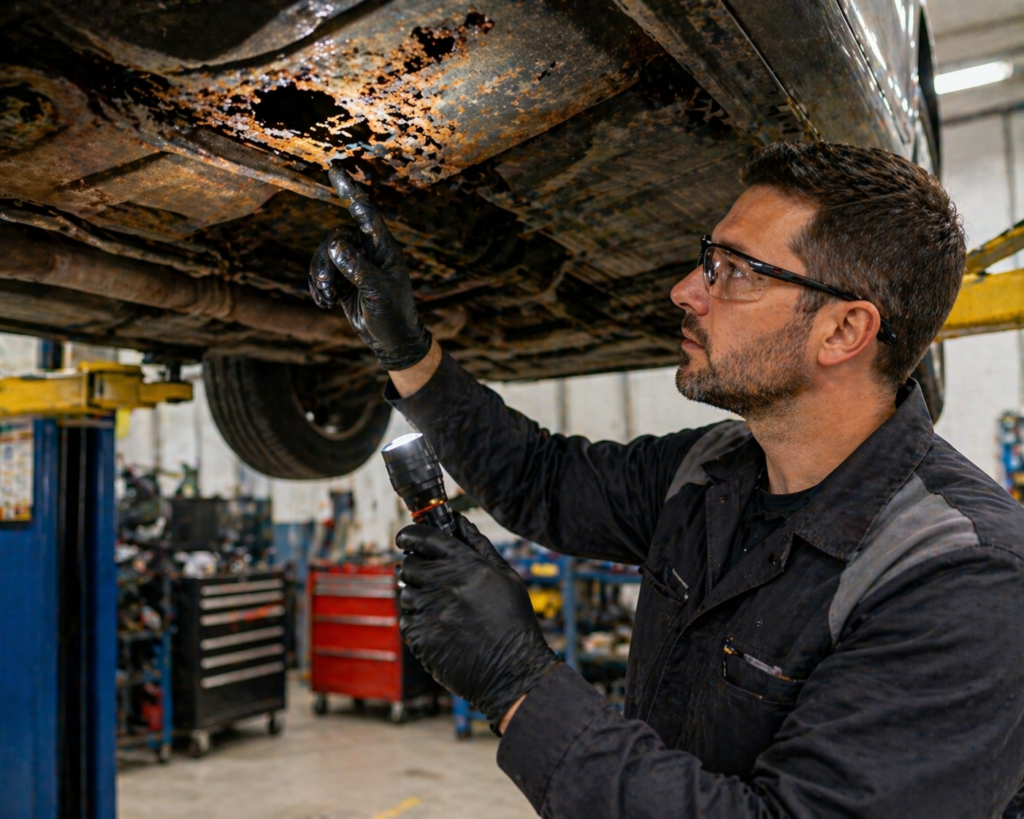
Car corrosion is one of those issues that can start small and seem harmless at first, but if left unchecked, it can quickly lead to costly repairs. What begins as a tiny rust spot or a patch of bubbling paint can eventually spread into deeper structural damage, affecting both the safety and value of your vehicle.
The good news is that corrosion often gives visible warning signs early on—if you know where to look. By inspecting the right areas and catching rust in its early stages, you can often prevent minor issues from turning into major repair bills. This guide explains what causes car corrosion, why early detection matters, and which parts of your vehicle deserve the closest attention.
Corrosion, commonly known as rust, happens when metal reacts with moisture, oxygen, and salts. Over time, this chemical reaction breaks down the metal surface and weakens it. While all vehicles are exposed to the elements to some degree, certain conditions make corrosion much more likely.
Common causes include:
Corrosion does not always appear in obvious places first. In many cases, it starts in hidden or low-visibility areas and only becomes noticeable once the damage has already spread.
A small rust patch may not seem urgent, but corrosion rarely stays small for long. Once it begins, it can spread beneath the surface, attacking more of the metal than what is visible from the outside.
If ignored, corrosion can:
The earlier rust is identified, the easier and cheaper it is to treat. Surface corrosion may only require cleaning, sanding, and repainting, while advanced rust can mean welding, panel replacement, or major mechanical repairs.
Some parts of a vehicle are far more vulnerable than others. These are the areas where moisture, dirt, and salt are most likely to collect and where early inspection can make the biggest difference.
The undercarriage is one of the most common places for corrosion to develop because it is constantly exposed to road spray, mud, water, and salt. Since it is out of sight, rust here often goes unnoticed until it becomes severe.
A flashlight can help you inspect visible sections underneath the car, but a mechanic can provide a more thorough check if needed.
Wheel wells and fenders are also high-risk areas because they are regularly sprayed with water, dirt, and debris from the tyres. Mud and grime can build up here and trap moisture against the metal.
If left untreated, corrosion in the wheel arches can spread outward and become visible on the body panels.
Door panels can rust from the inside out when water gets trapped inside. Most doors have drain holes designed to let moisture escape, but if those holes become clogged, water can remain inside and start corroding the metal.
These symptoms often mean the corrosion has already started beneath the paint surface.
The edges of the bonnet and trunk are easy to overlook, but they are common spots for chips, scratches, and moisture buildup. Because these seams are exposed to weather and frequent opening and closing, they are more vulnerable than many people realise.
Even minor paint damage in these areas can lead to rust if moisture gets underneath.
Rubber seals around windows and windshields are designed to keep water out, but if they become damaged or worn, moisture can seep in and sit under the trim. This can cause hidden rust that may not be obvious until it becomes more advanced.
Corrosion around window frames can be especially costly if it affects the seal or requires glass removal for repair.
The exhaust system is exposed to both heat and moisture, making it a common area for rust. Some surface rust is normal, especially on older vehicles, but more serious corrosion can create leaks or weaken key components.
If the rust has progressed beyond the surface, it may affect performance, increase noise, or require replacement.
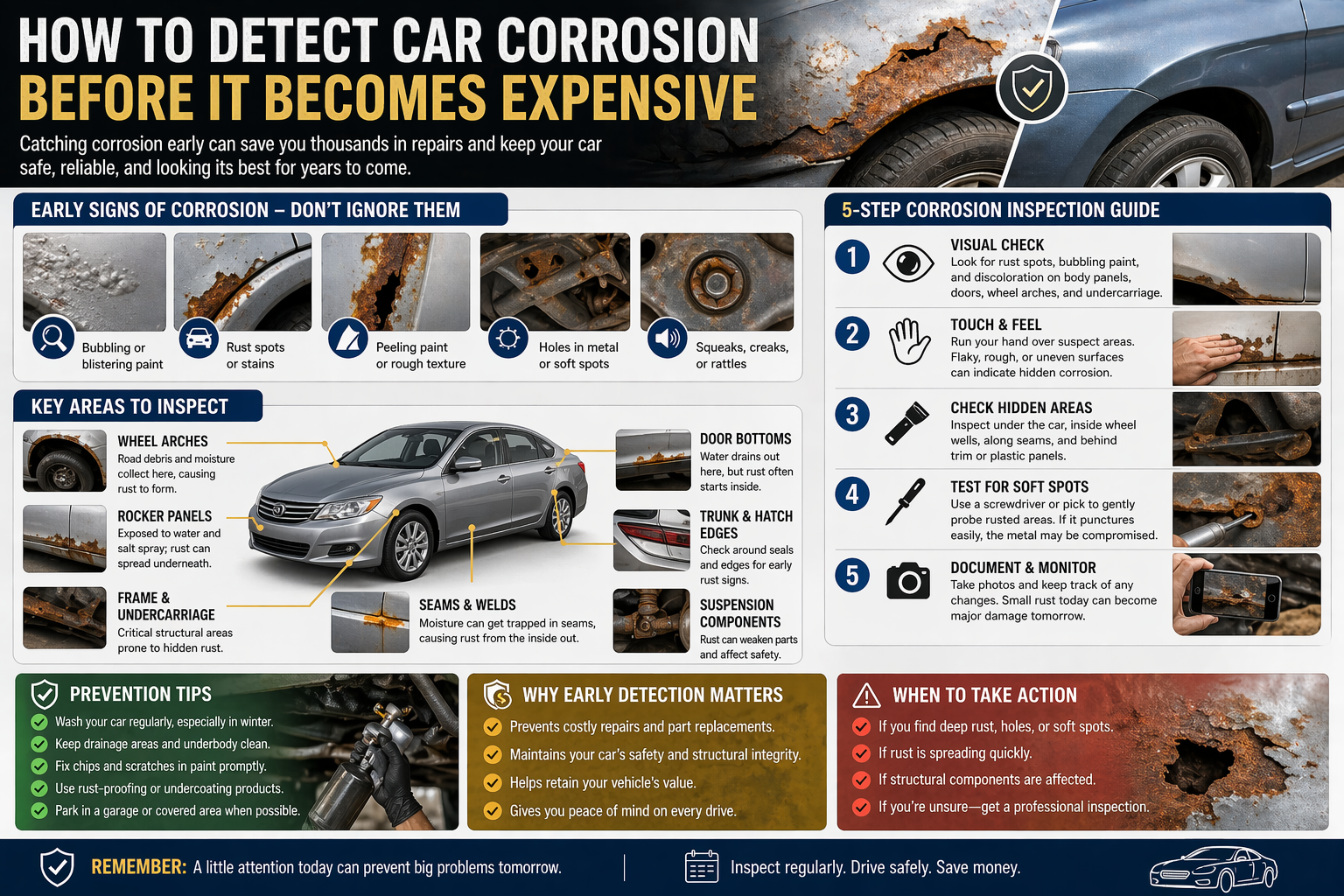
A visual inspection is a great start, but a more careful check can help you catch problems earlier.
Here are a few practical tips:
If you are unsure whether a spot is harmless surface rust or something more serious, it is worth having it assessed by a professional.
Not all rust is equally dangerous. Surface rust on non-critical parts may be manageable, but corrosion becomes much more serious when it affects structural or safety-related components.
Serious corrosion may involve:
When rust reaches this stage, repairs are often much more expensive and may even affect whether the car is roadworthy.
Corrosion doesn’t always start with obvious rust. In many cases, your car will show subtle early warning signs before visible damage appears. Spotting these clues early can help you take action before the problem spreads.
Look out for:
These early indicators are your best chance to address corrosion before it becomes more serious and expensive to repair.
You don’t need specialised tools to check your car for early signs of corrosion. A basic inspection at home can go a long way in identifying potential issues.
Regular checks make it easier to catch small problems before they escalate.
Not all rust is the same, and knowing the difference can help you decide the right course of action.
Acting early can significantly reduce repair costs and prevent further damage.
Preventing corrosion is always easier (and cheaper) than fixing it. A few simple habits can help protect your vehicle long-term:
Consistent maintenance is key to keeping corrosion at bay.
Corrosion doesn’t happen overnight—but it also won’t fix itself. Regular inspections and quick action are the best ways to protect your vehicle from long-term damage. By catching early warning signs and maintaining your car properly, you can avoid expensive repairs and keep your vehicle safe, reliable, and looking its best.
A few minutes of inspection today can save you thousands in repair costs tomorrow.
Noticed signs of corrosion or other vehicle issues? Regular maintenance—including AC servicing—helps keep your car performing at its best.
Book a professional service with Supercool Southport today:
👉 https://supercool-southport.com.au/
