5 Warning Signs Your Car Is Starting to Rust and How to Stop It

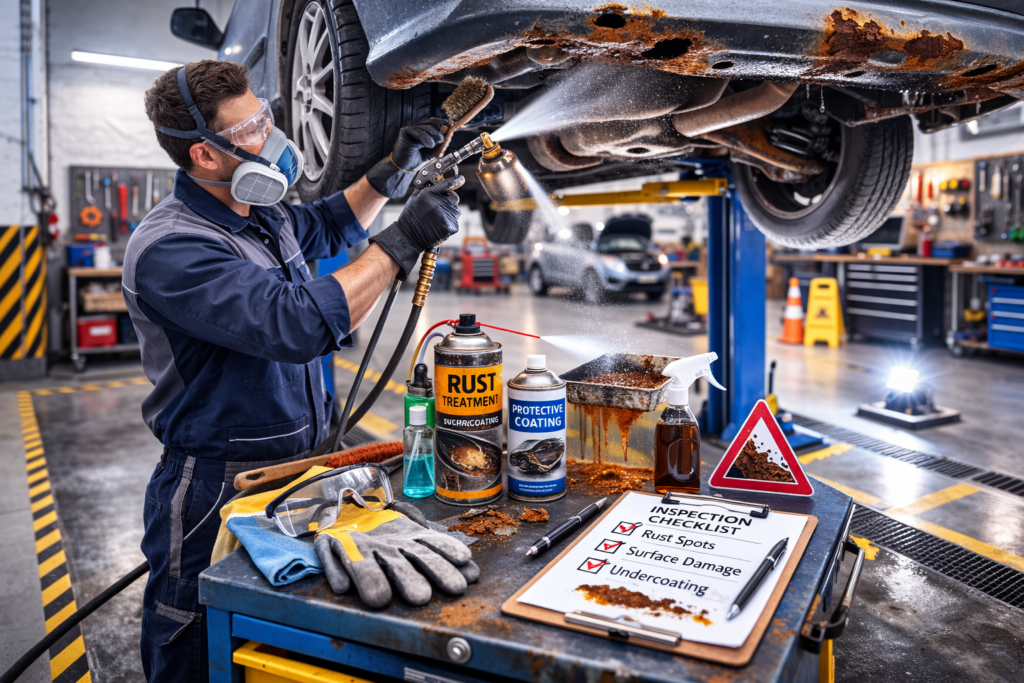
Mechanic inspecting car rust damage

Rust develops when bare metal is exposed to moisture and oxygen over time. Left untreated, corrosion can weaken structural components, reduce resale value, and lead to expensive repairs — which is why preventative measures like professional car rust protection services are so important.

Catching rust early is the best way to stop it. Here are five common warning signs — and what you can do before surface rust becomes serious damage, including when to consider car rust protection services to safeguard your vehicle long term.

1. Bubbling or Blistering Paint

One of the earliest visible signs of rust appears beneath the paint surface, often where moisture has penetrated through a chip, scratch, or compromised clear coat.

What to look for

  • Small bubbles in the paint

  • Raised or uneven patches

  • Discolouration under the clear coat

  • Paint that looks swollen or “puffed”

These bubbles can indicate moisture trapped beneath the paint layer, where oxidation has begun underneath.

How to stop it

  • Address the area promptly—don’t wait for the paint to crack open

  • Sand back minor surface rust to clean metal (or stable surface)

  • Apply rust converter/inhibitor if required

  • Prime and seal with touch-up paint and clear coat

  • Consider professional rust treatment if the affected patch is spreading or near seams/edges

Early intervention helps prevent rust from spreading under surrounding paint, where it becomes harder to detect and treat.

2. Surface Rust on Scratches or Stone Chips

Stone chips and scratches expose bare metal. Once the protective paint layer is broken, rust can begin quickly—especially in wet weather or coastal conditions.

Common locations

  • Bonnet and roof edges

  • Wheel arches and guards

  • Lower doors and door sills

  • Around door handles and locks

  • Front bumper edges and leading panels

How to stop it

  • Clean the exposed area and remove dirt/salt buildup

  • Apply rust inhibitor or converter to stop oxidation

  • Seal with touch-up paint (and clear coat where applicable)

  • Wax regularly to add a protective barrier to surrounding paint

  • Inspect chips after long road trips or wet seasons

Even small chips should be repaired early, as rust can creep outward under the paint and expand over

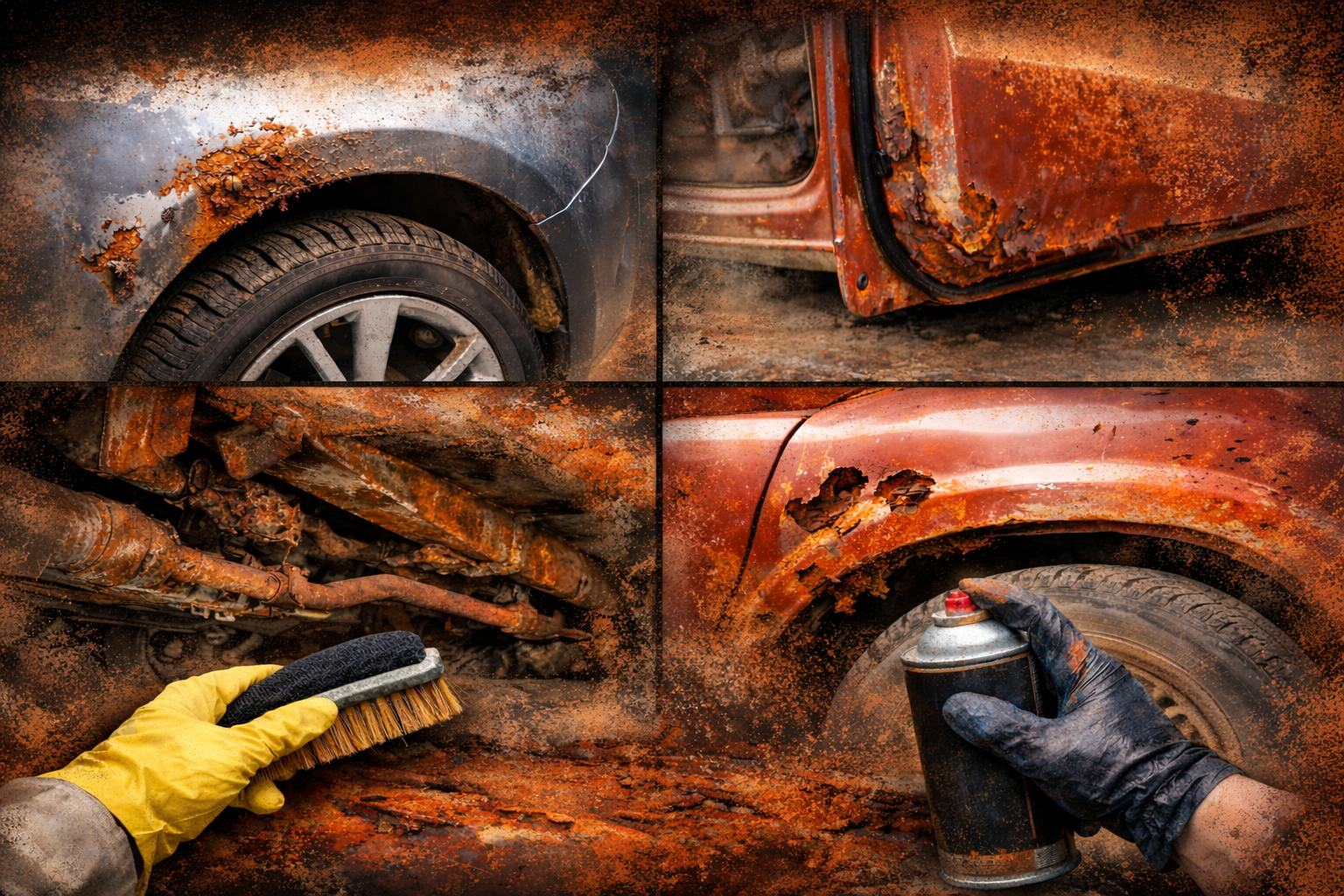
Severe rust damage on car parts

3. Rust Around Wheel Arches and Underbody Edges

Wheel arches and underbody edges take constant impact from water, mud, sand, and road debris. These areas are also exposed to salt in coastal regions or winter driving conditions, making them a common starting point for corrosion.

What to look for

  • Brown/orange staining around the arch lip

  • Rough, scaly texture along the inner edge

  • Paint that looks thin, chipped, or worn near the wheel well

  • Rust freckles appearing along panel seams

How to stop it

  • Wash wheel arches and underbody areas regularly, especially after rain, beach driving, or off-road use

  • Remove trapped dirt and mud from inner guards (buildup holds moisture)

  • Treat early rust with a rust converter or inhibitor

  • Touch up chips and worn paint before corrosion spreads

  • Consider professional underbody protection or rust-proofing for high-exposure vehicles

These areas often rust from the inside out, so early attention is important.

4. Rust in Door Sills, Seams, and Drainage Areas

Doors and rocker panels are designed with drains to let water escape. If those drains clog, moisture can sit inside panels and accelerate corrosion—often unseen until it worsens.

What to look for

  • Rust spots along door seams or bottom edges

  • Bubbles in paint near sills or pinch welds

  • Water marks or dampness in lower door areas

  • Visible corrosion near weld points and joins

How to stop it

  • Check and clear door drains and sill drainage holes regularly

  • Remove trapped leaves, dirt, and road grime from seams

  • Dry wet areas quickly (especially after heavy rain or washing)

  • Treat visible rust early and seal with primer/paint

  • Use cavity protection (wax/oil spray) to protect inner door panels and sills

Panel seams are high-risk because moisture can sit in gaps and spread rust under paint.

5. Flaking Metal, Scaling, or Rust Dust (Advanced Warning Sign)

If you’re seeing flaking metal or heavy scaling, rust has progressed beyond surface level. At this stage, corrosion can weaken components and spread quickly.

What to look for

  • Flaking or layered rust (“scales”)

  • Rust dust falling from underbody areas

  • Soft spots, holes, or metal that crumbles when pressed

  • Heavy corrosion on brackets, mounts, and structural points

How to stop it

  • Have the vehicle inspected—structural corrosion may require repair, not just treatment

  • Don’t seal over heavy rust without proper removal and prep

  • Replace severely rusted fasteners, brackets, or components where needed

  • After repairs, apply professional rust-proofing to protect surrounding areas

  • Increase underbody wash frequency and inspection intervals going forward

If rust is affecting safety-critical components, professional assessment is the safest next step.

Why Rust Spreads Quickly

Rust accelerates when vehicles are regularly exposed to moisture and corrosive elements. Certain environmental conditions significantly increase the rate of oxidation, especially when protective paint layers are compromised.

Rust spreads faster when vehicles are exposed to:

  • Coastal air and salt-laden sea breeze

  • Road salt used in winter conditions

  • Heavy rainfall and standing water

  • High humidity environments

  • Infrequent washing and underbody cleaning

  • Mud or debris trapped in wheel arches and seams

Once oxidation begins, it can creep beneath paint layers, travel along panel seams, and spread inside structural cavities where it may not be immediately visible. That’s why early detection and prevention are critical.

How to Prevent Car Rust

Preventing rust is far easier — and more affordable — than repairing corrosion once it becomes advanced. A consistent maintenance routine can significantly reduce risk.

Preventative measures include:

  • Regular washing, including underbody rinsing

  • Thorough drying after washing or heavy rain

  • Waxing to maintain a protective barrier over paint

  • Parking undercover where possible

  • Prompt repair of paint chips and scratches

  • Applying rust inhibitor or converter to minor surface rust

  • Professional rust-proofing treatments for high-risk vehicles

  • Annual inspections of the undercarriage, seams, and hidden areas

Early prevention is significantly less expensive than repairing structural corrosion or replacing rust-damaged components.

When to Consider Professional Rust-Proofing

If your vehicle is regularly exposed to harsh environmental conditions — or you plan to keep it long-term — professional rust-proofing can provide added protection against corrosion.

Rust-proofing is especially beneficial for protecting vulnerable areas such as:

  • Undercarriage and suspension components

  • Internal door cavities and sills

  • Frame rails and structural sections

  • Wheel arches and inner guards

  • Chassis seams and mounting points

Professional application ensures deeper penetration into hidden seams and joints, helping protect areas that are difficult to treat effectively with DIY products.

Final Thoughts

Rust often begins subtly — beneath paint, around seams, or underneath the vehicle. By recognising early warning signs and taking preventative action, you can protect your car’s structural integrity, safety, and long-term resale value.

Routine inspections, prompt repairs, and preventative protection are the most effective ways to stop rust before it spreads.

Protect Your Vehicle from Rust — Book with Supercool Southport

If you’re concerned about corrosion or want preventative protection for your vehicle, speak with the experienced team at Supercool Southport.

Visit: https://supercool-southport.com.au/
Contact their team to discuss professional rust-proofing options tailored to your vehicle and driving conditions.

Gold Coast Services

Supercool Car Air Conditioning © 2026 | Designed and developed by 123 Digital |Privacy Policy | Blog