

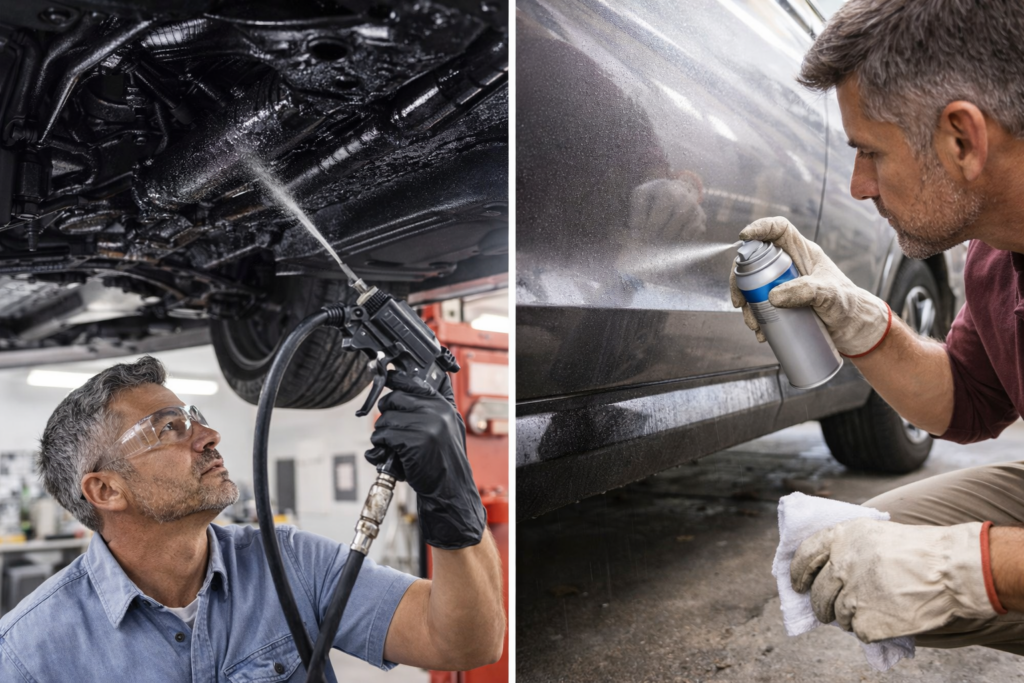
When comparing professional rust-proofing vs DIY coatings, the right choice depends on several factors: how much protection you want, how long you plan to keep the vehicle, your budget, and how much maintenance you are willing to do yourself.
Both options can help reduce corrosion, but they are not equal in terms of durability, coverage, or long-term effectiveness. Professional rust-proofing generally offers deeper and longer-lasting protection, while DIY coatings are more affordable and useful for maintenance, touch-ups, or short-term prevention.
Below is a practical, real-world comparison to help you decide which option is best for your car.
| Attribute | Professional Rust-Proofing | DIY Coatings (Sprays / Paints) |
|---|---|---|
| Protection Level | ⭐⭐⭐⭐⭐ Full coverage and deeper penetration | ⭐⭐⭐ Mostly surface-level protection |
| Durability | Typically 3–10+ years depending on product and conditions | Usually 6–18 months before reapplication is needed |
| Application | Applied by trained technicians for more even coverage | Depends heavily on your prep, tools, and technique |
| Cost | Higher upfront investment | Lower initial cost |
| Rust Treatment | Better suited to treating and protecting vulnerable areas | Mostly preventive, with limited ability to deal with existing rust |
| Coverage | Can protect undercarriage, seams, cavities, and hidden areas | Mostly limited to exposed or easily accessible surfaces |
| Convenience | Minimal effort once booked and completed | Requires time, preparation, and repeat maintenance |
Professional rust-proofing is generally the best choice if your goal is maximum protection and long-term durability. These services often include oil-based rust inhibitors, wax-based cavity protection, or underbody coatings applied with specialised equipment.
Because the application is performed by trained technicians, the coating is usually more consistent and reaches areas that are difficult to protect with DIY methods, such as internal seams, chassis rails, door cavities, and other hidden sections where rust often begins unnoticed.
Professional treatments are especially valuable for vehicles exposed to wet weather, coastal air, road salt, mud, or frequent off-road use. In those conditions, corrosion can spread quickly if hidden areas are left unprotected.
✔ Best for:
DIY rust-proofing coatings are a more budget-friendly option and can still provide useful protection when applied correctly. These products usually come in the form of sprays, rubberized undercoatings, rust converters, or oil/wax-based treatments.
They work by forming a barrier over exposed metal surfaces to help reduce contact with water, salt, and contaminants that cause corrosion.
DIY coatings are most effective when the surface is thoroughly cleaned, dried, and prepared before application. Without good prep, even a high-quality product may fail early.
DIY coatings can be a practical solution for older vehicles, daily drivers with minor corrosion concerns, or owners who prefer to handle routine protection themselves.
✔ Best for:
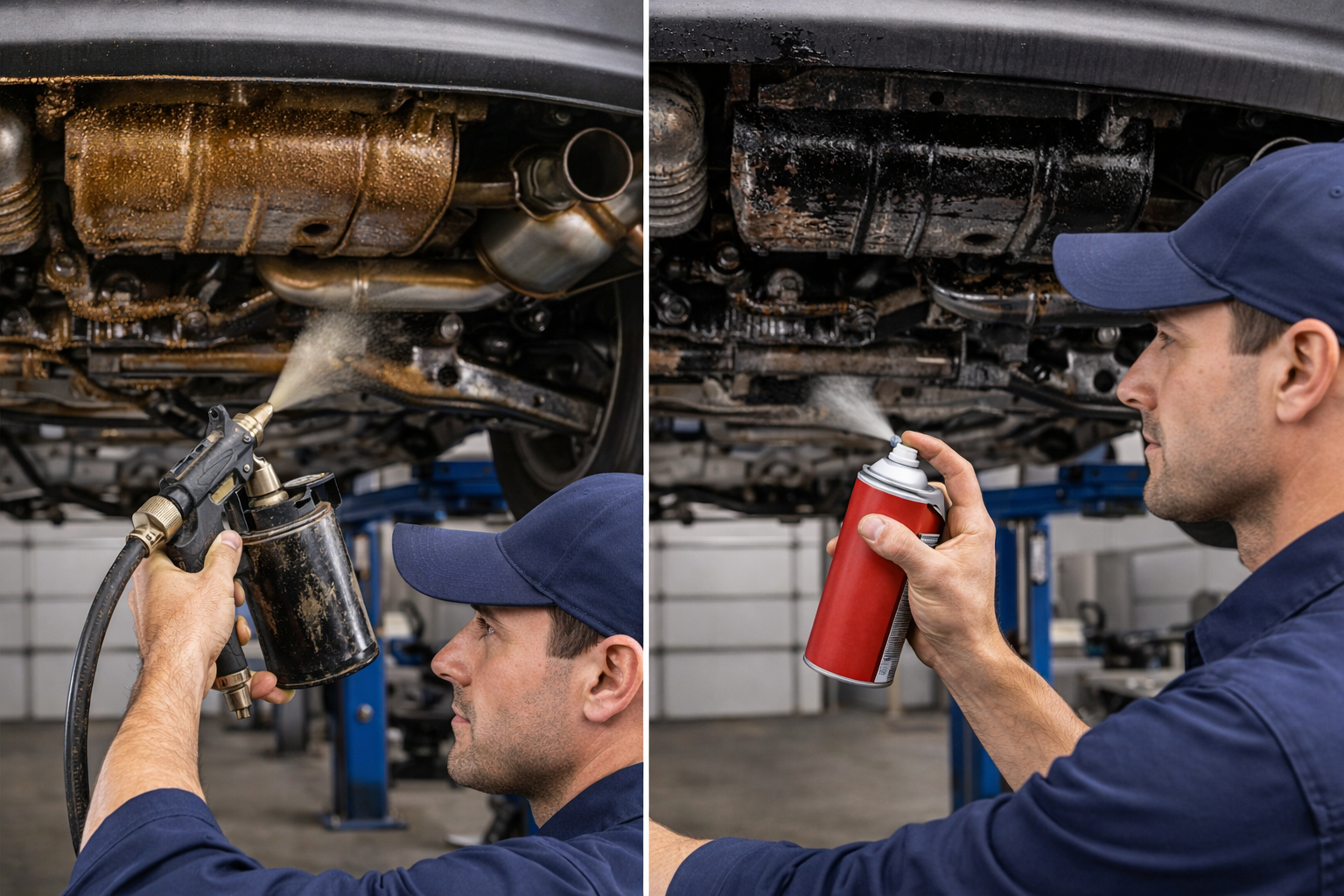
If your priority is long-term durability, deeper coverage, and stronger corrosion resistance, professional rust-proofing is the clear winner.
It offers:
If you want a lower-cost solution and are comfortable doing the prep and application work yourself, DIY coatings can still provide worthwhile protection.
They are best for:
The trade-off is that they require more effort and more frequent upkeep.
For most car owners, the smartest approach is not choosing one or the other exclusively—it is using both strategically.
This combined approach gives you:
In other words, professional rust-proofing gives you the foundation, while DIY products help you maintain and extend that protection over time.
Australia’s climate can be tough on vehicles—but not in the same way everywhere. Coastal salt air, tropical humidity, inland dust, and rural road conditions all affect how quickly rust can develop and how aggressively you need to protect your car.
That is why the best rust protection coating often depends on where and how you drive. A coating that works well in a dry inland city may not offer enough protection for a vehicle parked near the ocean or regularly exposed to heavy rain and humidity.
This guide breaks down the best rust protection coatings for different Australian climates, so you can choose the right option for your location, driving habits, and maintenance preferences.
👉 The harsher the environment, the more important it is to protect both hidden metal surfaces and exposed underbody areas.
Coastal environments are some of the harshest conditions for vehicle corrosion. Even if you are not driving directly on the beach, vehicles parked near the coast are exposed to salty air, moisture, and sea spray. Over time, that combination can dramatically speed up rust formation.
👉 Salt exposure is one of the strongest accelerators of vehicle corrosion.
Oil-based or lanolin-based rust proofing
Oil-based coatings are especially valuable in coastal conditions because rust often starts inside panels, seams, and enclosed areas long before it becomes visible on the outside.
For the best protection, combine:
👉 This combined system offers some of the most complete protection for harsh coastal environments.
In tropical and high-humidity regions such as parts of Queensland and the Northern Territory, vehicles face a different kind of corrosion risk. Salt exposure may still be a factor in some locations, but even without it, constant moisture in the air can encourage rust to form over time.
Humidity means metal surfaces stay damp longer, especially in hidden cavities, underbody areas, and around drainage points. Add frequent rain and warm temperatures, and corrosion can spread surprisingly quickly.
Oil-based coating or wax-oil hybrid
👉 For tropical conditions, the best protection usually comes from coatings that actively repel moisture rather than simply covering the surface.
Pure rubberized coatings used alone
These can work in some cases, but if applied badly or over existing moisture or rust, they may trap contaminants underneath. That can actually make corrosion harder to detect and worse over time.
In drier urban and inland areas such as Melbourne, Canberra, Adelaide, and inland parts of NSW or SA, corrosion risk is often lower than in coastal or tropical regions. Vehicles in these areas are typically exposed to less salt and less constant moisture, although road grime, dust, and occasional wet weather still play a role.
Because conditions are generally less aggressive, many drivers can get good results from lower-maintenance protection options.
Wax-based coating or ceramic coating
👉 Wax coatings are a practical option for drivers who want solid corrosion protection with less frequent upkeep.
Ceramic coatings are best known for protecting paintwork, making cleaning easier, and helping preserve appearance and resale value.
They are useful for:
But they are not enough on their own for full underbody rust protection. Ceramic coatings protect visible painted surfaces well, but they do not replace dedicated rust-proofing for the underside, seams, or internal cavities.
Undercoating is not tied to one climate alone. Instead, it is most useful for vehicles exposed to rougher road conditions, including gravel, mud, construction sites, and off-road terrain.
👉 Undercoating is particularly valuable when physical road impact is part of the corrosion risk.
Undercoating is not a full replacement for rust-proofing.
It works best when combined with:
On its own, undercoating mainly protects the underside from impact and surface exposure. It does not always reach the seams, cavities, and enclosed spaces where rust often begins.
| Climate | Best Coating | Why |
|---|---|---|
| 🌊 Coastal | Oil-based + wax combo | Best for salt, moisture, and hidden rust risk |
| 🌧️ Tropical / Humid | Oil-based or wax-oil hybrid | Strong moisture protection in wet climates |
| 🏙️ City / Inland | Wax-based or ceramic | Lower maintenance and suitable for milder conditions |
| 🛻 Rural / Off-road | Undercoating + oil-based treatment | Protects against both impact and corrosion |
If you want the most effective setup regardless of where you live in Australia, a layered approach usually gives the best long-term results.
This helps protect:
This kind of combined strategy is especially useful for:
If you want the best possible protection, especially for a newer car or a vehicle you plan to keep for many years, professional rust-proofing is the better choice. It offers more complete coverage, lasts longer, and protects the areas where rust often starts first.
If your main goal is to save money or maintain an older vehicle, DIY coatings can still be effective, provided you are willing to do the prep work and reapply them regularly.
The best option ultimately comes down to your budget, your climate, and how serious you are about long-term rust prevention.
If you’re serious about protecting your vehicle from long-term rust damage, professional treatment is the most reliable way to get lasting results—especially in coastal or high-moisture environments.
At Supercool Southport, experienced technicians provide high-quality rust-proofing solutions designed to protect your vehicle’s underbody, seams, and hard-to-reach areas where corrosion often begins.
Whether you’re looking to safeguard a new car or extend the life of an older one, their team can recommend the right treatment for your needs.
👉 Book your rust-proofing service today: https://supercool-southport.com.au/
