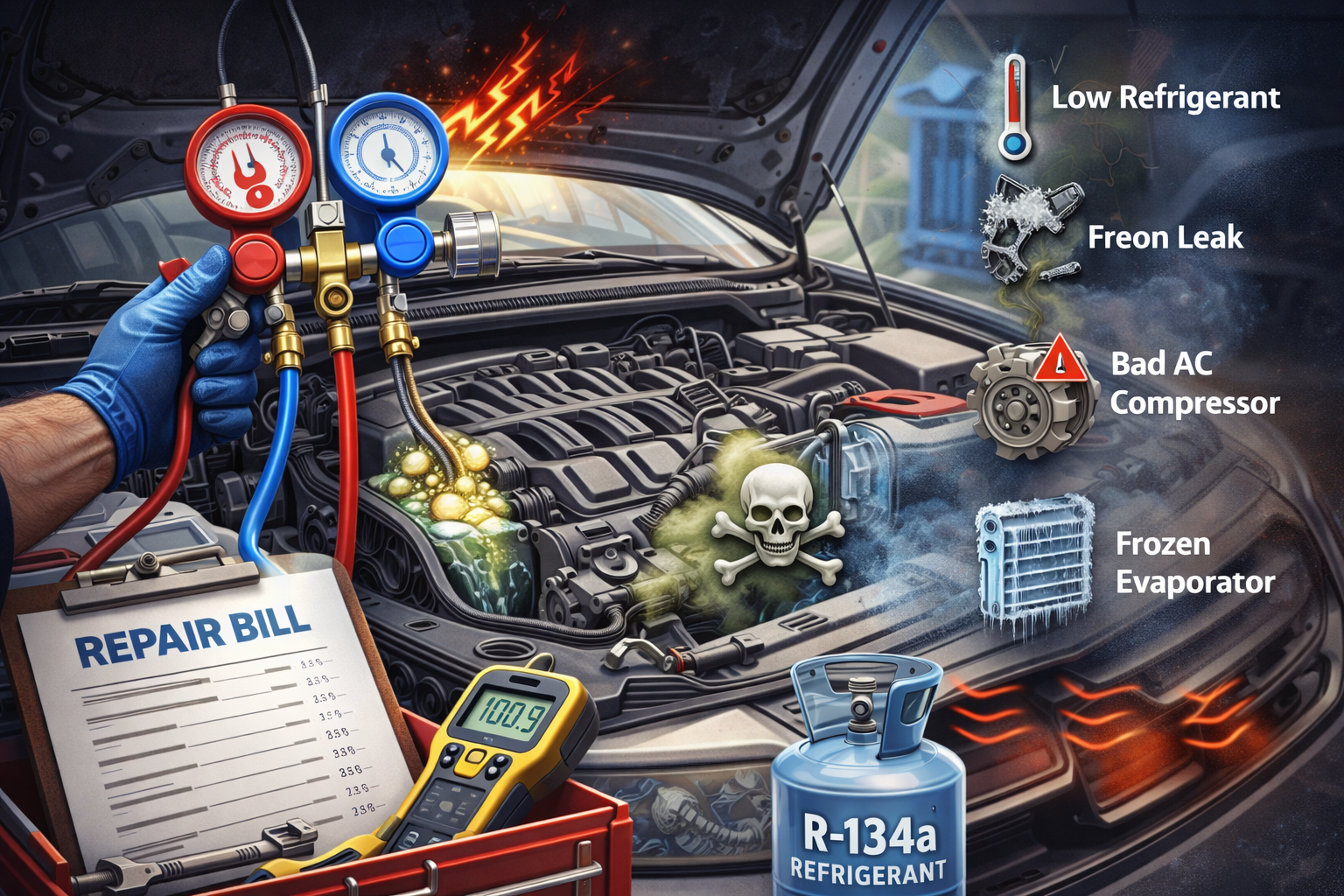
Why Your Car AC Is Not Cooling and How to Fix It Fast

Overheated car AC repair chaos

There’s nothing worse than turning on your car’s AC on a hot day — only to feel warm air blowing from the vents. If your car AC is not cooling, don’t panic. Many air conditioning problems are common and can be diagnosed quickly through professional auto airconditioning services. Some fixes are simple (like a blocked cabin filter), while others need professional testing (like leak detection or compressor faults) best handled by qualified auto airconditioning services technicians.

This guide explains the most common reasons your car AC isn’t cooling — and what you can do next, including when to seek expert auto air conditioning services to restore proper performance.

How Your Car’s AC System Works (Quick Overview)

Understanding the basics helps you narrow down the problem faster. Your vehicle’s air conditioning system is a closed loop that removes heat from inside the cabin and releases it outside the vehicle. It doesn’t “create cold” — it moves heat.

Here’s what each main component does and how they work together:

  • Compressor

    • The “pump” of the AC system.

    • Pressurises refrigerant and circulates it through hoses and components.

    • Usually driven by the engine belt (or electric on some hybrids/EVs).

    • If the compressor doesn’t run, the system can’t cool.

  • Condenser (near the radiator)

    • Acts like a heat exchanger.

    • Releases heat from the hot, pressurised refrigerant into outside air.

    • Needs good airflow (fans working, fins not blocked by dirt/debris).

    • If airflow is poor, AC often struggles most when stopped in traffic.

  • Expansion valve / orifice tube

    • Controls refrigerant flow into the evaporator.

    • Drops pressure suddenly, which cools the refrigerant before it enters the cabin-side heat exchanger.

    • If it sticks or blocks, cooling can become weak or inconsistent.

  • Evaporator (inside the dash)

    • Absorbs heat from cabin air as air passes over it.

    • Moisture in the air can condense on it, which is why AC produces water drips under the car.

    • If it’s blocked or leaking, performance drops and smells can develop.

  • Refrigerant (commonly R134a or R1234yf)

    • The working fluid that carries heat around the loop.

    • If refrigerant is low, the system can’t absorb/release heat effectively.

    • Low refrigerant usually means a leak, not “normal usage.”

  • Blower motor

    • Pushes air through the evaporator and out the vents.

    • If the blower is weak (or the cabin filter is blocked), you may feel little airflow even if the AC system is actually cooling.

What “Normal Cooling” Feels Like

When everything is working properly:

  • The compressor engages and stays running steadily (with normal cycling).

  • Airflow is strong and consistent.

  • Vent air temperature drops noticeably within a few minutes.

  • You may see water dripping under the car—this can be normal condensation.

Why AC Stops Cooling

If any part of this chain fails—compressor operation, airflow across condenser, refrigerant flow control, refrigerant charge level, or cabin airflow—your AC can blow warm or weak air. In many cases, the fastest way to narrow it down is to figure out whether the issue is cooling (refrigerant/system) or airflow (blower/filter).

Diagnosing a malfunctioning car AC

10 Common Reasons Your Car AC Is Not Cooling

Car AC problems usually fall into three buckets: low refrigerant/leaks, airflow or heat-exchange issues, or electrical/control faults. Below are 10 of the most common causes, with symptoms and the fastest next step.

1) Low Refrigerant Level (Most Common Cause)

Symptoms

  • AC blows warm or slightly cool air

  • Cooling gets worse over days/weeks

  • AC cycles on and off more than usual

  • Sometimes a faint hissing sound after shutting the car off

Why it happens

  • AC systems are sealed—so low refrigerant usually means a leak (often from aging seals, O-rings, or hose fittings).

Fastest fix

  • A DIY recharge can temporarily improve cooling, but if there’s a leak, the cooling will fade again.

  • Best outcome comes from leak detection + repair + proper recharge.

2) AC Refrigerant Leak

Leaks can occur in hoses, compressor seals, condenser, or evaporator.

How to spot it

  • Oily residue around AC fittings, hoses, or condenser

  • Gradual loss of cooling performance

  • UV dye detection (common professional method)

Fix

  • Leak repair + system vacuum + correct refrigerant recharge (professional work in most cases).

3) Faulty AC Compressor

The compressor is the heart of the system. If it can’t compress and circulate refrigerant, the system won’t cool.

Symptoms

  • Clicking, grinding, or squealing noises when AC is on

  • AC clutch not engaging (where applicable)

  • Warm air even after refrigerant is added

  • Intermittent cooling that cuts in/out

Fix

  • Diagnosis to confirm whether it’s the compressor, clutch, relay, or pressure switch

  • Compressor replacement if confirmed faulty (professional repair)

4) Clogged or Dirty Condenser

The condenser sits in front of the radiator and relies on airflow. If it’s blocked, it can’t dump heat properly.

Symptoms

  • AC cools while driving but not when idling

  • Weak cooling in traffic

  • Visible debris in the grille area

Fastest fix

  • Carefully remove debris (leaves, bugs)

  • Gently rinse with low-pressure water (avoid bending fins)

If the condenser is damaged or blocked internally, replacement may be needed.

5) Broken Cooling Fans (Radiator/Condenser Fans)

Fans pull air through the condenser when the car isn’t moving.

Symptoms

  • AC works on the highway but blows warm at stoplights

  • Engine temperature rises in traffic

  • Fan not running when AC is turned on (many vehicles should engage fans)

Fix

  • Diagnose fan motor, fan resistor/module, relay, wiring

  • Repair/replace the faulty component

6) Electrical Issues or Blown Fuse

Sometimes the system is fine mechanically, but power/control is missing.

Symptoms

  • AC doesn’t turn on at all

  • AC works intermittently

  • Compressor doesn’t engage (no click/response)

Fastest fix

  • Check AC-related fuses and relays

  • If a fuse blows again, there’s likely an underlying electrical fault that needs diagnosis

7) Clogged Cabin Air Filter

A clogged cabin filter restricts airflow through the vents. The AC system may still be cooling, but you won’t feel much air coming out.

Symptoms

  • Weak airflow from vents

  • Musty or dusty smell

  • AC feels “weak,” but the air isn’t necessarily warm

  • Windows fog more easily than normal

Fastest fix

  • Replace the cabin air filter (often inexpensive and one of the easiest DIY fixes).

  • If airflow improves immediately, you’ve likely found the issue.

8) Faulty Expansion Valve or Orifice Tube

These parts regulate refrigerant flow into the evaporator. If they clog or stick, the system can’t control pressure properly and cooling becomes unstable.

Symptoms

  • Inconsistent cooling (cold then warm)

  • Poor cooling even after a regas

  • Frost or icing on AC lines (in some cases)

  • High/low pressure readings outside normal range (diagnostic clue)

Fix

  • Professional diagnosis and replacement (system needs proper recovery, vacuum, and recharge).

9) Evaporator Problems

The evaporator is inside the dashboard and absorbs heat from cabin air. If it’s dirty, blocked, or leaking, cooling performance drops and odours can develop.

Symptoms

  • Bad smell from vents (musty/mouldy)

  • Weak cooling even when refrigerant is correct

  • Water inside cabin or damp carpet (possible drain blockage or evaporator issue)

  • Persistent fogging

Fix

  • Evaporator cleaning (where accessible) and drain clearing

  • Evaporator replacement if leaking (often labour-intensive due to dash access)

10) Blend Door Actuator Failure

The blend door controls how much air passes through the heater core vs the evaporator. If it fails, warm air may mix in even if the AC system is working.

Symptoms

  • One side cold, one side warm (common in dual-zone systems)

  • Temperature won’t change when you adjust settings

  • Clicking/ticking behind the dashboard

  • AC seems to work sometimes but won’t stay cold

Fix

  • Replace the blend door actuator (typically professional due to access, though some models are simple).

How to Fix Car AC Not Cooling (Step-by-Step Troubleshooting)

If you want to narrow it down quickly, follow this checklist in order—from easiest to most diagnostic.

Step 1: Check Airflow

  • Weak airflow: cabin filter is a prime suspect; replace it

  • No airflow: blower motor, resistor, or wiring may be faulty

  • Airflow strong: move to temperature checks

Step 2: Check Temperature

  • Air is warm but airflow is strong: likely refrigerant level/leak, compressor, condenser airflow, or blend door issue

  • Air is slightly cool but not cold: could be low refrigerant, dirty condenser, or fan/airflow issue

Step 3: Inspect Compressor Operation

  • Start engine

  • Set AC to max cold, fan high

  • Look under the bonnet:

    • Compressor/clutch engagement (where applicable)

    • Any unusual noises or belt issues

    • Cycling rapidly on/off (can indicate low refrigerant or pressure issues)

Step 4: Check Cooling Fans

  • With AC on, condenser/radiator fans often run (varies by vehicle)

  • If fans don’t run and cooling is poor:

    • Fan motor, relay, fuse, resistor/module, or wiring may be at fault

    • Poor fan operation often causes “cold while driving, warm at idle”

Step 5: Look for Visible Leak Clues

  • Oily residue on AC hoses, fittings, or around the condenser

  • Damp spots or grime buildup near connections

  • If you suspect a leak, a professional UV dye or electronic leak test is the fastest way to confirm it

If you’re unsure at any point—especially with refrigerant work—consult a qualified technician. Refrigerant handling and system charging require correct equipment and procedures to avoid damage and ensure safe operation.

How Much Does It Cost to Fix Car AC?

Car AC repair costs vary depending on the fault, vehicle type, and local labour rates. Below is a general guide to common repair costs:

Problem Estimated Cost (AUD)
AC Recharge (Regas) $100–$300
Refrigerant Leak Repair $150–$800
Compressor Replacement $800–$1,500
Cabin Air Filter Replacement $20–$50
Cooling Fan Replacement $200–$600

Important: Prices vary depending on the car model, refrigerant type (R134a vs R1234yf), and the extent of diagnosis required. Luxury, European, hybrid, and electric vehicles may cost more due to system complexity.

A proper inspection is the only way to get an accurate quote.

When to See a Mechanic Immediately

Some AC problems should not be ignored. Seek professional help if:

  • You hear grinding or loud mechanical noises

  • The AC smells burnt or electrical

  • You notice visible refrigerant leaks

  • The engine begins to overheat

  • A DIY recharge kit does not restore cooling

  • The AC cuts in and out repeatedly

Delaying repairs can cause further system damage—especially to the compressor, which is typically one of the most expensive components to replace.

How to Prevent Car AC Problems

Routine maintenance can extend the life of your air conditioning system and reduce repair costs.

Simple preventative steps include:

  • Run your AC at least once a week, even during winter (keeps seals lubricated)

  • Replace the cabin air filter every 12,000–15,000 miles (or as recommended)

  • Repair small leaks early before pressure drops damage components

  • Keep the condenser clean and free from debris

  • Book an annual AC inspection, especially before summer

  • Avoid ignoring weak cooling performance

Preventative maintenance is usually far less expensive than major component replacement.

Final Thoughts

If your car AC is not cooling, the issue is most commonly low refrigerant, a system leak, or a compressor-related problem. Some fixes—like replacing a cabin filter or checking fuses—are simple DIY tasks. Others require specialised equipment and licensed refrigerant handling.

The key is early diagnosis. The sooner you identify the issue, the easier and more affordable the repair is likely to be.

If you’re unsure, don’t risk damaging the system—consult a qualified technician.

Stay cool and drive safely. 🚗❄️

Book Professional Car AC Service in Southport

If your vehicle’s air conditioning isn’t performing properly, the team at SuperCool Southport specialises in automotive air conditioning diagnostics, repairs, and regassing on the Gold Coast.

Visit: https://supercool-southport.com.au/
Contact SuperCool Southport to arrange a professional AC inspection and keep your vehicle comfortable year-round.v

Gold Coast Services

Supercool Car Air Conditioning © 2026 | Designed and developed by 123 Digital |Privacy Policy | Blog