
Why Rust-Proofing Your Car Today Can Save You Thousands Tomorrow

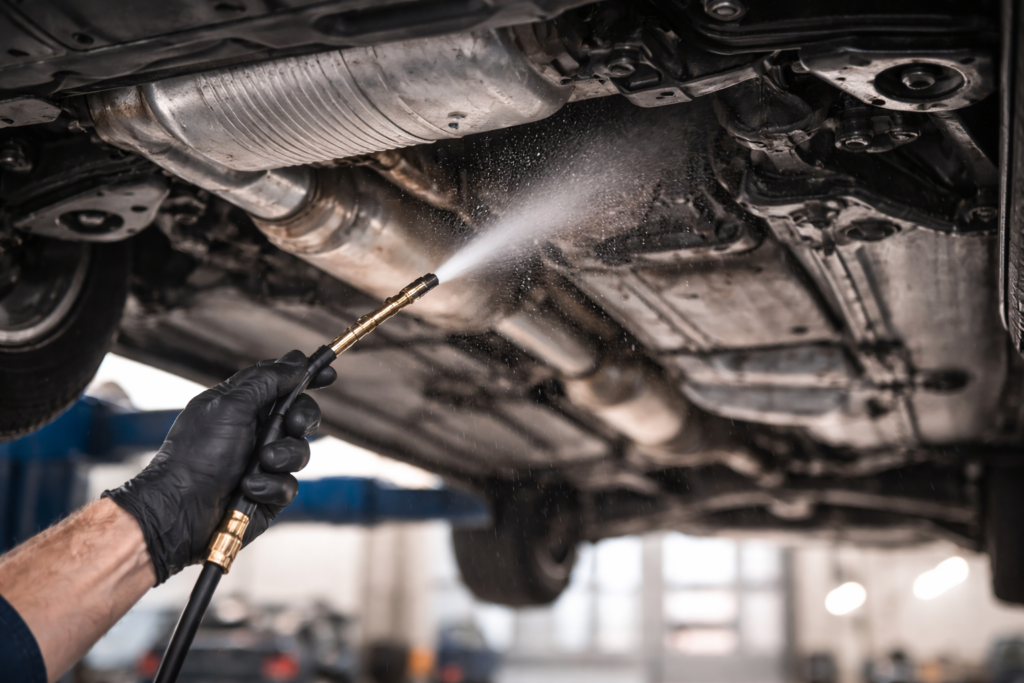
Mechanic applying rust-proofing to car header image

Rust-proofing is one of those vehicle protections people tend to skip—until rust shows up and the repair quotes get painful. The catch is that rust rarely starts where you can see it. It begins underneath the vehicle and inside seams, then spreads quietly until it affects safety, reliability, and resale value.

If you want to keep your car longer (and avoid big “surprise” repairs), rust-proofing is one of the highest-ROI things you can do—especially if you live near the coast or drive in wet, muddy, or salty conditions.

🛠️ What Is Rust-Proofing?

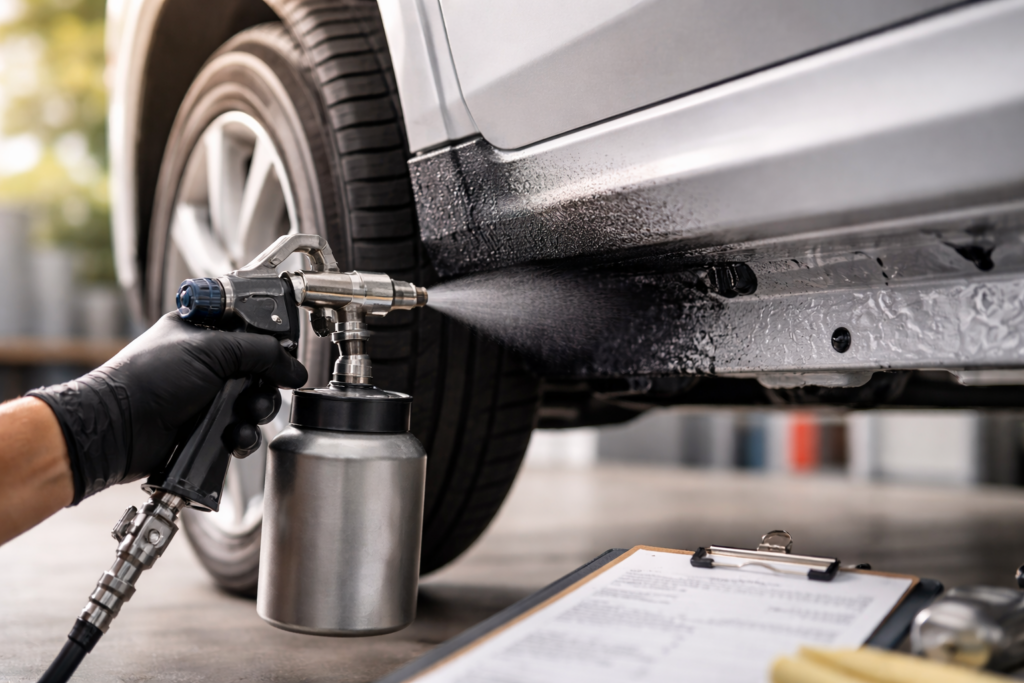
Rust-proofing is the process of applying a protective barrier to vulnerable metal areas of your vehicle to reduce oxidation (the chemical reaction that turns iron/steel into rust). A good rust-proofing approach focuses on two zones:

  • External exposure areas (underbody, wheel arches, suspension components)

  • Hidden cavities (door bottoms, rocker panels, chassis rails, seams, and folds where moisture sits)

Common rust-proofing methods (and what they’re best for)

1) Undercoating (rubberised or asphalt-based)

  • Creates a thick barrier on the underside of the car

  • Helps with stone-chip protection and road debris

  • Best for: highway driving, gravel roads, general underbody protection

  • Watch-outs: can trap moisture if applied over existing rust or if it cracks and lifts

2) Oil-based sprays (drip or dripless)

  • Creeps into seams and crevices, coating metal from the inside out

  • Great for hard-to-reach places where rust starts first

  • Best for: coastal driving, high humidity, vehicles kept long-term

  • Watch-outs: needs reapplication periodically (but that’s part of why it works well)

3) Electronic rust inhibitors

  • Uses electrical current to reduce oxidation (similar concept to cathodic protection)

  • Best for: owners who want an extra layer alongside physical coatings

  • Watch-outs: effectiveness can vary; typically not a replacement for physical protection

4) Factory rust protection

  • Most vehicles have some baseline protection from the factory

  • Best for: normal city driving in mild conditions

  • Watch-outs: often not enough for harsh environments (coastline, frequent wet driving, off-road)

💰 How Rust Costs You Thousands Over Time

Rust isn’t just cosmetic. It can affect parts that are expensive to repair—or unsafe to ignore. Once corrosion spreads, the fix is often more than “sand and paint.” It can mean replacing critical lines, panels, or structural sections.

Rust ProblemEstimated Cost
Replacing rusted brake lines$300–$800
Frame or chassis rust repair$1,500–$3,000+
Exhaust system replacement$500–$1,200
Body panel rust repairs$800–$2,500 per panel

Where the real costs come from

  • Labour: rust repair often involves cutting, welding, and refinishing

  • Parts replacement: rusted components are frequently cheaper to replace than repair

  • Hidden spread: visible rust is often the “tip of the iceberg”

  • Inspection failures: severe underbody rust can impact roadworthiness and insurance outcomes

In worst-case scenarios, heavy chassis or suspension corrosion can write off a vehicle—not because it won’t drive, but because it’s no longer economical or safe to repair.

🌧️ Why Rust-Proofing Matters More in Certain Conditions

Rust needs a few things to thrive: moisture, oxygen, and time. Add salt and abrasion (stone chips), and the process accelerates dramatically.

Rust-proofing is especially important if you drive in:

🌊 Coastal / high-humidity environments

Salt in the air and sea spray can settle on the underside of your car and speed up corrosion—even if you never drive on the beach.
Australia example: coastal areas like the Gold Coast can be harsh on underbodies because salty moisture is consistently present.

❄️ Snow + road salt regions

Road salt is highly corrosive. It clings to metal surfaces and gets trapped in seams and cavities.

🪨 Gravel, dirt roads, or construction zones

Stone chips can break the paint barrier and expose raw metal. Once bare metal is exposed, rust can begin quickly.

🛻 Off-road driving / water crossings

Mud and water pack into crevices and stay there. That trapped moisture is exactly what rust needs.

🔎 Signs Your Car Might Be Developing Rust

Rust rarely starts as a big, obvious problem. In most cases, it begins quietly in hidden areas—underneath the vehicle, inside seams, or behind trim—then spreads outward until it becomes visible (and expensive).

That’s why early detection matters: surface rust can often be treated and protected, but structural corrosion can require major repairs or even write off a vehicle.

🚩 Common signs of rust to watch for

1) Bubbling paint near wheel wells or doors

If your paint looks like it’s bubbling, blistering, or lifting—especially around:

  • wheel arches

  • door bottoms

  • tailgate edges

  • bonnet seams

…it often means rust has started underneath the paint. This happens when moisture gets into tiny cracks or stone chips and begins corroding the metal from the inside out.

2) Visible brown-orange spots on the underbody or under the hood

Rust spots underneath the vehicle are one of the earliest warning signs. Look for discoloration around:

  • chassis rails and crossmembers

  • suspension arms and mounting points

  • underbody seams and joins

  • brackets, bolts, and exposed metal edges

Even if it looks minor, rust spreads faster in areas that stay damp or collect road grime.

3) Unusual creaking or stiffness from the suspension

Rust doesn’t just affect panels—it can also affect moving components and fasteners. Corrosion can cause:

  • seized bolts

  • stiff bushings or mounting points

  • weakened suspension components over time

If your vehicle feels “older” suddenly, sounds creaky, or rides differently, it’s worth checking the underbody condition.

4) Holes forming in the floor pan or fenders

Once rust becomes perforation (holes), the damage is no longer superficial. This can impact:

  • structural integrity

  • safety in an accident

  • water leaks into the cabin

  • roadworthiness and inspection outcomes

Bottom line: If you can see rust, there’s often more hiding behind it—especially in coastal environments.

✅ Benefits of Rust-Proofing Your Vehicle

Rust-proofing isn’t just about keeping your car looking good. It’s about protecting the parts that cost the most to repair and keeping your vehicle safe, reliable, and valuable long-term.

1) Preserve Vehicle Value

A rust-free car:

  • looks better

  • sells faster

  • attracts more buyers

  • holds a stronger resale price

Rust is a major red flag for buyers because it suggests future repair risk. Even small visible rust can lead to lower offers, especially if it appears near wheel arches, doors, or the underbody.

2) Reduce Long-Term Repair Costs

Preventative rust-proofing is often under $1,000, while rust-related repairs can quickly blow out to thousands, especially when corrosion reaches:

  • brake lines

  • suspension mounting points

  • exhaust systems

  • chassis rails and floor pans

Rust-proofing is one of the best “pay now, save later” upgrades you can make—particularly if you plan to keep your vehicle for years.

3) Increase Safety

Rust can weaken critical components that keep your car safe and stable on the road. This includes:

  • brake line corrosion (risk of brake failure)

  • suspension arm corrosion (handling issues)

  • structural corrosion (reduced crash protection)

Even if your car still drives fine today, corrosion can silently reduce safety margins over time.

4) Extend the Life of Your Vehicle

Rust is one of the main reasons otherwise good cars get scrapped early. With proper protection, you can keep your vehicle:

  • roadworthy longer

  • mechanically reliable longer

  • structurally stronger for years

This is especially valuable for drivers who want to avoid upgrading vehicles frequently.

5) Peace of Mind

There’s a real confidence boost knowing your vehicle is protected—especially if you drive:

  • near the coast

  • in wet conditions

  • on gravel roads

  • in construction zones

  • off-road or through mud/water

Rust-proofing gives you that “protected from the inside out” feeling, not just a cosmetic fix.

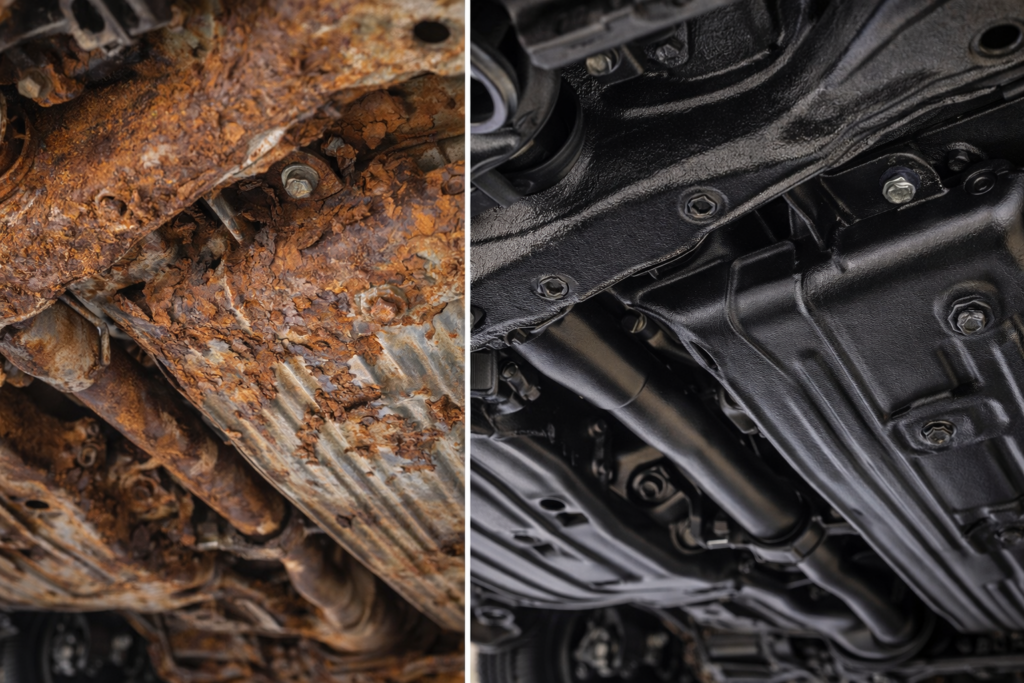
Rust vs protection undercarriage comparison

⏱️ When Is the Best Time to Rust-Proof?

Timing matters because rust-proofing works best before corrosion begins, not after it’s already advanced.

✅ Best times to rust-proof your car

When the car is new

This is the #1 best time. New vehicles haven’t yet developed:

  • stone chips

  • underbody exposure

  • seam corrosion

So protection can bond and perform at its best right from day one.

Before winter or wet seasons

In wet months, moisture and grime stick to the underside longer. In some areas, road salt also accelerates corrosion. Pre-season protection helps reduce exposure damage.

After purchasing a used car

Used cars often have unknown history. If there’s no evidence of prior rust protection, applying it early is smart—especially before coastal or wet-season driving.

🔁 How often should rust-proofing be reapplied?

Many oil-based rust protection treatments are designed to creep into seams and provide flexible coverage. Because of that, annual reapplications are often recommended, particularly if you drive in harsh conditions.


🧰 DIY vs. Professional Rust-Proofing

DIY rust-proofing can help in mild conditions, but it’s easy to miss the areas where rust actually begins.

Here’s how the two compare:

AspectDIYProfessional
CostLower ($100–$300)Higher ($400–$1,000)
CoverageMay miss critical areasThorough, includes hard-to-reach zones
LongevityShorterLonger-lasting and often guaranteed

Why professional rust-proofing usually wins

Professional services typically include:

  • full underbody access (hoist/lift)

  • correct prep and cleaning

  • cavity spraying inside seams and panels

  • even coverage across high-risk areas

  • product selection matched to local conditions

And because rust often starts in hidden cavities, professional application gives stronger long-term protection.

🏁 Final Thoughts: Protect Your Car Before It’s Too Late

Rust damage is one of the most costly—and most preventable—issues faced by car owners. Once corrosion spreads into structural areas, repairs become expensive fast and can permanently reduce the lifespan of your vehicle.

Rust-proofing is a smart, low-stress investment that can:

  • save you thousands in repairs

  • protect resale value

  • improve safety and reliability

  • keep your car stronger for longer

Don’t wait until rust takes hold. Protect your vehicle early, and you’ll get the benefits for years.

🧰 Need Expert Rust-Proofing on the Gold Coast?

If you’re looking for professional, high-quality rust-proofing designed for harsh Australian conditions—especially coastal exposure—trust SuperCool Southport. As local automotive specialists in vehicle protection, air conditioning servicing, and more, their team can help keep your car protected, reliable, and ready for the long haul.

📅 Book your rust-proofing appointment today and drive with confidence tomorrow!

Gold Coast Services

Supercool Car Air Conditioning © 2026 | Designed and developed by 123 Digital |Privacy Policy | Blog