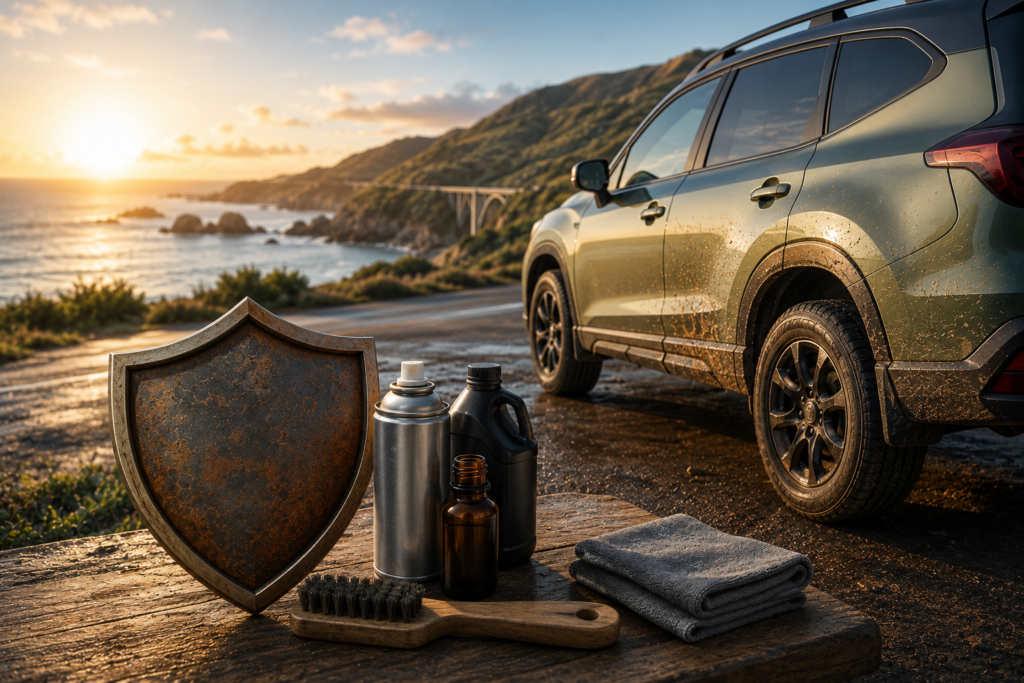
Rust prevention is one of the best ways to avoid premature vehicle deterioration, affecting everything from your car’s appearance to its structural integrity and resale value. While modern vehicles are built with factory corrosion protection, no vehicle is completely immune to rust. Daily exposure to moisture, road salt, mud, humidity, gravel, and harsh weather can gradually wear down protective coatings, leaving metal surfaces vulnerable to corrosion.
The good news is that rust is largely preventable with regular inspections, proper maintenance, and timely repairs. A proactive approach not only helps extend your vehicle’s lifespan but can also save you thousands of dollars in repair costs.
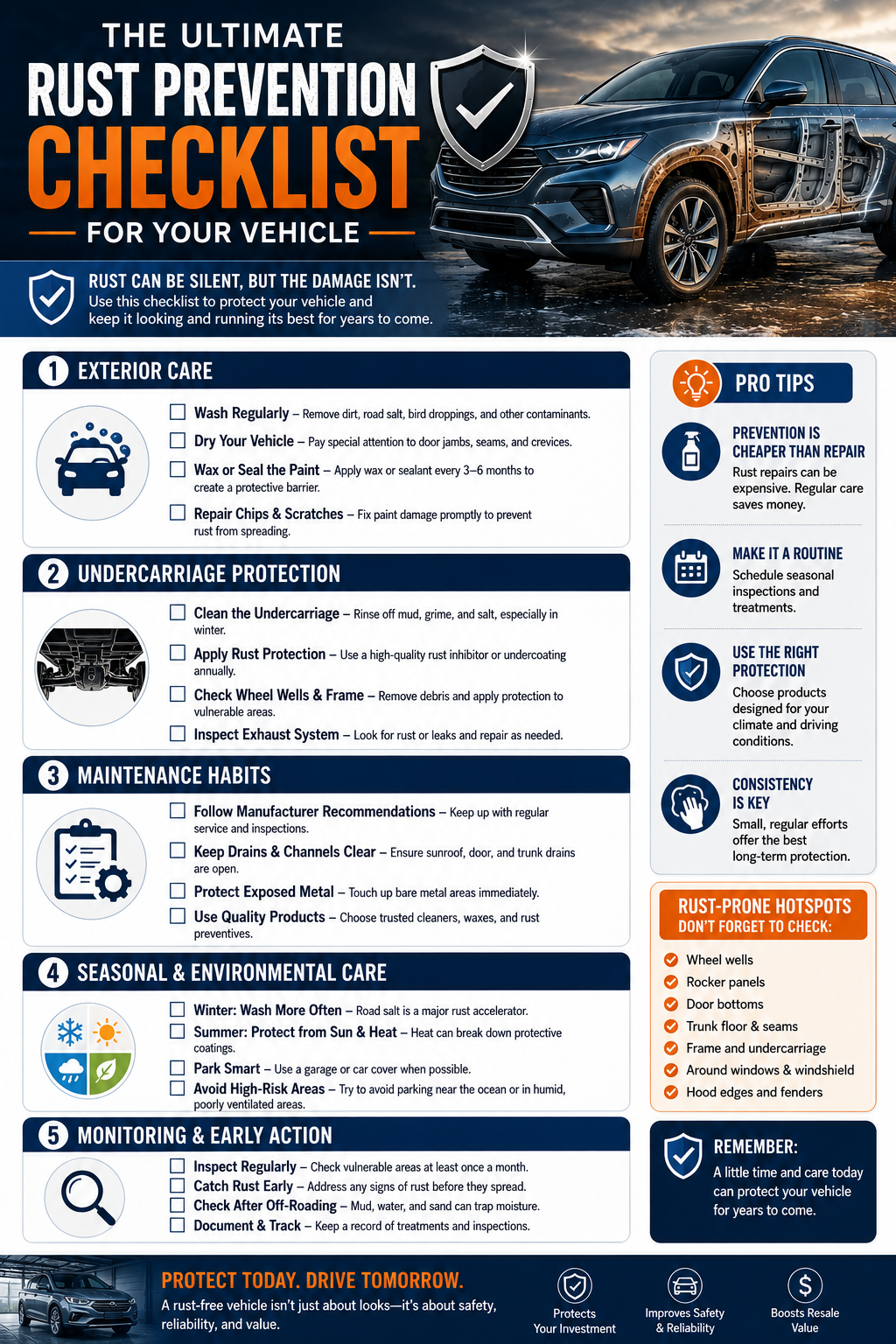
This ultimate rust prevention checklist provides a practical, step-by-step guide to help you protect your vehicle throughout the year.
Quick Checklist: How to Prevent Rust on Your Vehicle
For effective long-term rust prevention:
- Wash your vehicle regularly.
- Clean the undercarriage after driving on salted or muddy roads.
- Inspect the paint for chips and scratches.
- Repair damaged paint promptly.
- Apply wax or paint sealant to protect painted surfaces.
- Keep drain holes clean and unobstructed.
- Inspect the underbody and wheel wells.
- Check door bottoms and rocker panels for corrosion.
- Remove leaves, dirt, and debris from body seams.
- Keep your vehicle dry whenever possible.
- Follow the maintenance schedule for any rust-proofing treatment.
- Schedule annual professional rust inspections.
Following this checklist consistently can significantly reduce the likelihood of corrosion.
Why Rust Prevention Matters
Rust is more than a cosmetic problem. Left untreated, corrosion can spread beneath paint and protective coatings, eventually weakening important structural components.
Effective rust prevention helps:
- Extend vehicle lifespan
- Protect structural integrity
- Maintain resale value
- Reduce repair costs
- Improve vehicle safety
- Preserve exterior appearance
Preventive maintenance is almost always less expensive than repairing advanced rust damage. For drivers on the Gold Coast, where salt air, humidity, beach tracks, and wet conditions can increase corrosion risk, professional
car rust protection can provide added peace of mind.
Monthly Rust Prevention Checklist
Perform these inspections once every month to identify early signs of corrosion.
Inspect Your Vehicle’s Exterior
Walk around your vehicle and look for:
- Paint chips
- Scratches
- Peeling paint
- Surface rust
- Bubbling paint
- Stone damage
Even small chips can expose bare metal and allow oxidation to begin.
Wash Your Vehicle Thoroughly
Regular washing removes:
- Dirt
- Mud
- Road salt
- Bird droppings
- Tree sap
- Industrial fallout
Use a pH-balanced automotive shampoo rather than household detergents that may strip protective waxes.
Clean Door Jambs
Door jambs often collect:
Keeping these areas clean reduces trapped moisture that could encourage corrosion.
Check Drainage Holes
Modern vehicles contain drainage holes in:
- Doors
- Trunk
- Rocker panels
- Sunroof channels, if equipped
Blocked drains allow water to accumulate inside enclosed body panels.
Carefully remove dirt and leaves using compressed air or a soft plastic tool.
Every Three Months Checklist
Quarterly maintenance helps preserve protective coatings.
Apply Wax or Paint Sealant
Wax acts as a sacrificial barrier against:
- Rain
- UV rays
- Dirt
- Pollution
Synthetic sealants generally provide longer-lasting protection than traditional waxes.
Inspect Wheel Wells
Wheel wells receive constant exposure to:
Inspect for:
- Missing undercoating
- Rust spots
- Cracks
- Stone damage
Clean the Undercarriage
Most corrosion begins underneath the vehicle.
Pay attention to:
- Frame rails
- Suspension components
- Fuel tank area
- Brake lines
- Crossmembers
Use an underbody wash or have the vehicle professionally cleaned if necessary.
Every Six Months Checklist
Twice a year, perform a more comprehensive inspection.
Examine Common Rust Hotspots
Inspect:
- Rocker panels
- Door bottoms
- Hood edges
- Trunk seams
- Fuel filler door
- Spare tire compartment
- Floor pans
Look for discoloration, bubbling paint, or flaking coatings.
Inspect the Underbody Coating
If your vehicle has an undercoating, check for:
- Cracks
- Peeling
- Stone damage
- Areas where bare metal is visible
Any damaged areas should be evaluated and repaired as appropriate.
Check Suspension and Brake Components
Look for corrosion on:
- Brake lines
- Suspension arms
- Mounting brackets
- Fasteners
Surface rust on some exposed metal parts may be normal, but significant corrosion should be inspected by a qualified technician. Routine
car servicing can help identify brake, suspension, and underbody issues before they become more expensive repairs.
Annual Rust Prevention Checklist
At least once a year, perform a thorough inspection or schedule professional maintenance.
Professional Rust Inspection
A trained technician can inspect areas that are difficult to see, including:
- Hidden cavities
- Weld seams
- Frame rails
- Structural components
- Underbody coatings
Early detection often prevents more extensive repairs.
Review Rust-Proofing Protection
If your vehicle has been treated with an aftermarket rust-proofing product:
- Inspect its condition.
- Follow the maintenance or reapplication schedule recommended by the manufacturer or installer.
- Repair damaged protective coatings where appropriate.
SuperCool Southport offers
electronic rust protection and underbody rust protection from its Southport workshop for cars, 4WDs, utes, and vans.
Inspect Paint Protection
Evaluate the condition of:
- Wax
- Paint sealant
- Ceramic coating, if equipped
Refreshing these protective layers helps maintain resistance to environmental contaminants.
Seasonal Rust Prevention Checklist
Spring
After winter:
- Wash away accumulated road salt.
- Inspect underbody.
- Repair paint chips.
- Check wheel wells.
- Apply fresh wax if needed.
Summer
During warm weather:
- Wash regularly.
- Remove bug residue.
- Protect paint from UV exposure.
- Inspect after road trips.
Autumn
Before wet weather arrives:
- Clean drains.
- Apply paint protection.
- Inspect undercoating.
- Prepare for winter driving.
Winter
During winter:
- Wash weekly if roads are salted.
- Rinse underbody frequently.
- Remove packed snow from wheel wells.
- Repair any visible paint damage promptly.
Areas Most Vulnerable to Rust
Pay extra attention to these locations:
- Wheel arches
- Rocker panels
- Door bottoms
- Trunk seams
- Hood edges
- Undercarriage
- Frame rails
- Brake lines
- Suspension components
- Fuel filler area
- Spare tire well
- Exhaust system
These areas experience the highest exposure to moisture and road debris.
Habits That Help Prevent Rust
Small habits can make a significant difference over time.
Do:
- Wash your vehicle consistently.
- Dry your vehicle after washing.
- Remove mud promptly.
- Repair scratches early.
- Store your vehicle in a dry, well-ventilated area when possible.
- Keep floor mats dry.
- Inspect after long road trips.
Avoid:
- Leaving road salt on the vehicle.
- Parking for extended periods on wet grass.
- Ignoring paint damage.
- Allowing leaves to accumulate near drainage areas.
- Delaying rust repairs.
Signs You Shouldn’t Ignore
Early warning signs include:
- Orange or brown spots
- Bubbling paint
- Peeling paint
- Rough metal surfaces
- Flaking undercoating
- Water trapped inside doors
- Visible corrosion beneath the vehicle
Prompt attention to these signs can help limit further damage.
Printable Rust Prevention Checklist
Weekly
- Wash vehicle if exposed to rain, salt, or mud.
- Inspect for fresh paint chips.
- Remove dirt from wheel wells.
Monthly
- Wash thoroughly.
- Clean door jambs.
- Check drainage holes.
- Inspect underbody.
Quarterly
- Apply wax or sealant.
- Clean undercarriage.
- Inspect wheel wells.
- Check rocker panels.
Every Six Months
- Inspect undercoating.
- Check brake lines.
- Inspect suspension.
- Examine body seams.
Annually
- Schedule professional inspection.
- Review rust-proofing condition.
- Refresh protective coatings as needed.
Frequently Asked Questions
How often should I inspect my vehicle for rust?
A quick visual inspection every month and a more detailed inspection every six months is a practical routine. Vehicles driven in snowy, coastal, or humid environments may benefit from more frequent checks.
Does washing really help prevent rust?
Yes. Regular washing removes road salt, mud, and contaminants that can trap moisture and accelerate corrosion, especially when you also rinse the undercarriage.
Should I wax my car if it’s already rust-proofed?
Yes. Wax or paint sealant protects painted surfaces from moisture and contaminants, while rust-proofing typically protects hidden cavities and the underbody. They work together but serve different purposes.
Is factory rust protection enough?
Factory corrosion protection provides a good foundation, but additional maintenance and inspections are important, particularly in areas with road salt, high humidity, or coastal air.
Can I prevent rust completely?
No method can guarantee complete prevention under all conditions. However, regular maintenance, prompt repairs, and proper rust-proofing can significantly reduce the risk and slow the development of corrosion.
Final Thoughts
Rust prevention is not a one-time task. It is an ongoing maintenance routine that pays off throughout your vehicle’s life. By following this checklist, inspecting vulnerable areas regularly, washing away corrosive contaminants, and maintaining protective coatings, you can greatly reduce the risk of rust and keep your vehicle looking and performing its best.
Whether you drive through snowy winters, humid tropical climates, or coastal environments, consistency is the key to long-term rust prevention. If you are based in Southport or nearby areas, SuperCool Southport services drivers across the
Gold Coast service area from its Southport workshop.