

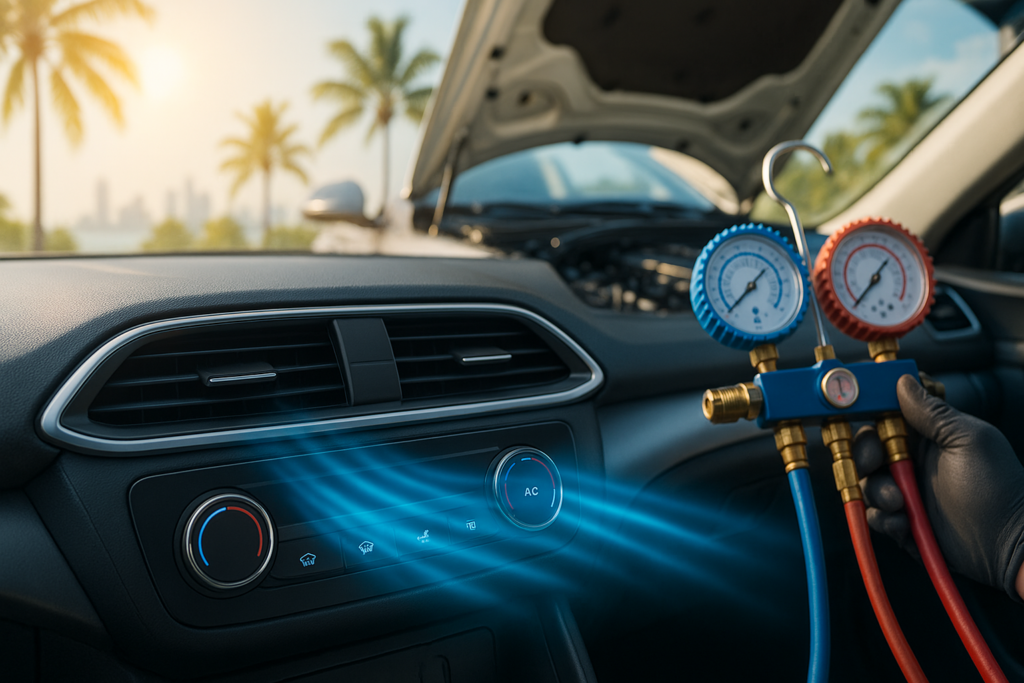
Is your car’s air conditioner no longer cooling like it used to? Does the air feel weak, warm, or inconsistent? If so, it might be time for a car AC regas. During the hotter months on the Gold Coast, a fully functioning AC system isn’t just a luxury—it’s essential for comfort and safe driving.
Whether you’re in Tallebudgera, Robina, Broadbeach, or anywhere in between, this guide walks you through everything you need to know about car AC regassing, including costs, the full process, benefits, and how to find reliable local services.
A car AC regas (also known as an aircon re-gas or refrigerant recharge) is the process of restoring your vehicle’s air conditioning system by replacing old, depleted, or contaminated refrigerant with fresh gas.
A professional regas typically includes:
For long-term performance, regular car air conditioning servicing helps prevent refrigerant loss and protects expensive AC components.
If the air coming through your vents feels warm, lukewarm, or inconsistent, your system may be low on refrigerant. Without enough refrigerant to absorb heat, your AC can’t cool effectively.
If you notice these symptoms, read why your car AC is not cooling and how to fix it fast.
Hissing or bubbling noises often point to refrigerant leaks caused by worn hoses, seals, or damaged components.
These issues are covered in this guide to common car AC problems and troubleshooting tips.
Musty or sour smells can indicate moisture buildup, mould, or bacteria inside the system. Low refrigerant can reduce the AC’s ability to remove humidity effectively.
If your AC takes much longer than usual to cool the cabin, your refrigerant level may be too low to maintain proper pressure and cooling efficiency.
Most vehicles require a regas every 12–24 months. Hot climates like the Gold Coast can accelerate refrigerant loss and increase system strain.
You can also follow these car AC maintenance tips to avoid costly repairs.
Costs vary depending on refrigerant type, vehicle size, and whether repairs are needed.
If you’re comparing service pricing, here’s a detailed guide on how much car AC repair costs.
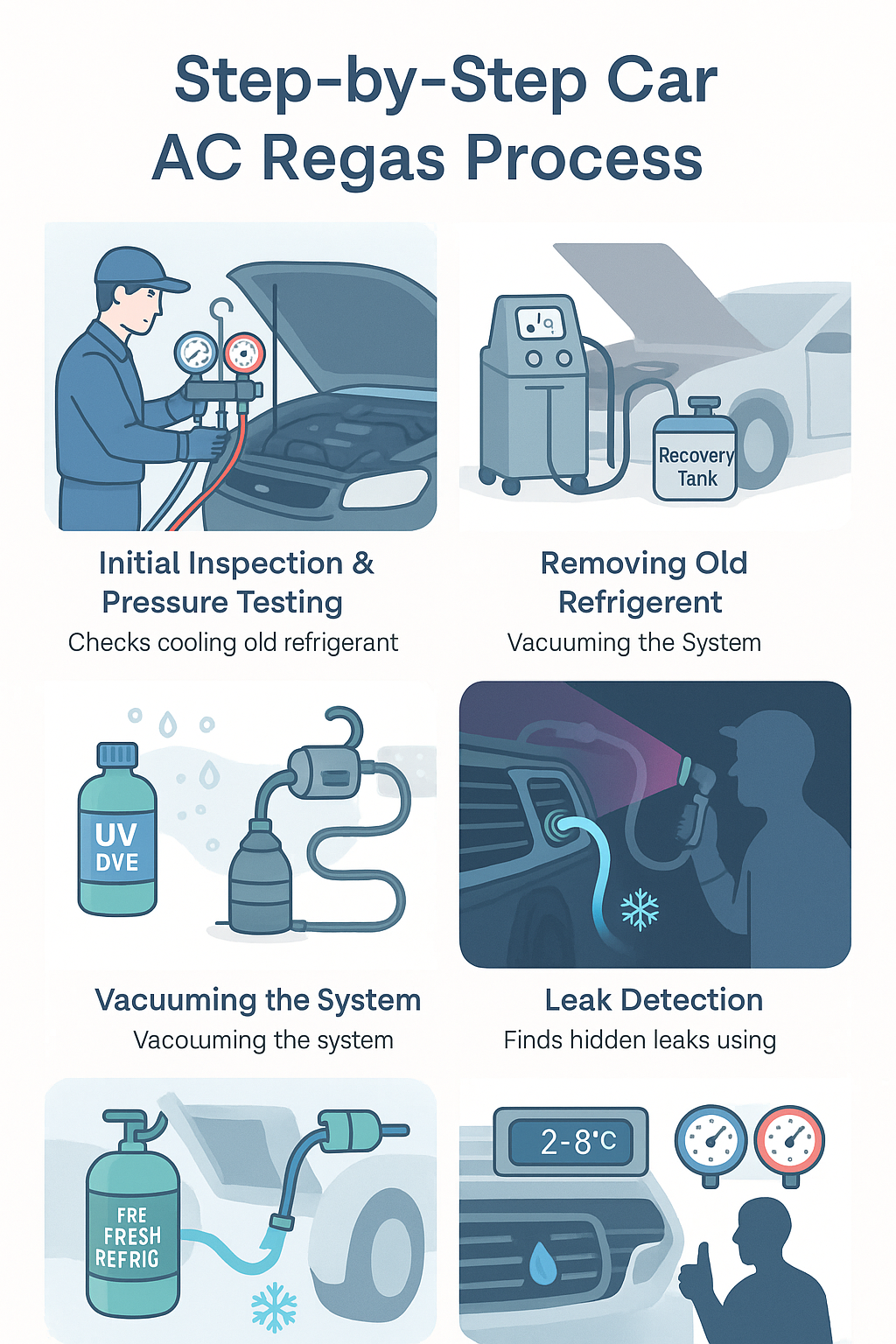
Technicians inspect refrigerant pressure, cooling performance, airflow, hoses, seals, and compressor operation.
Old refrigerant is safely removed using specialised recovery equipment to prevent contamination and moisture buildup.
A deep vacuum removes trapped moisture, air, and contaminants from the AC system.
Leak detection methods may include UV dye inspection, electronic leak detectors, and visual inspections.
The system is recharged with the correct refrigerant type and amount according to manufacturer specifications.
After refilling, technicians test cooling performance, vent temperature, airflow, and pressure stability.
Routine servicing also improves long-term reliability. Learn more about why regular car AC servicing is essential for hot summer drives.
Most vehicles require a regas every 12–24 months, depending on climate and usage frequency.
No. A regas restores refrigerant levels, but leaks must be repaired separately before the system can maintain proper cooling.
A standard car AC regas usually takes 30–60 minutes.
Sometimes. If mould or bacteria are already present, additional cleaning or antibacterial treatments may be required.
A well-functioning car air conditioning system is essential for comfort, safety, and efficient driving—especially in the warm Gold Coast climate. Regular AC regassing helps restore cooling performance, protect expensive components, and improve cabin air quality.
If your AC is blowing warm air, taking too long to cool, or hasn’t been serviced in over a year, now is the ideal time to book a professional inspection.
If your air conditioner isn’t cooling like it used to, get help from trusted professionals.
Visit SuperCool Southport for expert car air conditioning services, including AC diagnostics, leak detection, regassing, and system cleaning.
