The Ultimate Guide to Car AC Regas Cost, Process, and Benefits
Key Takeaways:
A car AC regas restores your air conditioner’s cooling performance by replacing old or low refrigerant.
Common signs you need a regas include weak airflow, warm air, strange noises, and foul smells.
Most vehicles benefit from a regas every 12–24 months, depending on usage and climate.
The regas process includes system evacuation, leak testing, and refilling the refrigerant to manufacturer specs.
Costs vary based on refrigerant type and vehicle model, but regassing is generally one of the most affordable AC services.
Always choose licensed, experienced AC technicians—especially in hot regions like the Gold Coast.
IntroductionIs your car’s air conditioner no longer cooling like it used to? Does the air feel weak, warm, or inconsistent? If so, it might be time for a car AC regas. During the hotter months on the Gold Coast, a fully functioning AC system isn’t just a luxury—it’s essential for comfort and safe driving.Whether you’re in Tallebudgera, Robina, Broadbeach, or anywhere in between, this guide walks you through everything you need to know about car AC regassing, including costs, the full process, benefits, and how to find reliable local services.
What Is a Car AC Regas?
A car AC regas (also known as an aircon re-gas or refrigerant recharge) is the process of restoring your vehicle’s air conditioning system by replacing old, depleted, or contaminated refrigerant with fresh gas. Refrigerant is the substance responsible for absorbing heat and producing cold air—so when levels drop, your AC simply can’t cool effectively.A professional regas typically includes the following steps:
1. Removing Old or Contaminated Refrigerant
Technicians extract the existing refrigerant from the system. This prevents mixing old gas with new gas and removes any contaminants that may affect performance.
2. Vacuuming the System to Eliminate Moisture and Air
A deep vacuum is applied to remove trapped air, moisture, and impurities. Moisture inside the AC can freeze, block the system, and cause long-term damage—this step is crucial.
3. Refilling the System with Fresh Refrigerant
The system is refilled with the correct type and amount of refrigerant according to your vehicle’s manufacturer specifications. This ensures proper cooling capacity and pressure balance.
4. Rebalancing and Testing System Pressure
Once refilled, the technician checks high and low pressure readings to confirm everything is functioning correctly. Balanced pressures ensure:
Efficient cooling
Smooth compressor operation
Even airflow
Reduced stress on AC components
Why Regassing MattersOver time, refrigerant levels naturally drop due to:
Small, slow leaks
Worn-out rubber seals and O-rings
Ageing hoses and fittings
General system wear
Even a slight decrease in refrigerant can lead to:
Warmer airflow
Slower cooling times
Increased fuel consumption
Extra strain on the AC compressor
A timely regas restores crisp, icy-cold air and ensures your AC system performs at its best—especially important in hot climates like the Gold Coast.
Signs You Need a Car AC Regas
If your car’s air conditioning isn’t performing like it used to, it may be time for a regas. Refrigerant gradually depletes over time, and even a small loss can dramatically affect cooling performance. Here are the most common signs your system needs attention:
1. AC Is Blowing Warm or Inconsistent Air
If the air coming through your vents feels warm, lukewarm, or randomly switches between cool and warm, that’s a strong indicator your system is low on refrigerant. Without enough refrigerant to absorb heat, your AC simply can’t cool effectively. You may also notice:
The cold air fades quickly after turning the AC on
Airflow feels weak or “thin”
The system cools only when driving fast, not when idling
This is the most common symptom drivers notice before booking a regas.
2. Unusual Hissing or Bubbling Sounds
A hissing or bubbling noise—especially after turning the car off—often points to refrigerant leaks. These sounds may come from:
Tiny leaks in hoses or O-rings
Cracked seals
Damaged evaporator or condenser components
Low-pressure areas in the system
Refrigerant leaks can worsen over time, so combining a regas with a leak detection test is crucial to avoid repeated issues.
3. Bad Odours Coming from Vents
If you notice a musty, damp, or sour smell when switching on the AC, it may be due to:
Low refrigerant, which reduces the system’s ability to remove moisture
Moisture buildup in the evaporator
Mould or mildew forming in the ducts
Bacteria thriving in humid conditions
Low refrigerant can reduce the system’s drying ability, allowing bacteria and mould to flourish—leading to unpleasant smells and reduced air quality.
4. AC Takes Too Long to Cool the Cabin
If your AC used to cool the car within minutes but now takes much longer, your refrigerant level may be too low to cool the evaporator effectively. Common signs include:
Cooling only happening once the car is moving
Very slow temperature drop inside the cabin
Warm air blowing at idle, then cooling slightly while driving
This usually indicates that your system is struggling to maintain optimal pressure.
5. It’s Been 12–24 Months Since Your Last Regas
Even without obvious symptoms, most vehicles require an AC regas every 12 to 24 months. Why? Because:
Refrigerant naturally evaporates through microscopic leaks
Seals dry out over time
Frequent AC use speeds up refrigerant loss
Heat and humidity (common on the Gold Coast) place added stress on the system
If it’s been a few years since your last regas, booking one proactively helps prevent problems before they appear.
Cost of a Car AC Regas
A car AC regas is generally affordable, but pricing can vary depending on the vehicle and the condition of the AC system. Here’s a more detailed breakdown:
Average Price Range
Standard AC Regas: $150–$250 Ideal for vehicles with no major leaks or faults—simply restoring cooling performance with a refrigerant top-up.
Leak Detection + Regas: $200–$350 Typically recommended when cooling is weak or inconsistent. This price includes UV dye testing and basic leak checks.
Hybrid, Electric, or High-End Vehicles: $250–$450 Luxury vehicles and hybrids often use more advanced refrigerant types and require additional labour and safety procedures.
Factors That Influence Cost
• Refrigerant Type
Different vehicles use different refrigerants.
R134a is common in older vehicles and is more affordable.
R1234yf is used in many newer models due to environmental regulations. It’s more expensive but offers improved efficiency and lower emissions.
• System Size and Refrigerant Capacity
Larger vehicles like SUVs, vans, and 4WDs need more refrigerant, increasing the cost of a regas.
• Existing AC Problems
If the technician discovers issues such as leaks, worn seals, or a failing compressor, additional repairs may be needed before completing the regas.
• Level of Service
Basic regassing is cheaper, but more comprehensive packages include:
Leak detection
Evaporator inspection
System cleaning
Pressure balancing These ensure long-term performance and reliability.
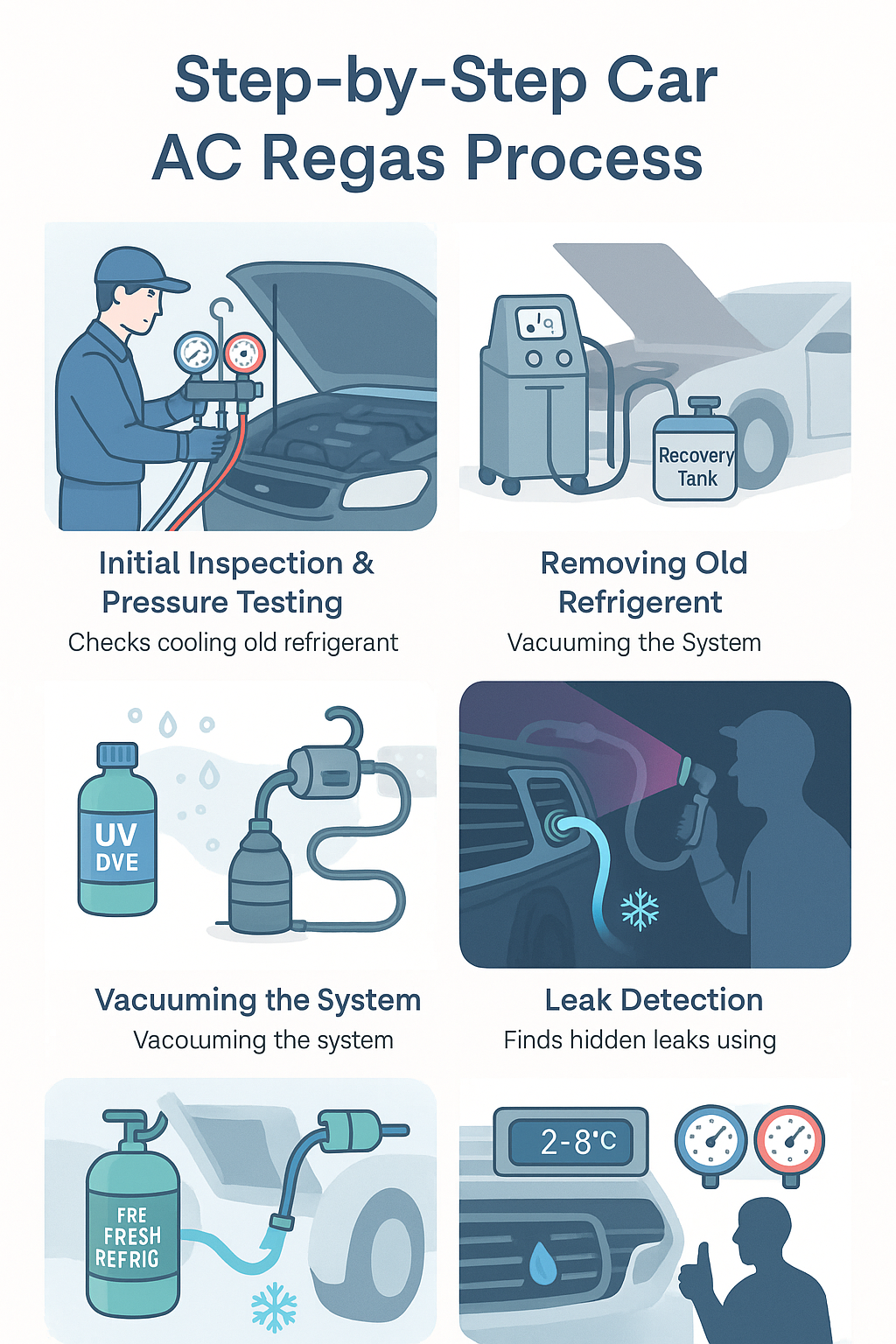
The Car AC Regas Process (Step-by-Step)
A professional car AC regas is far more than simply “topping up the gas.” It involves a series of precise, technical steps to ensure your system is clean, leak-free, and performing at maximum efficiency. Here’s a complete breakdown of what happens during a high-quality AC regas service:
1. Initial Inspection & Pressure Testing
Before any refrigerant is removed or replaced, the technician performs a full system check to evaluate:
Current refrigerant pressure (both high and low sides)
Cooling performance at the vents
Condition of hoses, seals, and AC lines
Compressor functionality, clutch engagement, and cycling
Condenser and evaporator health
Airflow strength and fan operation
This step helps identify whether the problem is simply low refrigerant or if deeper issues—like leaks or mechanical failure—are present.
2. Recovering (Removing) Old Refrigerant
Using specialised recovery equipment, the technician safely extracts the old refrigerant from your AC system. This step:
Prevents contamination
Removes any moisture or air trapped inside
Ensures the new refrigerant won’t mix with degraded gas
Protects the environment by safely capturing harmful substances
Old refrigerants often contain oil, moisture, and tiny debris that can affect performance if left inside the system.
3. Vacuuming the System
Next, a high-powered vacuum pump is connected to the AC system. This crucial step:
Removes all moisture, which can freeze into ice and block AC lines
Extracts air, which disrupts cooling efficiency
Eliminates contaminants, dust, and vapour
Creates a perfectly clean and pressurised environment for the new refrigerant
Most professional workshops vacuum the system for 30–45 minutes to ensure proper moisture removal—this step directly impacts how well the AC cools after the regas.
4. Leak Detection & System Integrity Check
Before refilling the system, technicians conduct leak detection to ensure the refrigerant won’t escape again. This can include:
UV dye inspection to highlight leaks under ultraviolet light
Electronic leak detectors that pick up tiny refrigerant molecules
Soap-bubble test on suspected connections
Visual inspection of common leak points:
O-rings
Hoses
Fittings
Valves
Condenser and evaporator
Compressor body
If any leaks are found, the technician may repair them on the spot or recommend further service before regassing continues.
5. Refilling with Fresh Refrigerant
Once the system is confirmed leak-free, your AC is recharged with the correct refrigerant type and amount for your vehicle. This step includes:
Adding the precise volume of refrigerant (overcharging or undercharging can cause damage)
Rebalancing system pressure
Adding oil (if required) for compressor lubrication
Ensuring refrigerant flows smoothly through all components
This is the heart of the regas process—replenishing the refrigerant that absorbs heat and delivers cold air.
6. Performance Testing & Final Checks
After the refill, the technician runs a complete performance evaluation to ensure everything works perfectly:
Vent temperature test
Pressure stability check
Compressor cycling assessment
Cooling speed and consistency
Fan speed and airflow strength
Inspection for post-regas leaks
Cabin comfort assessment
This confirms that the regas has restored optimal performance and that the AC system is operating safely and efficiently.
Benefits of a Car AC Regas
A professional regas offers immediate and long-term advantages for your vehicle. Here’s an expanded look at the benefits:
1. Restores Ice-Cold Airflow
Fresh refrigerant improves the system’s ability to absorb heat, resulting in crisp, icy-cold air almost instantly. This is especially noticeable during the Gold Coast summer.
2. Improves Driving Comfort and Safety
A well-functioning AC system keeps the cabin cool and prevents driver fatigue. Clear, cool air also helps reduce window fogging, improving visibility, especially during humid weather.
3. Enhances Fuel Efficiency
When refrigerant levels are low, the AC components—especially the compressor—work harder. This increases engine load and fuel consumption. Regassing allows the system to run smoothly with less strain on the engine.
4. Protects the Compressor
The compressor relies on refrigerant not only for cooling but also for lubrication. Low refrigerant levels can cause parts to grind, overheat, and eventually fail completely, which can be a very costly repair. A regas helps preserve this vital component.
5. Eliminates Moisture, Mould, and Odours
A properly charged AC system removes humidity from the cabin effectively. This reduces moisture buildup that leads to:
Mould
Mildew
Musty smells
Bacteria growth
Many workshops also include optional deodorising or anti-bacterial treatments during a regas.
6. Saves Money on Future Repairs
Routine regassing prevents issues that can snowball into expensive repairs such as:
Burst hoses
Frozen evaporators
Damaged seals
Burnt compressors
Persistent leaks
By maintaining the system’s pressure and performance, you avoid avoidable damage and extend the lifespan of your entire AC system.
Frequently Asked Questions (FAQs)
1. How often should I regas my car’s AC?
Most vehicles require a regas every 12–24 months, but this timeframe can vary depending on how often you use your AC and the climate you live in. On the Gold Coast, where AC systems work harder due to heat and humidity, some drivers may need a regas slightly sooner. If your cooling performance drops or airflow becomes weak before the 12-month mark, it’s worth scheduling a check.
Is regassing the same as re-gassing or a recharge?
Yes. “Regassing,” “re-gassing,” and “AC recharge” all refer to the same service—removing old refrigerant and refilling your system with fresh gas to restore optimal cooling.
What happens if I don’t regas my AC?
Skipping a regas can lead to:
Warm or inconsistent cooling
Poor fuel efficiency, as the system works harder
Moisture buildup, which can create mould and bad smells
Compressor damage, since refrigerant helps lubricate internal components
Over time, you may end up paying far more for repairs than the cost of a simple regas.
Is regassing safe for my vehicle?
Absolutely. When performed by a licensed and experienced technician, regassing is safe and beneficial for your AC system. They will use the correct refrigerant type for your vehicle and follow industry-standard procedures for pressure testing, leak detection, and refilling.
Can a regas fix leaks?
No—a regas itself does not repair leaks. However, reputable technicians will always perform leak detection before adding new refrigerant. If a leak is identified, they will either:
Fix it on the spot (if minor), or
Recommend further repairs before refilling the system
Leaks must be repaired to ensure the new refrigerant doesn’t escape.
How long does a regas take?
A typical car AC regas takes 30–60 minutes. This includes:
Extracting old refrigerant
Vacuuming the system
Leak testing
Refilling with fresh refrigerant
Performing a final cooling and pressure check More complex systems or vehicles with leaks may take longer.
Will a regas remove bad smells?
Sometimes. If bad odours are caused by low refrigerant leading to excess moisture, then a regas can help improve drying and reduce smells. However, if mould or bacteria are already present in the evaporator or ducts, you may also need:
Anti-bacterial treatment
AC system cleaning
Cabin filter replacement
Many workshops offer these services during a regas for complete odour removal.
How do I know if my AC needs regassing or a repair?
If your AC is cooling but not cold, a regas may be enough. If your system is:
Making unusual noises
Not cooling at all
Leaking water inside the cabin
Cycling on and off rapidly You may need repairs in addition to a regas. A technician can diagnose this during the pressure test.
Can I drive if my AC isn’t working?
Yes, your vehicle will operate normally. However, driving without proper AC can be:
Uncomfortable
Unsafe in humid or rainy weather (due to poor defogging)
Potentially harmful to your AC compressor if you continue running the system with low refrigerant
How long does a regas last?
A proper regas typically lasts 1–2 years, depending on climate, system condition, and usage frequency. If your AC loses cooling sooner than that, you likely have a leak or worn component.
Conclusion
A well-functioning car air conditioning system is essential for comfort, safety, and efficient driving—especially in the warm, humid climate of the Gold Coast. Regular AC regassing keeps your system cooling at its best, prevents compressor damage, and helps maintain clean, healthy airflow throughout your cabin. By recognising the early signs of low refrigerant and understanding the regas process, you can avoid costly repairs and ensure your system runs smoothly year-round.If your AC is blowing warm air, taking too long to cool, or hasn’t been serviced in over a year, now is the ideal time to book a professional regas. A quick visit to a qualified technician can restore icy-cold performance in under an hour. Stay cool and comfortable on every drive—schedule your car AC regas with Supercool Southport for fast, reliable service.
Need Fast, Reliable Car AC Regas on the Gold Coast?
If your air conditioner isn’t cooling like it used to, don’t wait—get professional help from trusted experts. For fast, affordable, and fully licensed car AC regas services, visit:👉 Supercool Southport: Professional AC diagnostics, leak detection, re-gassing, and system cleaning.Stay cool, stay comfortable, and protect your vehicle’s AC system with experienced technicians you can rely on.