As temperatures soar during the summer months, your car’s air conditioning system becomes more than just a comfort feature—it’s essential for safe and enjoyable driving. A properly functioning AC system helps keep you comfortable, improves concentration behind the wheel, and can even reduce driver fatigue during long trips.
However, hot weather places extra strain on your vehicle’s air conditioning system. Constant use, high cabin temperatures, clogged filters,
low refrigerant, and neglected maintenance can reduce cooling performance and lead to costly repairs.
The good news is that a few simple seasonal maintenance practices can keep your car’s AC running efficiently throughout the hottest months of the year. In this comprehensive guide, we’ll cover everything you need to know about preparing, maintaining, and optimizing your car’s air conditioning system to beat the heat.
Quick Answer: How Can You Keep Your Car AC Performing Well During Summer?
To keep your car’s air conditioner working efficiently during hot weather:
- Service the AC system before summer begins.
- Replace or clean the cabin air filter.
- Park in shaded areas whenever possible.
- Use a windshield sunshade.
- Vent hot air before turning on the AC.
- Run the AC regularly, even in cooler months.
- Check refrigerant levels if cooling decreases.
- Keep the condenser clean.
- Avoid overworking the system immediately after starting the car.
Following these tips can improve cooling performance, reduce wear on the system, and help prevent unexpected breakdowns.
Why Your Car AC Works Harder in Summer
During hot weather, the temperature inside a parked car can rise dramatically, especially under direct sunlight. When you start your vehicle, the air conditioning system must remove this excess heat before it can maintain a comfortable cabin temperature.
Several factors increase the workload on your AC system:
- High outdoor temperatures
- Direct sunlight
- Increased cabin heat
- Heavy traffic
- Frequent stop-and-go driving
- Dust and pollen buildup
- Long road trips
Routine maintenance ensures the system can handle these demanding conditions efficiently.
1. Schedule an AC Inspection Before Summer
The best time to service your air conditioning system is before peak summer temperatures arrive.
A professional inspection typically includes:
- Checking refrigerant pressure
- Inspecting hoses and seals
- Testing compressor operation
- Examining the condenser
- Checking blower motor performance
- Inspecting cooling fans
- Verifying vent temperature
Early maintenance can identify minor issues before they become expensive repairs.
2. Replace the Cabin Air Filter
One of the most overlooked maintenance items is the cabin air filter.
A dirty filter restricts airflow, making your AC work harder while reducing cooling performance.
Signs Your Cabin Air Filter Needs Replacement
- Weak airflow from vents
- Unpleasant odors
- Increased dust inside the cabin
- Windows fogging easily
- Reduced cooling efficiency
Many manufacturers recommend replacing the cabin air filter every
12,000 to 15,000 miles (20,000 to 24,000 km)
or according to the maintenance schedule in your owner’s manual.
3. Park in the Shade Whenever Possible
Reducing cabin temperature before you even start the vehicle helps your AC cool the interior faster.
Whenever possible:
- Park under trees
- Use covered parking
- Choose underground garages
- Face the windshield away from direct afternoon sunlight
Even partial shade can significantly reduce interior heat buildup.
4. Use a Windshield Sunshade
A reflective windshield sunshade blocks direct sunlight and helps reduce dashboard and cabin temperatures.
Benefits include:
- Faster cooling
- Less strain on the AC
- Protection against UV damage
- Reduced dashboard cracking
- More comfortable seats and steering wheel
It’s a simple, inexpensive accessory that can make a noticeable difference during hot weather.
5. Vent Hot Air Before Turning the AC to Maximum
When entering a hot car, the air trapped inside can be much warmer than the outside temperature.
Before turning the AC to its coldest setting:
- Open the doors or windows for 30–60 seconds.
- Allow trapped hot air to escape.
- Start driving with the windows slightly open.
- Turn on the AC after the initial heat has dissipated.
- Close the windows once the cabin begins cooling.
This reduces the initial workload on the air conditioning system.
6. Use the Recirculation Mode
After the cabin has cooled slightly, switch to
recirculation mode
.
Instead of continuously cooling hot outside air, the system cools already-conditioned cabin air, improving efficiency and helping the vehicle reach the desired temperature faster.
Recirculation mode is particularly effective during extremely hot afternoons and in heavy traffic.
7. Keep the Condenser Clean
The AC condenser, typically located in front of the radiator, releases heat removed from the cabin.
Over time, it can become blocked by:
- Dirt
- Leaves
- Insects
- Road debris
A dirty condenser reduces cooling efficiency.
Inspect it periodically and remove debris carefully using low-pressure water or have it cleaned during
routine vehicle servicing.
8. Run Your AC Year-Round
Many drivers only use their air conditioner during summer.
Running the AC for about
10–15 minutes every couple of weeks
, even during cooler months, helps:
- Lubricate compressor seals
- Circulate refrigerant
- Prevent seals from drying out
- Reduce the likelihood of leaks
Regular use contributes to long-term system reliability.
9. Watch for Signs of AC Problems
Recognizing early warning signs can help prevent larger repairs.
Common symptoms include:
If you notice any of these issues, have the system inspected promptly.
10. Don’t Ignore Unusual Smells
A musty or moldy smell when the AC is running may indicate moisture buildup within the evaporator or microbial growth in the ventilation system.
Possible solutions include:
- Replacing the cabin air filter
- Cleaning the evaporator (performed by a qualified technician)
- Using an HVAC cleaner designed for automotive systems, following the product instructions
- Running the fan briefly before turning off the engine to help dry the system
Persistent odors should be professionally diagnosed.
11. Keep Engine Cooling Systems in Good Condition
Your car’s air conditioning and engine cooling systems work together.
Problems with:
- Radiator
- Cooling fans
- Coolant levels
- Thermostat
can indirectly affect AC performance, especially in slow-moving traffic.
Regular engine cooling system maintenance supports consistent air conditioning performance.
12. Don’t Delay Refrigerant Service
Low refrigerant is one possible reason an AC system may not cool effectively. Because automotive AC systems are sealed, a low refrigerant level can indicate a leak.
A qualified technician can:
- Check refrigerant pressure
- Inspect for leaks
- Repair the source of the leak if needed
- Recharge the system according to the manufacturer’s specifications
Avoid adding refrigerant without diagnosing the underlying issue, as overcharging or ignoring leaks can damage the system.
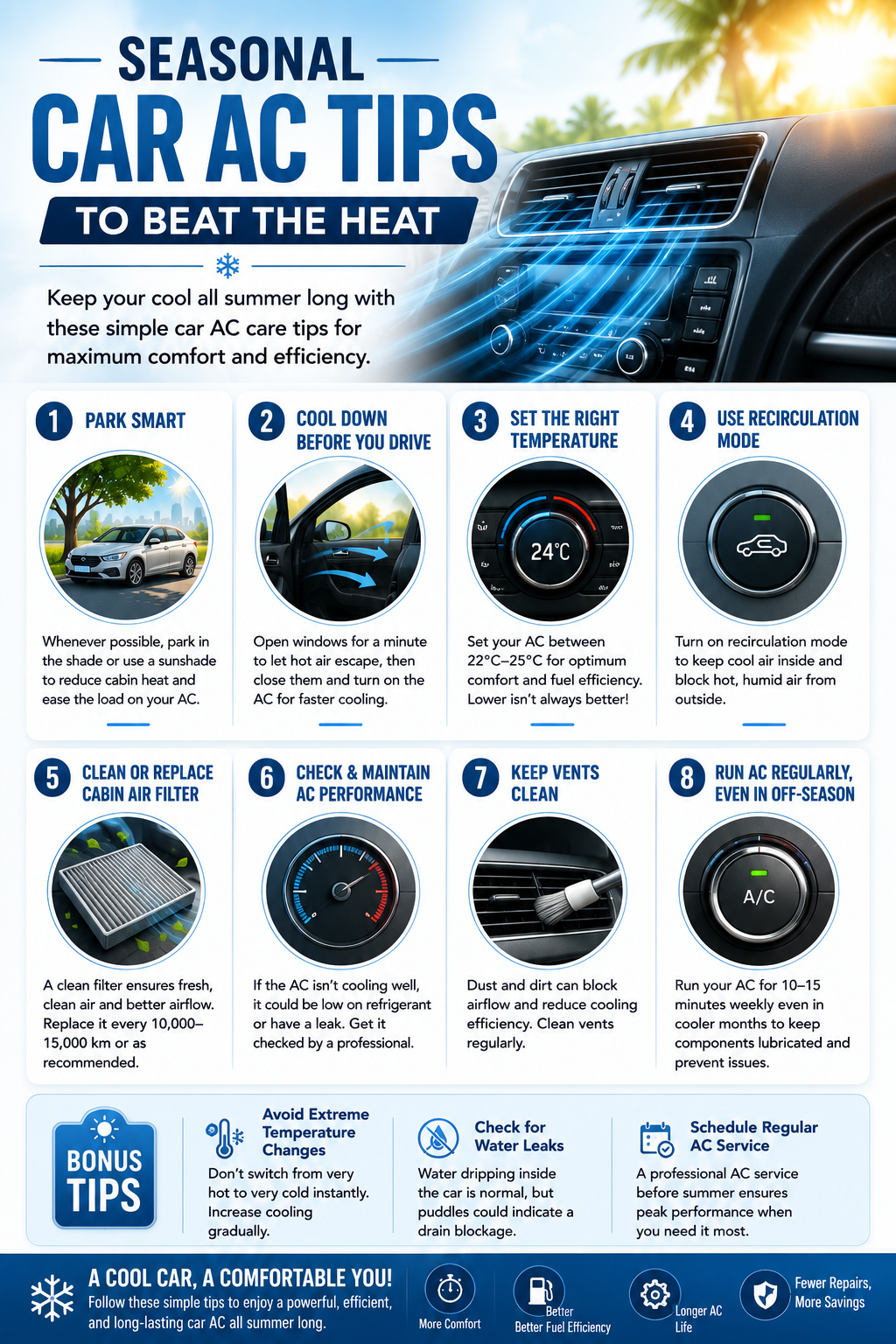
Common Summer Car AC Mistakes
Avoid these habits:
- Ignoring weak airflow
- Skipping cabin air filter replacement
- Parking in direct sunlight all day
- Running the AC at maximum immediately without venting hot air
- Delayingprofessional inspections
- Ignoring unusual noises or smells
- Neglecting engine cooling system maintenance
Small preventive actions can significantly improve AC performance and reliability.
Seasonal Car AC Maintenance Checklist
| Season |
Recommended Maintenance |
| Spring |
Inspect AC, replace cabin filter if needed, check condenser |
| Summer |
Monitor cooling performance, clean condenser, use sunshade |
| Autumn |
Run AC periodically, inspect airflow |
| Winter |
Operate AC occasionally to keep seals lubricated and refrigerant circulating |
Frequently Asked Questions
Why is my car AC not cooling well in hot weather?
Possible causes include a clogged cabin air filter, restricted airflow through the condenser, low refrigerant due to a leak, or a mechanical issue with the AC system. A proper inspection is the best way to identify the cause.
How often should I service my car’s AC?
Follow your vehicle manufacturer’s maintenance schedule. If cooling performance changes, unusual noises develop, or odors appear, have the system inspected sooner.
Does using recirculation mode help?
Yes. Once the cabin begins to cool, recirculation mode helps the system cool already-conditioned air, improving efficiency and reducing the workload on the AC.
Should I run my AC during winter?
Yes. Running the AC occasionally throughout the year helps circulate refrigerant and keeps seals lubricated, supporting long-term performance.
Can a dirty cabin air filter affect AC performance?
Yes. A clogged cabin air filter can restrict airflow through the vents, making the cabin feel less cool even if the AC system itself is functioning properly.
Final Thoughts
Your car’s air conditioning system plays an important role in keeping you comfortable and focused on the road during hot weather. With regular maintenance, smart driving habits, and timely inspections, you can improve cooling performance, extend the life of your AC components, and reduce the risk of unexpected repairs.
Preparing your AC system before summer, replacing the cabin air filter as recommended, keeping the condenser clean, and addressing any changes in performance early will help ensure reliable cooling throughout the season.
For professional diagnosis, regassing, and repairs, book a
car air conditioning service with SuperCool Southport.