

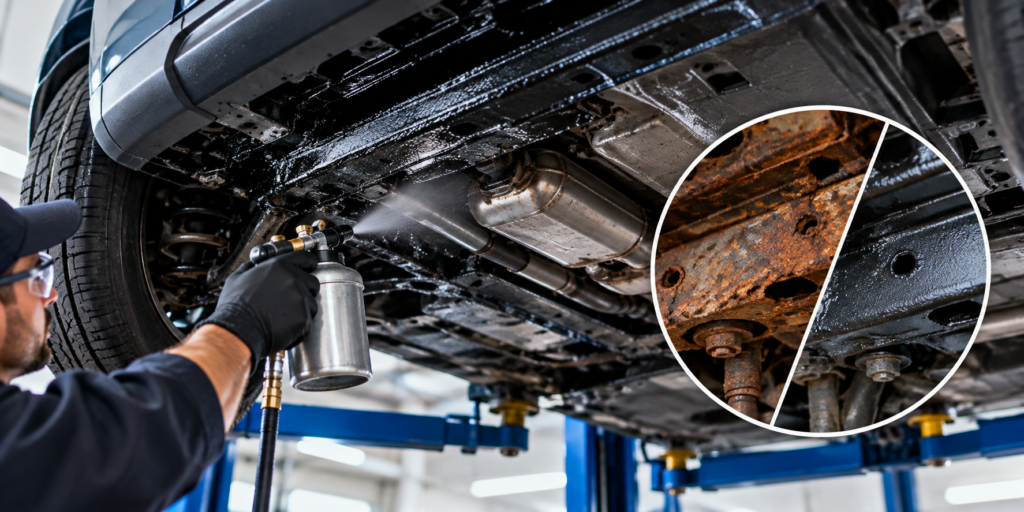
Rust can start as a small cosmetic issue, but given enough time, corrosion can damage metal components, weaken vulnerable areas, and turn a relatively simple maintenance concern into a much more expensive repair.
For Gold Coast vehicle owners in particular, exposure to salt air, humidity, moisture, sand, beach tracks, boat ramps, mud, and road grime can create conditions where corrosion becomes a long-term concern. Rather than waiting until rust is already obvious, taking a preventive approach can help protect vulnerable metal surfaces and reduce the chance of more complicated repairs later.
If you are looking at ways to protect your vehicle before corrosion becomes a bigger problem, SuperCool Southport provides car rust protection on the Gold Coast, including electronic, chemical, and underbody protection options suited to different vehicles and driving conditions.
Rust forms when iron or steel reacts with oxygen and moisture. The process can happen gradually, but certain environments can accelerate it, especially when a vehicle is regularly exposed to coastal air, rain, road contaminants, salt, mud, or standing moisture.
The issue is not simply what you can see on the outside of the vehicle. Moisture can collect in seams, cavities, wheel arches, underbody sections, brackets, fasteners, chassis components, and other areas that are difficult to inspect during normal day-to-day use.
By the time corrosion becomes clearly visible, it may already have progressed beyond a small surface spot.
| Stage of Corrosion | What You May Notice | Potential Consequence |
|---|---|---|
| Early surface corrosion | Discolouration, small rust spots, chipped coating | May be relatively straightforward to clean, treat, and protect |
| Developing corrosion | Flaking, bubbling paint, deeper rust around seams or fasteners | May require more preparation, repair, or replacement work |
| Advanced corrosion | Weak metal, holes, badly corroded structural or mechanical areas | Potentially expensive repairs, replacement components, fabrication, or welding |
This is why prevention can be easier to manage than dealing with extensive corrosion after it has already developed.
One of the biggest reasons to consider long-term rust protection is the potential to reduce corrosion-related repair costs over the life of the vehicle.
A small patch of early surface corrosion may only require cleaning, treatment, and protection. Once corrosion spreads deeper into panels, brackets, seams, mounts, or underbody sections, repairs can become more involved.
Depending on the area affected, fixing advanced corrosion may require:
A rust-protection system is designed to reduce exposure to the moisture and contaminants that encourage corrosion in the first place.
It is important to be realistic, however. Rust protection should not be treated as a guarantee that a vehicle will never develop corrosion. Its effectiveness depends on the treatment used, how well it is applied, the condition of the vehicle, environmental exposure, and ongoing maintenance.
SuperCool Southport offers several vehicle rust protection options, including electronic protection, with the appropriate approach depending on the vehicle and how it is used.
Many vehicle owners naturally focus on visible paintwork, but some of the more important corrosion-prone areas are underneath the vehicle or hidden behind panels.
Moisture, sand, road grime, and salt can reach areas such as:
These areas are not always easy to clean or inspect at home, which means corrosion may be developing for some time before an owner notices it.
That is one reason professional application can be useful. A proper rust-protection service should consider the vulnerable parts of the vehicle rather than simply applying a visible coating to easy-to-reach surfaces.
The cost of rust is not limited to replacement parts or repair labour.
If your vehicle needs substantial corrosion work, you may also need to deal with the inconvenience of having the vehicle off the road. That can mean organising alternative transport, changing work schedules, postponing trips, or losing access to a work vehicle while repairs are completed.
For tradespeople and businesses that rely on utes, vans, and commercial vehicles, unexpected downtime can be especially disruptive.
| Reactive Approach | Preventive Approach |
|---|---|
| Wait until corrosion becomes obvious | Inspect vulnerable areas periodically |
| Repair after damage has spread | Protect exposed metal before major corrosion develops |
| Potentially longer repair time | Maintenance can often be planned around your schedule |
| Greater risk of unexpected repair costs | Problems may be identified earlier during routine care |
Rust protection works best as part of a broader vehicle-maintenance routine rather than as a replacement for regular inspections. If you are already booking routine maintenance, SuperCool also provides car servicing and mechanical repairs from its Southport workshop.
Vehicle condition is one of the things prospective buyers tend to notice quickly.
Visible rust, bubbling paint, corroded fasteners, badly deteriorated underbody sections, or evidence of poor corrosion repairs can make a buyer more cautious. Even where the vehicle remains mechanically usable, corrosion can affect how well maintained it appears.
Taking steps to reduce corrosion may therefore help preserve the vehicle’s overall condition over time.
Of course, rust protection is only one factor affecting resale value. Buyers may also consider:
Rust protection should therefore be viewed as one part of keeping a vehicle in good condition rather than as a guaranteed way to increase its selling price.
Corrosion gradually removes material from affected metal. If the process is allowed to continue for long enough, a component that might otherwise have remained serviceable can eventually weaken or require replacement.
Preventive corrosion control can help slow this deterioration by limiting exposure to the conditions that promote oxidation.
This becomes increasingly important when you plan to keep a vehicle for many years.
The longer a vehicle stays in service, the more opportunities there are for moisture, salt, mud, sand, and road contaminants to reach exposed or vulnerable metal. Long-term ownership therefore makes ongoing corrosion prevention more relevant, particularly for vehicles frequently used in harsh environments.
Rust prevention can be particularly relevant on the Gold Coast because vehicles are frequently used around coastal environments.
Even if you do not drive directly on the beach, coastal air, humidity, frequent rain, boat ramps, wet roads, and salt contamination can all contribute to conditions where corrosion becomes more likely over time.
Vehicles used for beach driving, boating, off-road trips, construction work, or outdoor commercial use can face even greater exposure.
| Vehicle Use | Typical Corrosion Exposure | Why Protection May Be Worth Considering |
|---|---|---|
| Daily Gold Coast driving | Humidity, rain, coastal air, road grime | Long-term environmental exposure can accumulate over time |
| Beach driving | Sand, salt, moisture, wet underbody conditions | Salt and sand can reach difficult-to-clean underbody areas |
| Boat launching | Repeated exposure to wet and salty environments | Frequent moisture exposure can increase corrosion concerns |
| 4WD and off-road use | Mud, water, gravel, sand, debris | Contaminants can collect around underbody and chassis components |
| Work vehicles | Frequent driving, job sites, dirt roads, outdoor exposure | Preventive maintenance may help protect vehicles that need to stay in service |
SuperCool Southport provides rust-protection services for motorists from across the region. You can view its Gold Coast service area for more information about the suburbs commonly serviced from the Southport workshop.
There is no single rust-protection method that is automatically right for every vehicle.
A daily-driven passenger car that stays mainly on sealed roads has different exposure from a 4WD that spends weekends on beach tracks. Likewise, a new vehicle with clean metal surfaces is different from an older vehicle that already has visible corrosion.
SuperCool Southport lists electronic, chemical, and underbody rust-protection options, with the appropriate treatment depending on the vehicle, its current condition, and how it is used.
| Protection Type | General Approach | What to Discuss Before Choosing |
|---|---|---|
| Electronic rust protection | Uses an electronic corrosion-control system rather than relying only on a physical coating | Vehicle type, installation requirements, intended use, and existing condition |
| Chemical protection | Protective products are applied to suitable vulnerable areas | Coverage, preparation, product used, inspection needs, and reapplication intervals |
| Underbody protection | Creates a physical protective barrier over suitable areas underneath the vehicle | Current underbody condition, off-road use, beach driving, coating maintenance, and damaged areas |
If you are unsure which approach makes sense, start with how and where you use the vehicle rather than choosing a treatment based on the product name alone.
Rust prevention is not necessarily a one-time job.
Different systems have different inspection and maintenance requirements, and the amount of exposure your vehicle receives makes a difference. A 4WD that regularly travels on beach tracks or through mud may require more frequent cleaning and inspection than a passenger vehicle driven mainly on sealed suburban roads.
A sensible long-term corrosion-prevention routine can include:
These smaller maintenance steps are generally easier to plan for than discovering that extensive corrosion has already developed.
Rust protection works best as prevention. It should not be treated as a way to hide or permanently solve advanced corrosion that is already present.
If an older vehicle already shows rust, the existing condition should be inspected before deciding on treatment. Applying a coating over badly corroded metal without addressing the underlying problem may simply conceal deterioration rather than correct it.
Before booking rust protection for an older vehicle, tell the workshop about any corrosion you already know about, including:
This gives the technician a better starting point for discussing what protection is appropriate.
Even after rust protection has been applied, normal vehicle care still matters.
A protected 4WD that has spent the day on a beach should still be cleaned appropriately. A work ute covered in mud should still have accumulated debris removed. Damaged coatings should still be inspected, and routine mechanical maintenance should continue.
Think of rust protection as one layer of a broader maintenance plan rather than a substitute for looking after the vehicle.
If you want one Southport workshop to help with several areas of vehicle maintenance, SuperCool provides car air conditioning, rust protection, servicing, and mechanical repair services from its Gold Coast workshop.
Whether rust protection is worthwhile depends on your vehicle, how long you intend to keep it, its current condition, and the environments where it is driven.
It may be particularly worth considering if your vehicle:
Before choosing a treatment, ask what system will be used, which areas will be protected, how the vehicle will be prepared, what maintenance is required afterward, and whether future inspections or reapplication will be necessary.
| Question | Why It Matters |
|---|---|
| What type of rust protection is being recommended? | Electronic, chemical, and underbody treatments work differently. |
| Which parts of my vehicle will be treated? | You want to understand the actual coverage rather than assuming every surface is protected. |
| Does the vehicle need preparation first? | Cleaning, drying, inspection, or addressing existing corrosion may be necessary. |
| How often should it be inspected? | Protection can be damaged or wear over time depending on use. |
| Will I need reapplication? | Some treatments require ongoing maintenance to remain effective. |
| What should I do after beach or off-road driving? | Cleaning and maintenance remain important even after protection is installed. |
No rust-protection system should be treated as a guarantee that corrosion will never occur. The effectiveness of any treatment depends on the vehicle, existing condition, application quality, environmental exposure, and ongoing maintenance.
It can be particularly relevant because Gold Coast vehicles may be exposed to coastal air, humidity, beaches, boat ramps, rain, sand, and other conditions that contribute to corrosion. The right approach depends on where and how you use your vehicle.
It may be worth considering if you plan to keep the vehicle for a long time or regularly use it in coastal, beach, boating, off-road, or other high-exposure environments. Applying protection before significant corrosion develops can also be easier than addressing rust later.
Potentially, but existing corrosion should be assessed first. Rust protection is designed to help prevent or slow corrosion; it is not a substitute for repairing significant rust damage that is already present.
Yes. Rust protection should not replace normal cleaning. Salt, sand, mud, and contaminants should still be removed appropriately, particularly from underbody areas and other places where debris can collect.
SuperCool Southport provides Gold Coast car rust protection from its workshop at 51 High Street, Southport. The business services motorists from Southport and surrounding Gold Coast suburbs.
Long-term rust protection is ultimately about dealing with corrosion before it becomes a much bigger problem.
By reducing exposure to moisture, salt, sand, mud, and other corrosive contaminants, an appropriate protection system can help preserve vulnerable metal areas, reduce the likelihood of more involved repairs, and make long-term vehicle ownership easier to manage.
The best approach depends on your vehicle and how you actually use it. A daily driver, beach-going 4WD, boat-towing ute, and commercial work vehicle can all face different levels of exposure.
If you are considering rust protection, SuperCool Southport can discuss the available options based on your vehicle, its existing condition, and where it is driven. Visit the Gold Coast rust protection service page or explore SuperCool’s Gold Coast service area to learn more.
Supercool Car Air Conditioning © 2026 | Designed and developed by 123 Digital |Privacy Policy | Blog

No: AU01712