

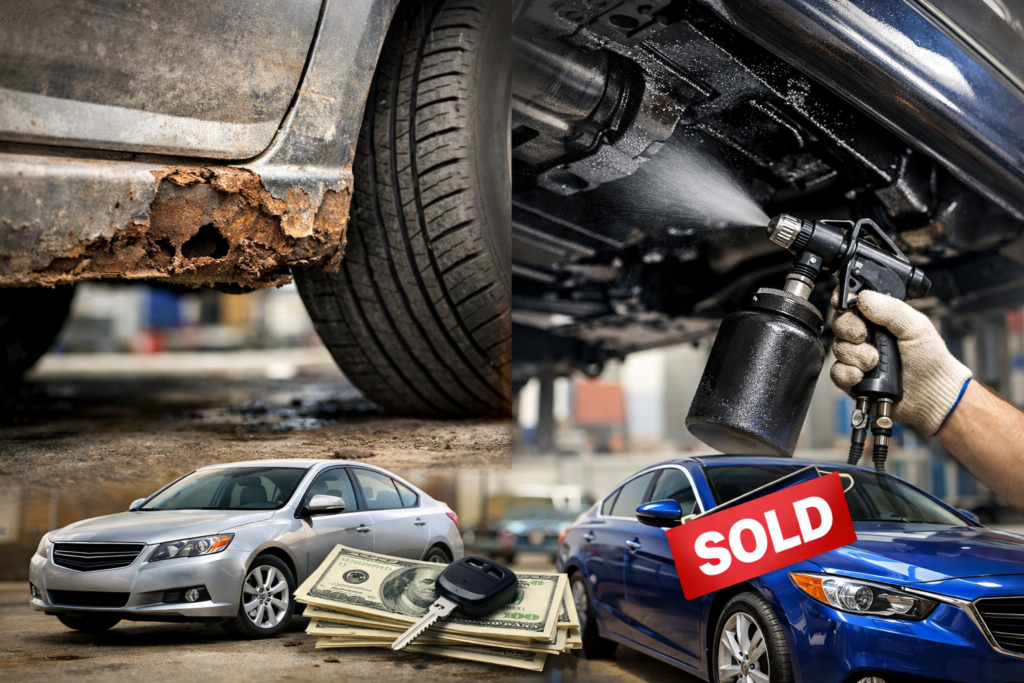
When it comes to maintaining your car’s resale value, most owners focus on routine maintenance, low mileage, and keeping the exterior clean. While these factors are important, one critical aspect that often gets overlooked is rust prevention.
Rust can quietly damage your vehicle from the inside out, weakening structural components and ruining its appearance. Over time, this deterioration can significantly reduce your car’s market value. Investing in professional rust-proofing is a proactive way to protect your vehicle—and maximize its resale price when it’s time to sell or trade in.
Rust-proofing is a protective treatment designed to prevent corrosion on your vehicle’s metal surfaces. It works by applying specialized coatings that block moisture, salt, and air—three key elements that cause rust.
These treatments are typically applied to high-risk areas, including:
By creating a protective barrier, rust-proofing prevents oxygen and moisture from reacting with metal, which is the main cause of rust formation.
Rust is more than a surface-level flaw. While it may start as a small patch or bubble in the paint, it often points to deeper corrosion issues that can affect a vehicle’s safety, appearance, and overall marketability. For used-car buyers, rust is a warning sign that the car may require expensive repairs or may not hold up well over time.
One of the biggest concerns with rust is its effect on a vehicle’s structural integrity. Corrosion can weaken key components such as the frame, chassis, suspension mounts, and underbody. Once rust spreads to these areas, the vehicle may become less safe to drive and more expensive to repair. Buyers are often cautious about hidden rust damage because it can compromise both performance and long-term reliability.
First impressions matter when selling a vehicle. Visible rust spots, bubbling paint, discoloration, and corrosion around wheel wells or door edges can make even a mechanically sound car look neglected. Many buyers associate rust with poor maintenance, which can lower trust and reduce their willingness to pay a competitive price.
Repairing rust is rarely simple or cheap. In many cases, corrosion must be sanded down, treated, and repainted, while more advanced rust damage may require replacing entire panels or structural parts. Because rust can spread beneath the surface, buyers often assume the problem is worse than it appears. As a result, they may negotiate aggressively, expect a lower selling price, or avoid purchasing the vehicle altogether.
In some areas, excessive rust can prevent a vehicle from passing roadworthiness or safety inspections. Corrosion in critical areas such as the frame, brake lines, or suspension components may make the car legally or mechanically unfit for the road. This creates an added barrier for resale, since buyers do not want to deal with inspection failures or the cost of bringing the vehicle back into compliance.
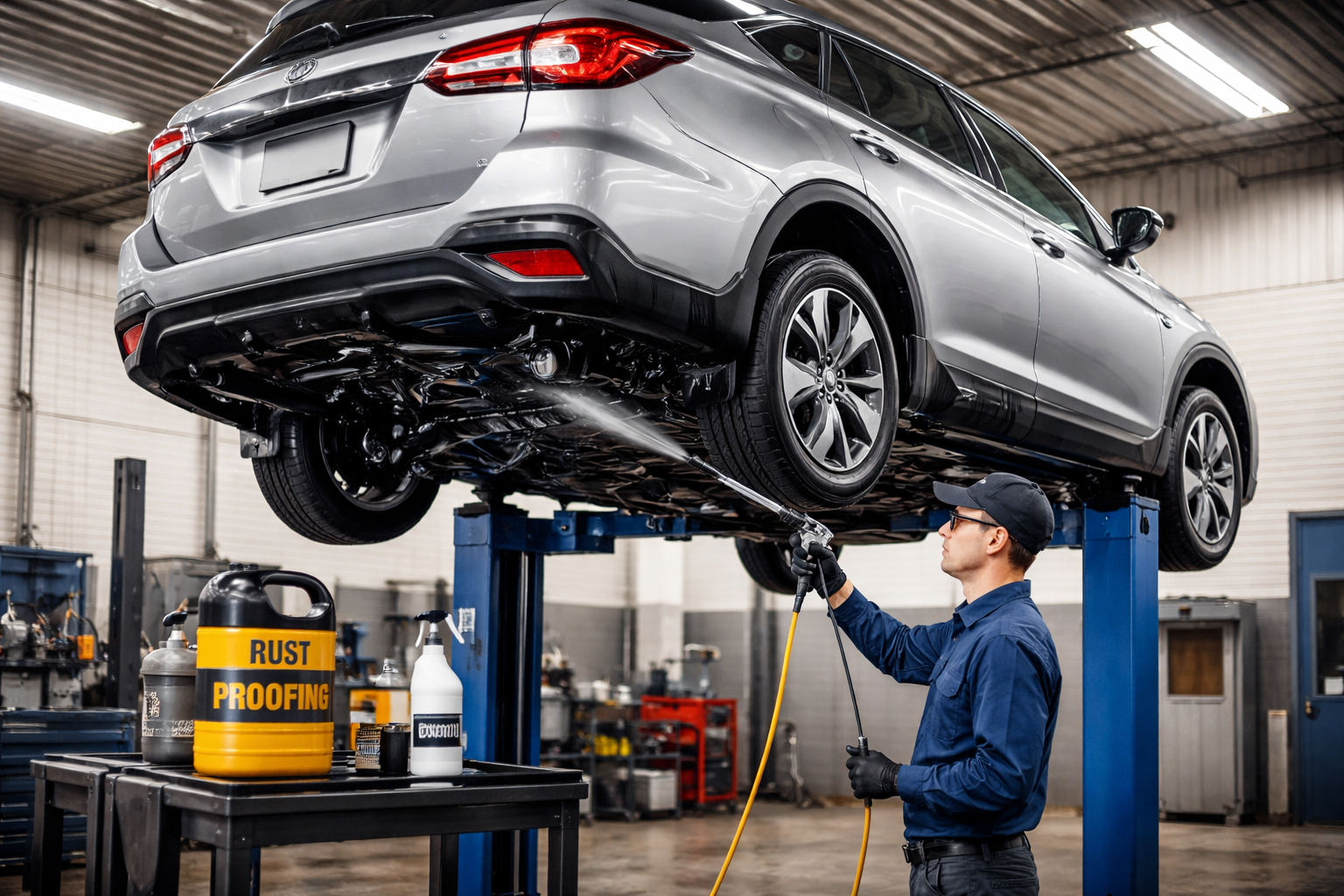
Rust-proofing helps preserve your car’s condition over time, which can directly support a higher resale or trade-in value. By preventing corrosion before it starts, this treatment protects both the appearance and structural health of the vehicle.
Rust-proofing helps protect essential metal components from moisture, salt, and environmental exposure. This reduces the risk of corrosion in critical areas like the undercarriage, frame, and chassis. A vehicle that remains structurally sound is far more attractive to buyers and typically commands a stronger resale price.
A rust-free vehicle looks cleaner, newer, and better cared for. Rust-proofing helps prevent corrosion from developing on body panels, around door edges, and in other visible areas. Since appearance plays a major role in resale value, keeping the exterior in good condition can help your car stand out in the used market.
When buyers see a vehicle with no visible rust and a record of preventive care, they are more likely to view it as reliable. Proof of rust-proofing treatments can serve as evidence that the car has been properly maintained. This added reassurance can make buyers more comfortable and reduce resistance during price negotiations.
Vehicles protected against rust generally stay in better overall condition for longer. Rust-proofing slows the deterioration caused by water, road salt, and humidity, helping the vehicle remain roadworthy and visually appealing over the years. A longer-lasting vehicle naturally becomes more desirable in the resale market.
Dealerships assess a car’s body condition, undercarriage, and structural soundness when determining trade-in value. A rust-free vehicle is usually seen as lower risk and easier to resell. Because of that, cars with minimal or no corrosion are often more likely to receive stronger trade-in offers than vehicles showing visible rust damage.
Choosing the right rust-proofing method can make a big difference in how well your vehicle resists corrosion over time. Each treatment offers different levels of protection, maintenance, and cost, so understanding your options can help you select the best solution for preserving your car’s condition and resale value.
Oil spray rust-proofing is one of the most common and widely used methods. It works by applying a thin, oil-based formula that seeps into seams, joints, and other hard-to-reach areas where moisture can collect. This makes it especially effective for older vehicles or cars that may already have small areas vulnerable to corrosion.
There are two main types: drip and non-drip formulas. Drip oil sprays continue to flow into tight spaces after application, while non-drip versions are thicker and create a more controlled coating.
Best for: older vehicles, daily drivers, and cars exposed to wet or salty conditions
Main advantage: reaches hidden areas effectively
Maintenance: usually requires annual reapplication for continued protection
Electronic rust protection systems use a small electric current that is intended to slow down the corrosion process. These systems are marketed as a modern, low-maintenance solution for rust prevention.
However, results can vary depending on the vehicle, environment, and installation quality. While some car owners consider it a useful added layer of protection, others view it as less reliable than physical barrier methods such as oil sprays or undercoating.
Best for: drivers looking for a supplementary rust-prevention option
Main advantage: minimal mess and low ongoing maintenance
Consideration: effectiveness can be mixed depending on real-world conditions
Undercoating involves applying a thick protective layer to the underside of the vehicle. This treatment is designed to shield the undercarriage from water, mud, road salt, gravel, and other debris that can damage exposed metal over time.
Because the undercarriage is one of the most rust-prone parts of a vehicle, undercoating is a popular choice for drivers in areas with heavy rain, rough roads, or salted streets. It adds a strong physical barrier that helps reduce wear from daily driving conditions.
Best for: vehicles driven in wet climates, snowy regions, or on rough roads
Main advantage: strong protection for the underbody
Ideal use: preventing corrosion caused by road salt and debris impact
Permanent rust-proof coatings are typically applied once and designed to provide long-lasting protection for several years. These coatings often use durable chemical formulas that bond to the vehicle’s metal surfaces and create a resilient shield against moisture and corrosion.
Although this option usually comes with a higher upfront cost, it can appeal to car owners who want lower maintenance and longer-term protection without frequent reapplication.
Best for: newer vehicles and long-term owners
Main advantage: long-lasting protection with minimal upkeep
Consideration: higher initial cost compared to other treatments
Timing plays an important role in how effective rust-proofing will be. Applying treatment before corrosion begins is always the best strategy, since preventing rust is much easier and more affordable than repairing it later.
The best time to rust-proof a vehicle is when it is still new. Applying protection early helps stop moisture, road salt, and contaminants from reaching bare metal before corrosion has a chance to develop. Starting early can help preserve both the vehicle’s condition and its long-term resale value.
Moisture is one of the main causes of rust, which makes seasonal timing especially important. Applying rust-proofing before the rainy season or before winter weather sets in helps prepare your vehicle for the harshest driving conditions. In areas where roads are treated with salt, this protection becomes even more valuable.
Coastal environments can accelerate rust because salt in the air settles on metal surfaces and promotes corrosion. If you live near the ocean or regularly drive in seaside areas, rust-proofing is a smart preventive measure that can help protect your vehicle year-round.
Even with professional rust-proofing, everyday maintenance plays a major role in protecting your vehicle from corrosion. Good habits can help extend the life of the treatment and preserve your car’s condition for years to come.
Dirt, mud, road grime, and salt can build up quickly on your vehicle’s exterior and underbody. Washing your car regularly helps remove corrosive materials before they have a chance to damage exposed metal surfaces. Pay special attention to the undercarriage, wheel wells, and lower panels, where moisture and debris often collect.
Moisture is one of the biggest contributors to rust formation. After heavy rain or a car wash, drying your vehicle can help reduce the amount of water left sitting on vulnerable surfaces. This is especially helpful in humid or coastal environments where moisture lingers longer.
Small paint chips and scratches may seem minor, but they can expose bare metal to air and water. Over time, these damaged spots can become starting points for rust. Touching up paint damage as soon as possible helps protect the bodywork and keeps corrosion from spreading.
Whenever possible, park your vehicle in a garage or under a covered space. Protection from rain, dew, and direct environmental exposure can go a long way in preventing rust. Covered parking is particularly beneficial if you live near the coast or in an area with frequent storms or high humidity.
In most cases, yes—especially if you plan to keep your car for several years or want to protect its resale value. The cost of rust-proofing is relatively small when compared to the potential loss in value caused by visible corrosion, structural damage, or costly repairs later on.
Rust can make a vehicle harder to sell, lower buyer confidence, and reduce trade-in offers. By investing in rust-proofing early, you are taking a simple preventive step that can help maintain your car’s condition, appearance, and long-term market value. In many cases, it can be the difference between selling your car quickly at a strong price and struggling to sell it at a discount.
Rust-proofing is one of the smartest long-term investments you can make for your vehicle. While it may not be as noticeable as a polished exterior or a freshly detailed interior, its impact on your car’s condition and resale value can be substantial. Preventing rust before it starts helps protect the structure, appearance, and reliability of your vehicle over time.
If you are serious about maintaining your car’s value, rust-proofing should not be treated as an optional extra. It is an essential part of long-term vehicle protection and a practical way to preserve your return when it is time to sell or trade in.
