

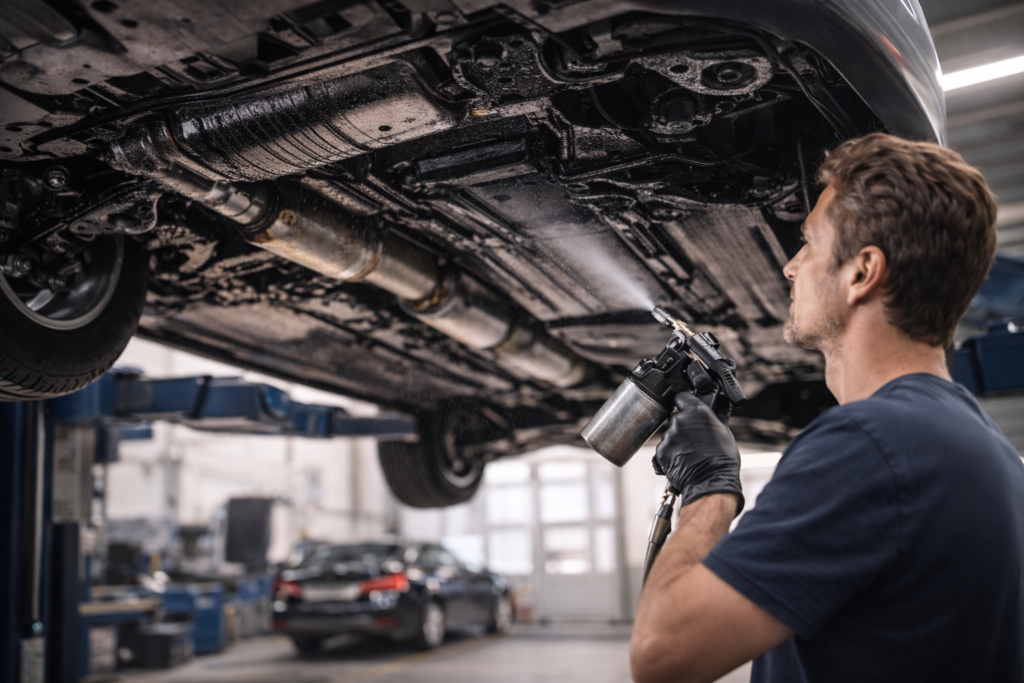
Your car’s underbody is the most vulnerable part of the vehicle — constantly exposed to water, salt, dirt, gravel, mud, and harsh road conditions. While it might be out of sight, rust on your undercarriage can quietly spread for months (or years) before you notice it — and by then, repairs can be expensive.
That’s where underbody rust proofing comes in. It’s one of the smartest long-term protection steps you can take, especially if you live near the coast, drive in wet conditions, or plan to keep your vehicle for years.
In this guide, we’ll break down what underbody rust proofing is, why it matters, what types are available, typical costs, pros and cons, and whether DIY or professional protection is best for your car.
Underbody rust proofing is the process of applying a protective coating or corrosion inhibitor to the underside of your vehicle to prevent rust caused by moisture, salt, and debris.
The goal is simple: create a barrier between metal surfaces and the elements that trigger corrosion.
Frame rails / chassis sections
Floor pans
Fuel lines and brake lines
Suspension components and mounting points
Wheel wells and inner guards
Crossmembers and underbody seams
Subframes and brackets
Because the underbody is constantly hit with road spray and grime, it’s one of the first places rust begins — even on vehicles that look perfect from the outside.
Most drivers focus on keeping paint shiny and interiors clean — but rust damage usually starts underneath, where it’s rarely inspected or cleaned properly.
Your vehicle’s underside faces the harshest conditions on the road, yet it’s the most neglected part of the car. Without protection, exposed metal slowly oxidises and corrosion spreads over time.
Rust on structural areas (like chassis rails and mounting points) is one of the biggest long-term threats to your vehicle. If corrosion spreads here, it can:
weaken the vehicle’s integrity
reduce crash protection
cause inspection or roadworthy failures
lead to expensive welding or replacement work
Structural rust is often the kind of damage that writes vehicles off financially.
Brake and fuel lines run along the underside and are exposed to moisture, salt, and road grime.
Rust-proofing helps prevent:
rusted brake lines (which can become a serious safety risk)
fuel line corrosion and leaks
damaged fittings and connections
This is one of the most practical “safety” benefits of underbody protection.
Your suspension and steering components take a beating underneath the car. Corrosion can lead to:
seized bolts and fasteners
weakened brackets and mounts
noisy or stiff suspension movement
expensive labour during repairs (because rusted parts are harder to remove)
Even when rust doesn’t “break” the suspension, it makes future servicing harder and more costly.
Some underbody coatings (especially thicker rubberised types) provide mild sound deadening by reducing:
road noise
vibration transfer through the floor pan
harshness from gravel impacts
It’s not the main reason to do it, but it’s a nice added benefit—especially in utes, vans, and older cars.
Rust is one of the fastest ways to lose value. Buyers (and dealerships) often treat underbody rust as a major red flag because it suggests:
long-term neglect
hidden repair risk
future safety and reliability issues
A rust-protected underbody helps keep your vehicle:
easier to sell
more attractive to buyers
worth more at trade-in time
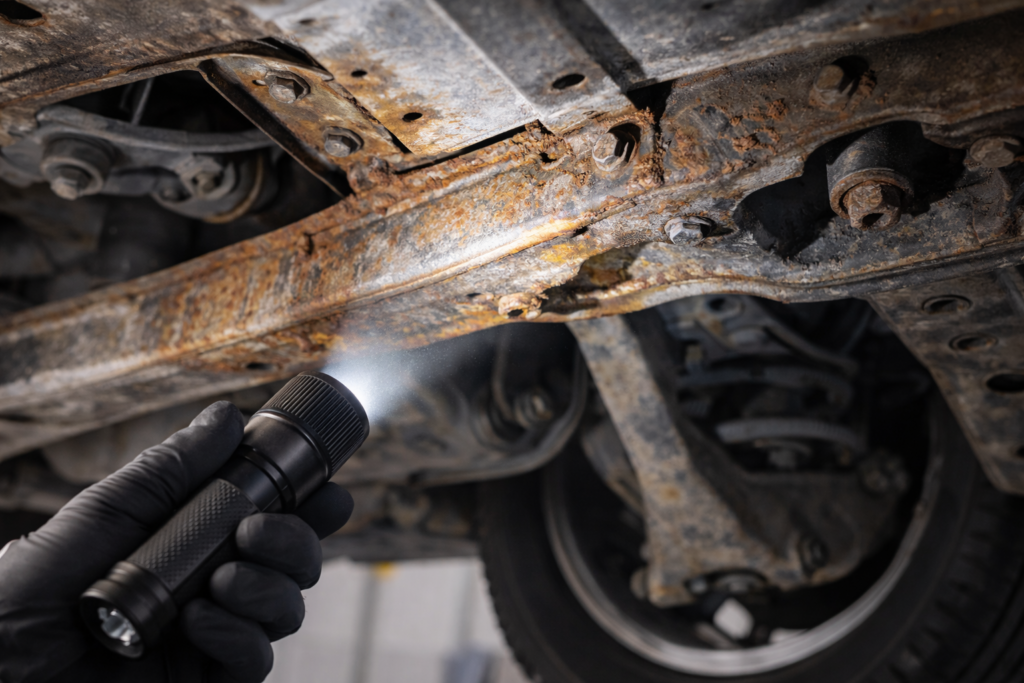
Underbody rust proofing is most valuable for drivers whose cars are regularly exposed to salt, moisture, grime, and stone impact—the exact conditions that rust loves. Even modern cars with factory coatings can develop corrosion underneath because road spray and debris constantly chip and wear protective layers.
You especially need underbody rust protection if:
✅ You live near the coast
Salt in the air settles on the undercarriage and keeps metal surfaces “active” for corrosion. Coastal humidity also lingers in seams and cavities where rust begins.
✅ You drive in snowy areas where salt/brine is used on roads
Road salt sticks to underbodies, builds up in wheel wells, and accelerates rust dramatically—especially around seams, brake lines, and mounting points.
✅ You own a 4WD, ute, or off-road vehicle
Mud, sand, water crossings, and high-pressure spray into the underbody can trap moisture and grit. Off-road vehicles also take more stone impacts that expose bare metal.
✅ You frequently drive on gravel, dirt, or wet roads
Stone chips and constant splashback strip protective layers over time—especially in wheel wells and along the floor pan edges.
✅ You plan to keep your car long-term
Rust protection pays off the longer you own the vehicle. It helps preserve structure, reduces future repair headaches, and supports better resale value.
Different products protect in different ways. The “best” option depends on your environment, your vehicle type, and whether you want a hard barrier (undercoating) or deep seam protection (oil/wax).
| Type | Description | Typical Lifespan | Best For |
|---|---|---|---|
| Rubberized Undercoating | Thick, rubber-based barrier that resists chips and abrasion. Helps reduce stone impact and road spray exposure. | 2–5 years | Daily drivers, highway + city use, gravel exposure |
| Oil-Based Rustproofing | Penetrates seams, joins, and hard-to-reach areas; “creeps” to protect from inside out. Can drip and needs reapplication. | 1–2 years | Older cars, high-risk seams, annual maintenance approach |
| Wax-Based Coatings | Durable, non-drip protection with excellent cavity coverage. Often applied professionally with proper access tools. | 3–5 years | Long-term protection, coastal driving, professional-grade results |
| Electronic Modules | Emit low-level currents intended to reduce oxidation. Effectiveness varies; best used as an add-on. | Mixed results | Supplemental protection only (pair with physical coatings) |
If you want impact resistance (chips, gravel, abrasion): go rubberized undercoating.
If you want seam and cavity protection (where rust starts): go oil-based or wax-based.
If you want the best long-term result, many pros combine approaches: cavity wax/oil + underbody barrier.
Costs vary by vehicle size (small car vs 4WD/ute), condition (clean vs heavy grime), and whether the service includes cavity treatment and warranty.
| Type | DIY Cost | Professional Cost |
|---|---|---|
| Rubberized Spray | $30–$100 | $400–$800 |
| Oil-Based Drip Spray | $50–$150 | $300–$700 |
| Wax-Based Coating | N/A (typically pro-only) | $500–$1,000 |
| Electronic Rust Module | $100–$300 | $300–$600 (installed) |
💡 Note: Professional services often include underbody inspection, proper cleaning/prep, cavity access, and may offer multi-year warranties (especially with wax-based systems).
DIY can be useful—especially for yearly touch-ups—but professional services usually win on coverage and longevity, because rust starts in places DIY sprays often don’t reach.
Lower cost up front
Flexible timing (do it at home)
Great for annual touch-ups, especially oil-based products
Useful if you’re maintaining an older vehicle and staying consistent
Messy application (oil-based sprays can drip and overspray)
Hard to reach hidden cavities (frame rails, inside seams, behind liners)
Higher chance of missed areas that later become rust hotspots
No warranty or workmanship guarantee
Risk of poor prep (coating over moisture or existing rust)
Thorough coverage, including cavities and high-risk seams
Better prep (cleaning + inspection) and correct application tools
Higher-quality products and controlled application
Often includes warranty (sometimes multi-year, depending on product and inspection schedule)
Stronger choice for coastal, off-road, and long-term ownership
Higher upfront cost
Requires booking, drop-off, and sometimes cure time
Some warranties require periodic inspections
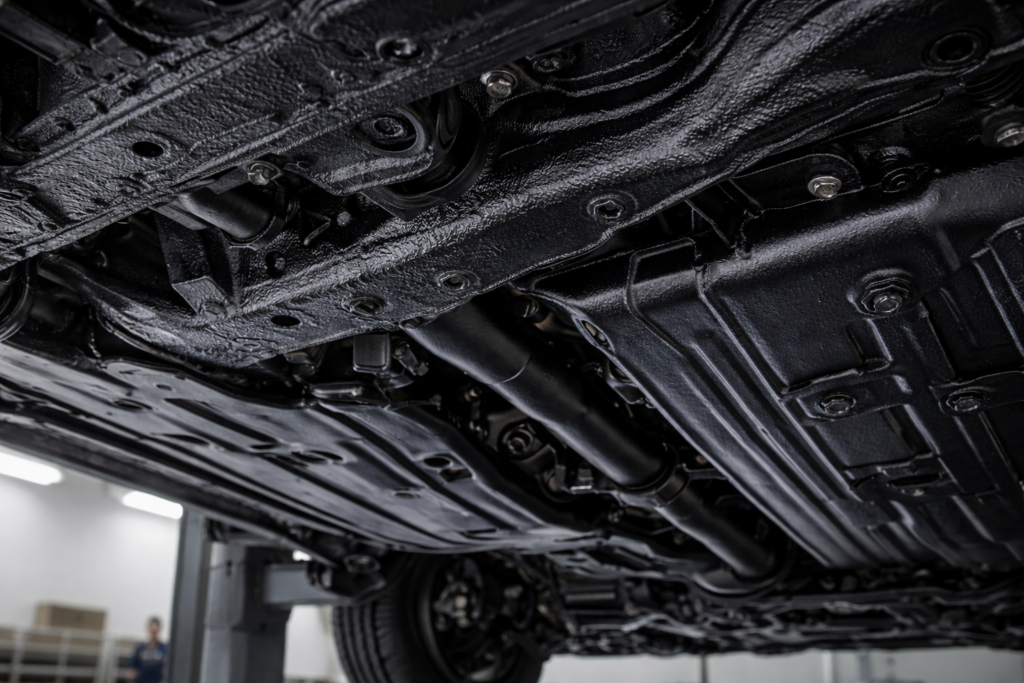
Timing is a big part of what makes underbody rust proofing effective. The earlier you protect clean metal, the better the coating bonds—and the longer it can defend against moisture, salt, and road grime.
New cars are the easiest to protect because the underbody is typically:
cleaner
free from corrosion
less contaminated with road film
Applying underbody protection early helps prevent rust from ever getting a foothold—especially around seams, joins, wheel wells, and underbody edges where moisture collects.
Used vehicles often have early-stage corrosion in hidden areas. Before applying any product, it’s important to:
inspect the underbody for flaking paint, surface rust, or cracks in old sealant
treat or remove surface rust first (otherwise you risk sealing in corrosion)
Professional services usually include this assessment so you don’t coat over existing problems.
Oil-based rustproofing is designed to “creep” into seams and cavities, but it also wears away over time. Annual reapplication is often recommended if you:
live near the coast
drive on wet roads frequently
have a 4WD/ute that sees mud/gravel
do highway driving where road spray hits constantly
📌 Pro Tip: Always clean the undercarriage thoroughly before application. Dirt and moisture reduce bonding, and coating over debris can create rust pockets.
If any of these signs show up, it’s a strong indicator your vehicle needs protection (or re-protection) now—not later:
Flaking metal or peeling underbody paint
Often means corrosion is already undermining the protective layer.
Visible orange/brown corrosion patches
Early rust can spread quickly once it starts, especially around seams and joints.
Water pooling in wheel wells or undercarriage
Trapped moisture is rust’s best friend—standing water accelerates corrosion.
Rust forming near fuel or brake lines
These areas are safety-critical and expensive to repair if corrosion advances.
No existing underbody sealant (or it’s deteriorating/cracking)
Old coatings can crack and lift, allowing moisture to sit underneath and rust to grow unseen.
Quick check: If your underbody looks dry, chalky, patchy, or scaly—and especially if you see rust around seams—an inspection is worth doing before the damage spreads.
Rust proofing works best when you maintain it—especially if you drive in harsh conditions.
Rinse after:
coastal driving
muddy roads
rainy weeks
salted roads (if applicable)
Focus on wheel arches, inner guards, and underbody seams where grime packs in.
A quick yearly check helps catch:
stone-chip damage
lifted edges in undercoating
missed areas around wheel wells and seams
DIY coatings may need more frequent touch-ups.
Oil-based sprays often benefit from annual reapplication.
Professional wax-based coatings typically last longer but should still be inspected.
High-pressure water too soon can lift or weaken fresh coatings.
Best practice: Wait 48–72 hours after application (or follow product instructions) before rinsing or washing the underbody.
Underbody rust proofing may not be glamorous, but it’s one of the smartest long-term investments you can make for your vehicle. Whether you’re protecting a new car or extending the life of an older one, preventing rust from underneath means:
fewer expensive repairs
stronger safety and reliability
higher resale value
longer vehicle lifespan—especially in coastal and wet conditions
A clean, protected undercarriage is one of those “quiet wins” that pays off for years.
Protect your car the right way with SuperCool Southport — specialists in professional underbody rust proofing, corrosion inspections, and vehicle protection services. Serving the Gold Coast and beyond, they use high-quality products designed to withstand Australian road and weather conditions.
👉 Book your underbody rust-proofing appointment today — and keep corrosion from eating away your car’s future!
Supercool Car Air Conditioning © 2026 | Designed and developed by 123 Digital |Privacy Policy | Blog

No: AU01712