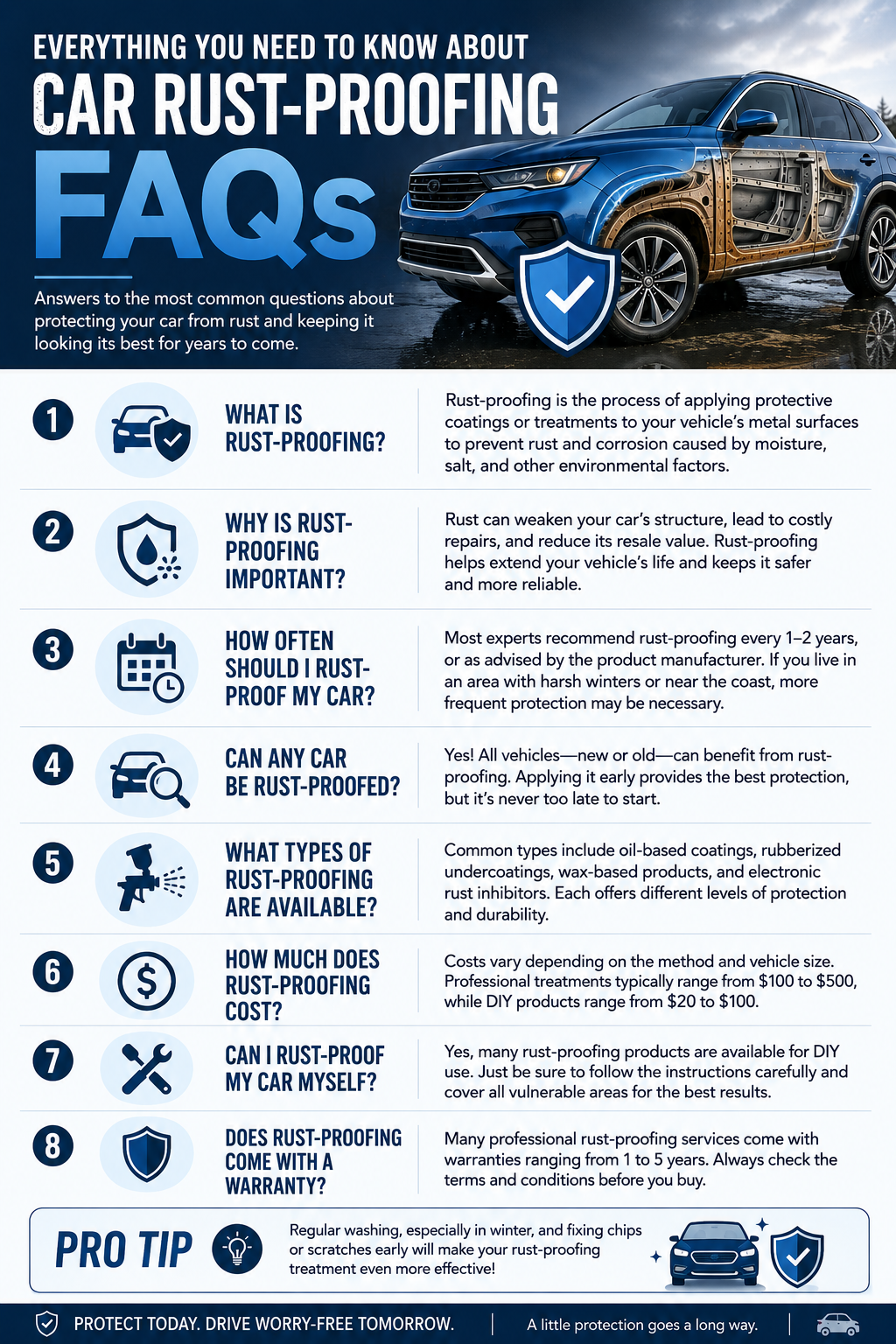
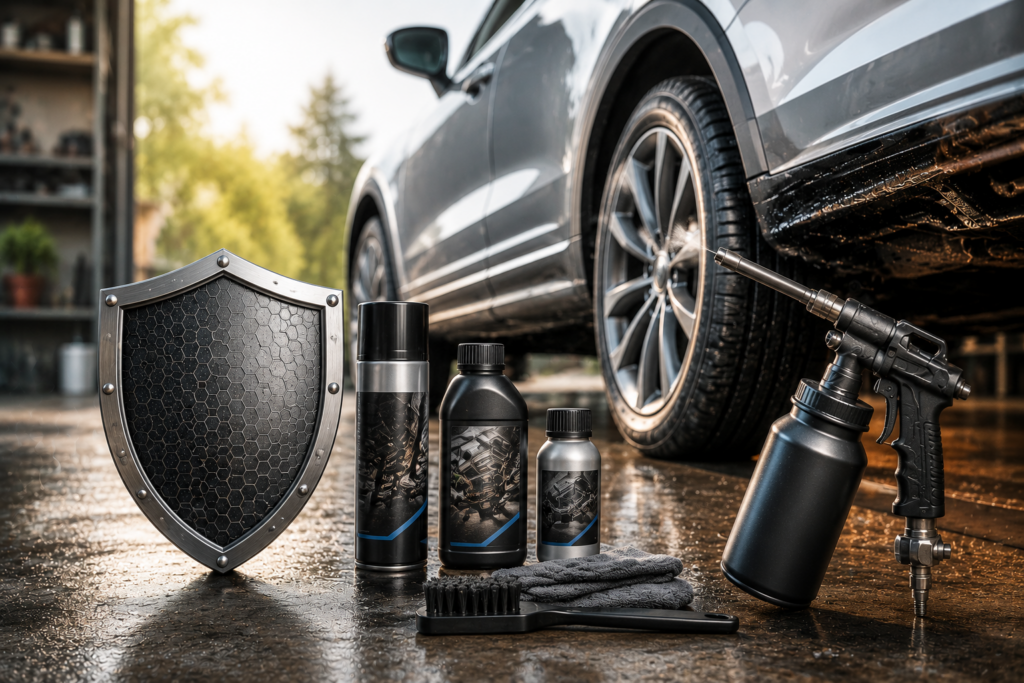
Car rust-proofing is one of the most effective ways to protect your vehicle from corrosion, extend its service life, and preserve its value. Yet many drivers are unsure about how rust-proofing works, whether it’s necessary for their vehicle, how long it lasts, and what they need to do to maintain it.
This comprehensive FAQ answers the most common questions about car rust-proofing with detailed, practical information. Whether you’re considering rust-proofing a new vehicle or protecting an older one, this guide will help you make informed decisions.
1. What Is Car Rust-Proofing?
Car rust-proofing is a preventive treatment designed to reduce the likelihood of corrosion by protecting metal components from moisture, oxygen, road salt, and other environmental contaminants.
Most modern vehicles already include factory-applied corrosion protection, such as galvanized steel, e-coating, sealants, and underbody coatings. However, these factory protections can become damaged over time due to stone chips, road debris, harsh weather, or everyday wear. Supplemental rust-proofing adds an extra layer of defense, especially in areas that are difficult to inspect or vulnerable to corrosion.
Professional rust-proofing treatments may be applied to:
- Vehicle undercarriage
- Frame rails
- Wheel wells
- Door cavities
- Rocker panels
- Hood and trunk seams
- Suspension mounting points
- Hidden body cavities
The primary goal is to create a barrier that minimizes contact between metal surfaces and corrosive elements.
2. Why Is Rust-Proofing Important?
Rust is more than just a cosmetic issue. If left untreated, corrosion can spread beneath paint and protective coatings, eventually weakening structural components and increasing repair costs.
Rust-proofing helps by:
- Slowing or preventing corrosion
- Protecting the vehicle’s structural frame
- Preserving suspension and brake mounting points
- Maintaining the appearance of body panels
- Extending the service life of the vehicle
- Helping retain resale value
- Reducing long-term maintenance expenses
Vehicles exposed to road salt, high humidity, coastal air, or frequent rainfall generally face a higher risk of corrosion and may benefit the most from additional protection. This is especially relevant for drivers across the
Gold Coast service area, where coastal air and humidity can increase rust risk.
3. How Does Rust Form on a Car?
Rust forms through a natural chemical reaction known as oxidation.
When iron or steel comes into contact with oxygen and moisture, it begins to form iron oxide, commonly known as rust.
Several factors can accelerate this process, including:
- Road salt
- Humid climates
- Coastal salt spray
- Standing water
- Mud accumulation
- Damaged paint
- Scratches and stone chips
Rust typically begins in small, hidden areas where moisture becomes trapped. Over time, it can spread beneath the paint and eventually affect larger sections of the vehicle if not addressed. For more warning signs, see this guide on
how to detect car corrosion before it becomes expensive.
4. Which Parts of a Car Rust the Most?
Although corrosion can occur almost anywhere, certain areas are particularly susceptible because they are regularly exposed to water, dirt, and road debris.
Common rust-prone areas include:
- Wheel arches
- Rocker panels
- Door bottoms
- Undercarriage
- Frame rails
- Suspension components
- Brake lines
- Fuel filler area
- Hood and trunk seams
- Spare tire well
- Floor pans
- Exhaust system
These areas should be inspected regularly, particularly after winter driving or exposure to muddy or coastal conditions.
5. Does Every Car Need Rust-Proofing?
The answer depends largely on where and how you drive.
You may benefit from supplemental rust-proofing if you:
- Live in regions where roads are treated with salt during winter.
- Frequently drive in rainy or humid climates.
- Live near the ocean where salt-laden air is common.
- Regularly travel on gravel, dirt, or unpaved roads.
- Plan to keep your vehicle for many years.
- Own a work truck, SUV, or commercial vehicle exposed to harsh conditions.
Drivers in dry climates may experience slower corrosion, but routine inspections and proper maintenance are still recommended because rust can develop from paint damage or trapped moisture.
6. What Are the Different Types of Car Rust-Proofing?
Several rust-proofing methods are available, and each has different advantages depending on the vehicle, climate, and intended use.
Oil-Based Rust-Proofing
Oil-based rust-proofing products are designed to penetrate seams, joints, and enclosed cavities where moisture can collect. Because they remain relatively flexible, they can continue to protect hard-to-reach areas over time.
Advantages:
- Excellent penetration into hidden cavities
- Helps displace moisture
- Suitable for vehicles exposed to harsh weather
- Can reach inaccessible areas
Considerations:
Oil-based treatments may require periodic inspections or reapplication according to the product manufacturer’s recommendations.
Wax-Based Rust Protection
Wax-based products create a durable moisture-resistant coating on metal surfaces. Once cured, the wax forms a protective barrier that helps reduce water intrusion.
Advantages:
- Long-lasting protection
- Effective moisture barrier
- Minimal dripping after curing
- Suitable for enclosed cavities
Rubberized Undercoating
Rubberized coatings are commonly applied to the vehicle’s underbody to help protect against impacts from stones, gravel, and road debris while also providing a barrier against moisture.
Advantages:
- Excellent protection from road debris
- Helps reduce underbody noise
- Durable coating
- Suitable for high-impact areas
Regular inspections are recommended to ensure the coating has not cracked or peeled due to impacts.
Asphalt-Based Undercoating
Heavy-duty vehicles sometimes use asphalt-based coatings because they provide a thick protective layer against corrosion and physical damage.
These products are generally used on trucks and commercial vehicles rather than passenger cars.
Electronic Rust Protection
Electronic rust protection devices claim to reduce corrosion through electrical impulses. At SuperCool Southport, drivers can learn more about available
car rust protection options on the Gold Coast, including electronic rust protection systems.
7. When Should You Rust-Proof a New Car?
The ideal time is before corrosion begins.
Applying supplemental rust protection early helps protect vulnerable areas before moisture and contaminants have an opportunity to penetrate exposed surfaces.
Many owners choose to rust-proof their vehicles during the first year of ownership, especially if they live in areas with harsh winters or coastal climates.
8. Can You Rust-Proof an Older Vehicle?
Yes.
An older vehicle can still benefit from rust-proofing if significant structural corrosion has not already occurred.
Professional preparation typically includes:
- Thorough cleaning
- Removal of loose rust
- Surface rust treatment
- Inspection for structural damage
- Application of protective coatings
While rust-proofing cannot reverse severe corrosion, it can help slow additional deterioration.
9. Can Rust-Proofing Stop Existing Rust?
Rust-proofing is intended as a preventive measure rather than a repair solution.
If corrosion is already present, the affected area should first be cleaned, repaired, or stabilized using appropriate methods. Once the surface has been properly prepared, rust-proofing can help reduce the risk of future corrosion.
10. Is Factory Rust Protection Enough?
Modern vehicles include factory corrosion protection, but environmental conditions vary significantly.
Additional rust-proofing may be worthwhile if your vehicle is routinely exposed to:
- Road salt
- Coastal air
- Flood-prone areas
- Heavy rainfall
- Off-road conditions
Even with factory protection, regular maintenance, such as washing the underbody and repairing paint damage, remains essential. Routine
car servicing can also help identify early issues before they become expensive repairs.
11. How Long Does Car Rust-Proofing Last?
The lifespan of rust-proofing depends on several factors:
- Product type
- Driving conditions
- Climate
- Vehicle usage
- Maintenance routine
Some treatments require annual inspections or maintenance, while others can provide protection for several years when properly cared for. Follow the product manufacturer’s maintenance recommendations rather than assuming all products have the same lifespan.
12. How Can You Tell If Your Car Needs Rust-Proofing?
Your vehicle may benefit from inspection or supplemental protection if you notice:
- Paint chips exposing bare metal
- Small orange or brown spots
- Frequent driving in salted winter conditions
- Exposure to coastal air
- Damage to the underbody coating
- Water trapped in door panels
- Visible corrosion underneath the vehicle
A professional inspection can help determine whether additional treatment is appropriate.
13. Does Washing Your Car Help Prevent Rust?
Absolutely.
Routine washing removes contaminants that accelerate corrosion, including:
- Road salt
- Mud
- Dirt
- Sand
- Industrial fallout
- Bird droppings
For vehicles driven in snowy or coastal environments, regular underbody rinsing is particularly important because corrosive materials tend to accumulate beneath the vehicle.
14. How Often Should You Wash a Rust-Proofed Car?
| Driving Conditions |
Suggested Washing Frequency |
| Normal driving |
Every 2–3 weeks |
| Winter with salted roads |
Weekly |
| Coastal areas |
Every 1–2 weeks |
| Heavy rain or muddy roads |
As soon as practical |
| Off-road driving |
After every trip |
Using pH-balanced automotive shampoo helps preserve waxes and protective coatings.
15. Does Waxing Help Prevent Rust?
Yes, but only on painted exterior surfaces.
Wax provides benefits such as:
- Water repellency
- UV protection
- Reduced dirt buildup
- Easier cleaning
- Additional protection for paint
However, wax does not protect enclosed body cavities or the undercarriage. It should be viewed as part of a broader maintenance strategy rather than a replacement for dedicated rust-proofing.
16. What Are the First Signs of Rust?
Early signs include:
- Paint bubbling
- Orange discoloration
- Brown staining
- Flaking paint
- Rough metal surfaces
- Rust around wheel wells
- Corrosion underneath the vehicle
Early treatment is far less expensive than repairing advanced corrosion.
17. Can Ceramic Coatings Replace Rust-Proofing?
No.
Ceramic coatings are designed to protect painted surfaces from environmental contaminants, UV exposure, and light chemical damage.
They do not protect:
- Frame rails
- Door cavities
- Rocker panels
- Suspension components
- Undercarriage
For comprehensive corrosion protection, ceramic coatings and rust-proofing serve different purposes and can complement each other.
18. Is Underbody Washing Really Necessary?
Yes.
The vehicle’s underbody is exposed to:
- Salt
- Gravel
- Mud
- Standing water
- Road chemicals
Regular underbody cleaning helps remove corrosive materials before they damage protective coatings.
Many automatic car washes now offer underbody rinse programs specifically designed for this purpose.
19. Does Driving Near the Ocean Increase Rust Risk?
Yes.
Salt carried in coastal air can settle on your vehicle, attracting moisture and accelerating corrosion.
If you live near the coast:
- Wash your vehicle more frequently.
- Rinse the undercarriage regularly.
- Inspect for rust every few months.
- Consider supplemental rust-proofing if you plan to keep the vehicle for an extended period.
20. Is Rust-Proofing Worth the Cost?
The answer depends on your climate, driving habits, and how long you intend to own the vehicle.
For many drivers, particularly those in regions with salted roads, high humidity, or coastal exposure, the cost of rust-proofing may be justified by reducing the likelihood of costly corrosion-related repairs and helping preserve resale value.
Rather than viewing rust-proofing as a guaranteed solution, it is best considered one part of a comprehensive vehicle maintenance program that also includes regular washing, inspections, prompt paint repair, and proper storage. You can also read
7 common rust-proofing myths busted for more guidance before making a decision.
Final Thoughts
Rust is one of the few vehicle problems that becomes progressively more difficult and expensive to repair once it starts. While no rust-proofing product can guarantee a vehicle will never corrode, combining quality rust protection with regular maintenance can significantly reduce the risk.
The most effective long-term strategy includes keeping the vehicle clean, repairing paint damage promptly, inspecting vulnerable areas, maintaining protective coatings, and following the maintenance recommendations for any rust-proofing treatment you choose.
By taking a proactive approach, you can help preserve your vehicle’s appearance, structural integrity, and value for many years to come.