10 Proven Tips to Keep Your Car AC Running Like New

Modern-car-interior-with-airflow-lines-header-image

A properly working car air conditioning system isn’t just about staying comfortable — it’s also an important safety feature, especially during extreme heat. A weak AC can lead to driver fatigue, reduced focus, and uncomfortable cabin conditions that make long trips harder than they need to be.

If your AC isn’t cooling like it used to, don’t wait until it stops working completely. With a few simple habits and routine checks, you can maintain strong cooling performance, reduce strain on the system, and avoid expensive repairs.

Here are 10 proven, expert-backed tips to keep your car AC running like new.

✅ 1. Run the AC Regularly (Even in Winter)

Why it matters

A lot of drivers only switch on their car air conditioning in summer—but your AC system is designed to be used year-round. Running it regularly helps keep refrigerant pressure stable and ensures the compressor circulates lubricating oil through seals, O-rings, and hoses.

When an AC system sits idle for months, seals can dry out and shrink slightly. That makes it easier for refrigerant to escape over time, leading to weaker cooling, longer cooldown times, and (eventually) costly repairs.

Expert tip

Run your AC for 10–15 minutes once a week, even during winter.

  • Set temperature to the coldest setting

  • Use high fan speed

  • Keep airflow directed through the main vents to circulate the system fully

Bonus benefit

Regular use helps prevent the classic musty AC smell, which often comes from moisture lingering in the evaporator area and feeding bacteria or mildew. Using the system consistently reduces buildup and keeps cabin air fresher.

✅ 2. Use the AC’s Defrost Mode

Why it matters

Most people don’t realize the defrost setting often activates the AC compressor—even when the heater is on. That’s intentional: AC removes moisture from the air, which helps clear fogged windows faster and improves visibility.

Defrost mode also helps dry out the air ducts and evaporator area, reducing the chance of mold and mildew forming in the system. If you’ve ever noticed a damp smell when the fan starts, moisture management is usually the reason.

Experience tip

Run defrost for 5–10 minutes once a week, especially if you notice:

  • Windows fogging up and taking too long to clear

  • A damp, stale, or “sock-like” smell from the vents

  • Reduced airflow or inconsistent cooling performance

Pro move

After heavy rain, car washes, or humid weather, use defrost briefly to pull moisture out of the system. It’s one of the simplest habits that can prevent funky smells and help your AC stay efficient.

✅ 3. Clean or Replace the Cabin Air Filter

Why it matters

Your cabin air filter is the “lungs” of your HVAC system. When it gets clogged with dust, pollen, and road grime, it restricts airflow—so even if your AC is blowing cold air, less of it reaches the cabin. The result is slower cool-down times, weak airflow from the vents, and a system that has to work harder than necessary.

A dirty filter can also contribute to stale odors and increased allergens inside the car.

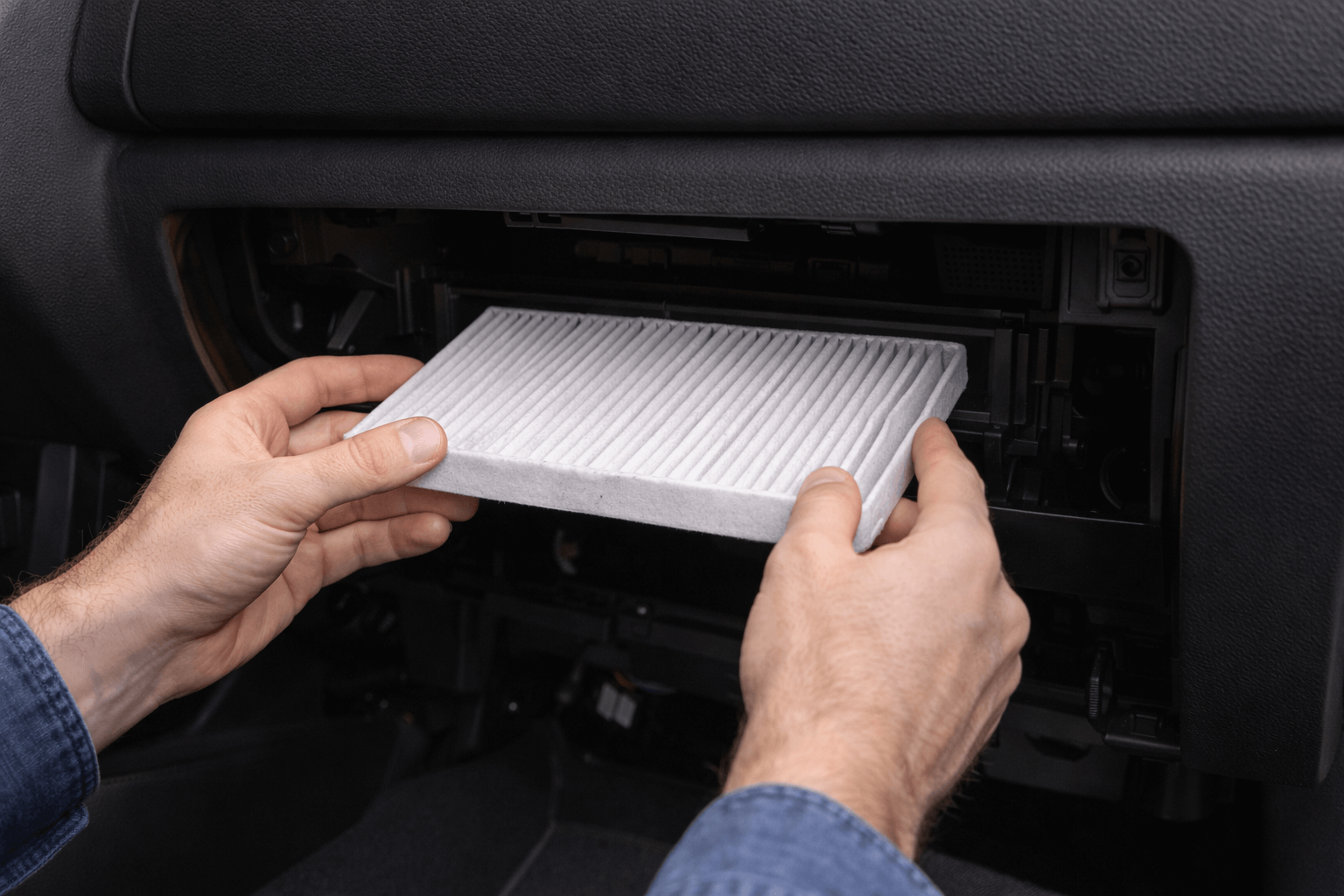
Installing a new cabin air filter

Pro advice

Replace the cabin air filter every 12,000–15,000 miles (or follow your owner’s manual). Replace sooner if you:

  • Drive in dusty areas

  • Sit in heavy traffic frequently

  • Have allergies or notice musty smells

  • Experience weak airflow even on high fan speed

Quick check: If airflow feels “choked” or the fan sounds loud but doesn’t push much air, the cabin filter is often the culprit.

✅ 4. Inspect and Clean the Condenser

Why it matters

The AC condenser sits near the front of your vehicle (often behind the grille) and releases heat from the refrigerant. If it’s clogged with bugs, leaves, dirt, or road debris, it can’t shed heat efficiently—so the system struggles to cool, especially in hot weather or stop-and-go traffic.

A blocked condenser can also increase pressure in the AC system, adding strain on the compressor and reducing overall efficiency.

DIY tip

Every few months, do a quick visual inspection through the grille. If you see buildup:

  • Use a hose with gentle water pressure to rinse debris off the condenser fins

  • Spray from a slight distance to avoid bending fins

  • Avoid pressure washers (they can damage the delicate fins)

Extra tip: If you regularly park under trees or drive rural roads, condenser cleaning is even more important.

✅ 5. Check the Refrigerant Level

Why it matters

Low refrigerant is one of the most common causes of weak or warm AC. Refrigerant doesn’t “wear out”—so if it’s low, it usually means there’s a leak somewhere (even a small one). When refrigerant drops, cooling performance falls, and the compressor may cycle more often or run hotter than it should.

Ignoring low refrigerant can lead to bigger repairs, because the system may be forced to operate outside normal pressure ranges.

Expert advice

Have your refrigerant level checked once a year, ideally before peak summer. If it needs a recharge, it should be done by a certified technician who can:

  • Verify the correct refrigerant type and fill level

  • Check pressures properly

  • Add UV dye or perform leak testing if needed

Heads-up: “Topping off” repeatedly without finding the leak is a red flag—good service includes diagnosing why it got low.

✅ 6. Don’t Pre-Cool the Car (the Wrong Way)

Why it matters

Your AC system cools more effectively when the car is moving because airflow across the condenser is stronger, helping it release heat. Idling in a hot driveway trying to “pre-cool” can:

  • Cool the cabin more slowly

  • Put extra strain on the AC system

  • Burn more fuel (especially in non-hybrid vehicles)

Practical tip

Instead of idling to pre-cool, do this:

  1. Start the car and drive off (even slow movement helps)

  2. For the first 30–60 seconds, use fresh air with the fan on to push hot air out

  3. Then switch to AC and use recirculation once the cabin begins to cool

Fuel-saver bonus: Recirculation cools already-cooled cabin air, so the system works less to maintain comfort.

✅ 7. Keep Windows Tightly Sealed

Why it matters

When your windows or sunroof are even slightly open, hot and humid air constantly enters the cabin. That forces your AC system to work harder to maintain temperature, which can reduce cooling performance and increase wear on components over time.

It also makes it harder to remove humidity from the cabin—so you may notice the air feels less “crisp” even if it’s technically cold.

Quick tip

Whenever the AC is on:

  • Keep all windows fully closed

  • Ensure the sunroof is shut and sealed

  • Check that vents are aimed properly for efficient airflow

Extra tip: If you feel warm air entering even with everything closed, your door seals (weatherstripping) may need inspection.

✅ 8. Park in the Shade (Whenever Possible)

Why it matters

Your AC has to fight the heat that’s already trapped inside the car. If your vehicle sits in direct sun, cabin temperatures can climb dramatically—making your AC work overtime as soon as you start driving.

Reducing the cabin temperature before you turn the AC on helps:

  • Cool the car faster

  • Reduce strain on the compressor

  • Improve comfort almost immediately

Smart tip

Whenever possible:

  • Park in a garage

  • Choose shaded parking

  • Use a windshield sunshade

  • Consider window shades for extra protection

Bonus move: Crack the windows slightly only while parked (if safe/legal in your area), then close them fully once you start driving and turn the AC on.

✅ 9. Have the AC System Inspected Annually

Why it matters

Car AC systems can slowly lose performance over time due to minor leaks, worn seals, electrical issues, or compressor strain—often before the AC completely stops working.

A professional inspection can identify early warning signs like:

  • Low refrigerant pressure

  • Small leaks

  • Weak compressor performance

  • Blocked drainage or airflow issues

Catching these early is usually far cheaper than waiting for a full system failure.

Maintenance tip

Book an AC inspection once a year, ideally before peak summer. This timing helps ensure your system is ready when temperatures spike and demand for repairs increases.

✅ 10. Use Recirculation Mode Wisely

Why it matters

Recirculation mode helps your car cool faster because it reuses air that’s already been cooled, instead of constantly pulling in hot outside air. That reduces the workload on the AC system and improves efficiency.

However, leaving recirculation on for long periods can cause the cabin air to feel stale—especially if there’s moisture or odors trapped inside.

Efficiency tip

On hot days:

  1. Start with fresh air mode briefly to push out trapped heat

  2. Switch to recirculation once the cabin begins cooling

  3. Turn recirculation off occasionally to refresh cabin air

Best practice: Recirculation is great for quick cool-downs and highway driving, but mixing in fresh air improves comfort on longer trips.

⚠️ Bonus: Warning Signs Your Car AC Needs Immediate Attention

If you notice any of these symptoms, it’s best to consult a licensed auto AC specialist sooner rather than later:

  • Weak airflow (even on high fan speed)

  • Strange smells (musty, sour, moldy, or chemical odors)

  • Unusual noises when the AC is on (rattling, squealing, clicking)

  • Water pooling on floor mats (possible drain blockage)

  • Warm air blowing from vents even when set to cold

Early repairs often prevent major failures like compressor damage or refrigerant leaks becoming worse.

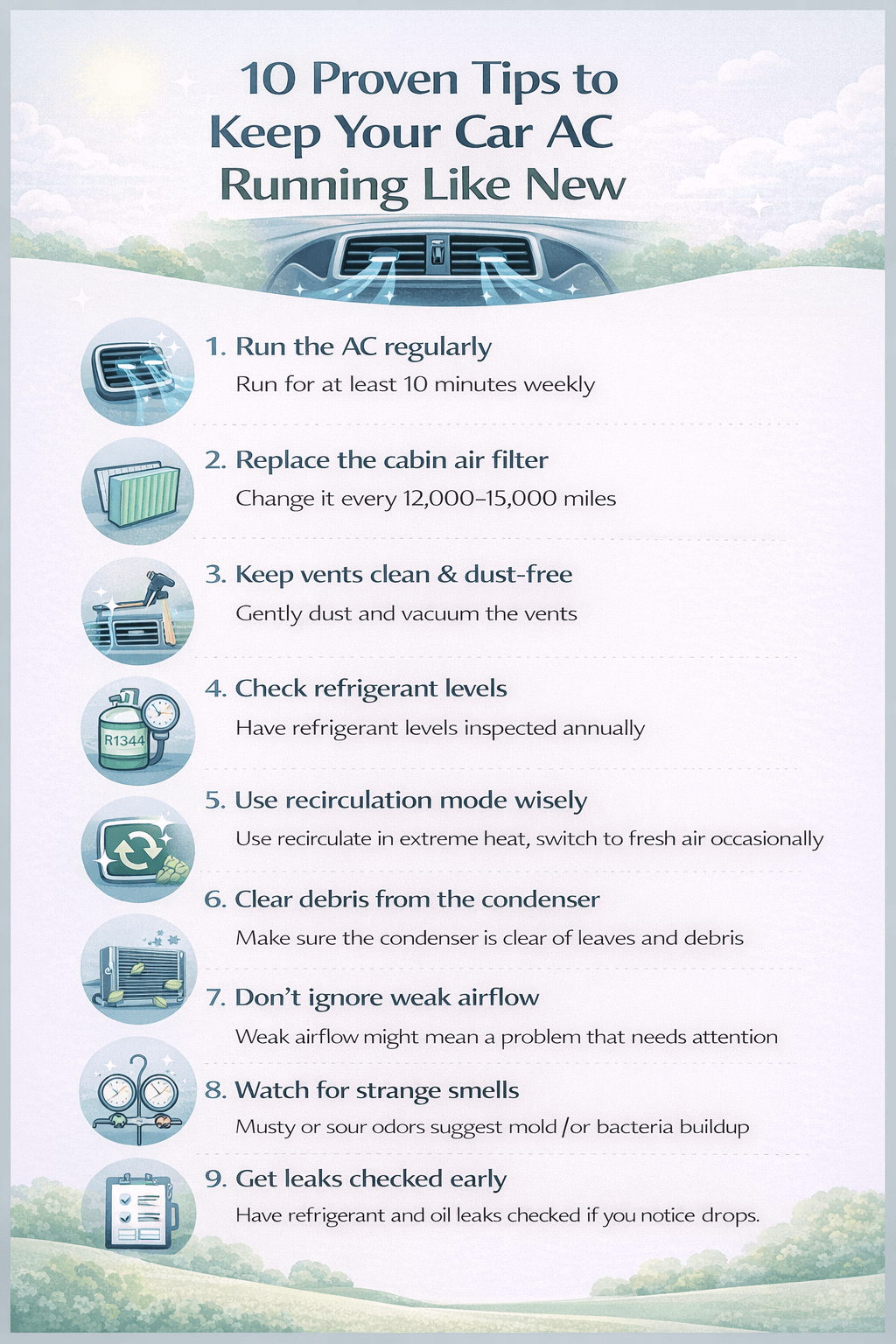
10 tips to maintain car AC infographic

✅ Final Thoughts

Your car’s AC system is complex—but it doesn’t have to be high-maintenance. With a few smart habits and simple routine checks, you can keep it cooling efficiently, avoid unexpected breakdowns, and extend the life of your system.

By following these 10 proven tips, you’re not only protecting your AC performance—you’re also improving your overall driving comfort and safety year-round.

FAQs

Q: How often should I recharge my car’s AC refrigerant?

A: Most AC systems don’t need a recharge unless there’s a leak. Refrigerant doesn’t “run out” under normal conditions. That said, a 12-month AC check-up is a smart way to confirm pressures are healthy and catch small issues early.

Q: Can I clean my AC vents at home?

A: Yes! You can gently clean vents using:

  • soft brush to loosen dust

  • Compressed air to blow debris out (light pressure)

  • A microfiber cloth for the vent surfaces

If smells persist after cleaning vents, the issue may be deeper in the system (like the evaporator), and a professional clean may be needed.

Q: Why is my car AC blowing warm air?

A: Common causes include low refrigerant, a failing compressor, a blocked condenser, electrical faults, or a leaking AC line. If it suddenly turns warm, it’s best to book an inspection quickly to prevent further damage.

Q: How long should a car AC system last?

A: With regular maintenance, most car AC systems can last 8–15 years. Lifespan depends on driving conditions, climate, and how often the system is used.

Q: Is it normal for car AC to lose gas over time?

A: A small amount of loss can happen gradually, but significant refrigerant loss usually indicates a leak. Refrigerant doesn’t get “used up,” so repeated re-gassing without repairs isn’t a long-term fix.

Q: Why does my AC smell bad when I first turn it on?

A: A musty smell often comes from moisture buildup in the evaporator or vents, which can lead to mold or bacteria growth. Using defrost mode and replacing the cabin filter can help, but persistent smells may need a professional clean.

Q: My AC is cold while driving but warm at idle — why?

A: This can happen if the condenser isn’t getting enough airflow at idle, the cooling fan is weak, or the refrigerant level is low. A technician can confirm the cause with a pressure test and inspection.

Q: Can a dirty cabin filter affect cooling performance?

A: Yes. A clogged cabin filter restricts airflow, making the AC feel weaker even if the system is producing cold air. Replacing it is one of the cheapest ways to improve performance.

Q: Is it safe to use DIY AC recharge kits?

A: DIY kits can be risky because overfilling or using the wrong product can cause damage. For best results, refrigerant checks and re-gassing should be done by a licensed auto AC specialist.

Q: How do I know if my car AC has a leak?

A: Signs include gradually weaker cooling, frequent re-gassing, oily residue around AC fittings, or hissing noises. Leak detection typically requires professional tools like UV dye or electronic sniffers.

Q: Does using the AC increase fuel consumption?

A: Yes, but usually only slightly. AC use adds load to the engine, especially in stop-start driving. Using recirculation mode and avoiding excessive idling helps reduce fuel impact.

Q: Why is water leaking inside my car when the AC is on?

A: Water on the floor mats often indicates a blocked AC drain tube, causing condensation to back up into the cabin. This should be addressed quickly to prevent mold and interior damage.

Q: When should I book an AC service?

A: A good rule is once per year, ideally before summer. If cooling feels weak, smells appear, or airflow drops, book sooner.

❄️ Book Your Car AC Service with SuperCool Southport

If your car air conditioning isn’t cooling properly, smells unusual, or takes too long to chill the cabin, don’t wait for it to fail in peak heat — book a professional inspection and keep your system running efficiently year-round with SuperCool Southport. Visit https://supercool-southport.com.au/ to organise an AC check, regas, or expert diagnosis and get back to cold, reliable comfort fast.

Gold Coast Services

Supercool Car Air Conditioning © 2026 | Designed and developed by 123 Digital |Privacy Policy | Blog