

Rust-proofing is one of the most misunderstood aspects of car maintenance. Some vehicle owners assume modern cars don’t need it, while others expect it to be a permanent, one-time fix. These misconceptions can lead to poor maintenance decisions—and costly repairs down the line.
The truth is that rust-proofing plays an important role in protecting your vehicle, but only when it’s properly understood and maintained. Let’s break down seven of the most common rust-proofing myths—and what you really need to know.
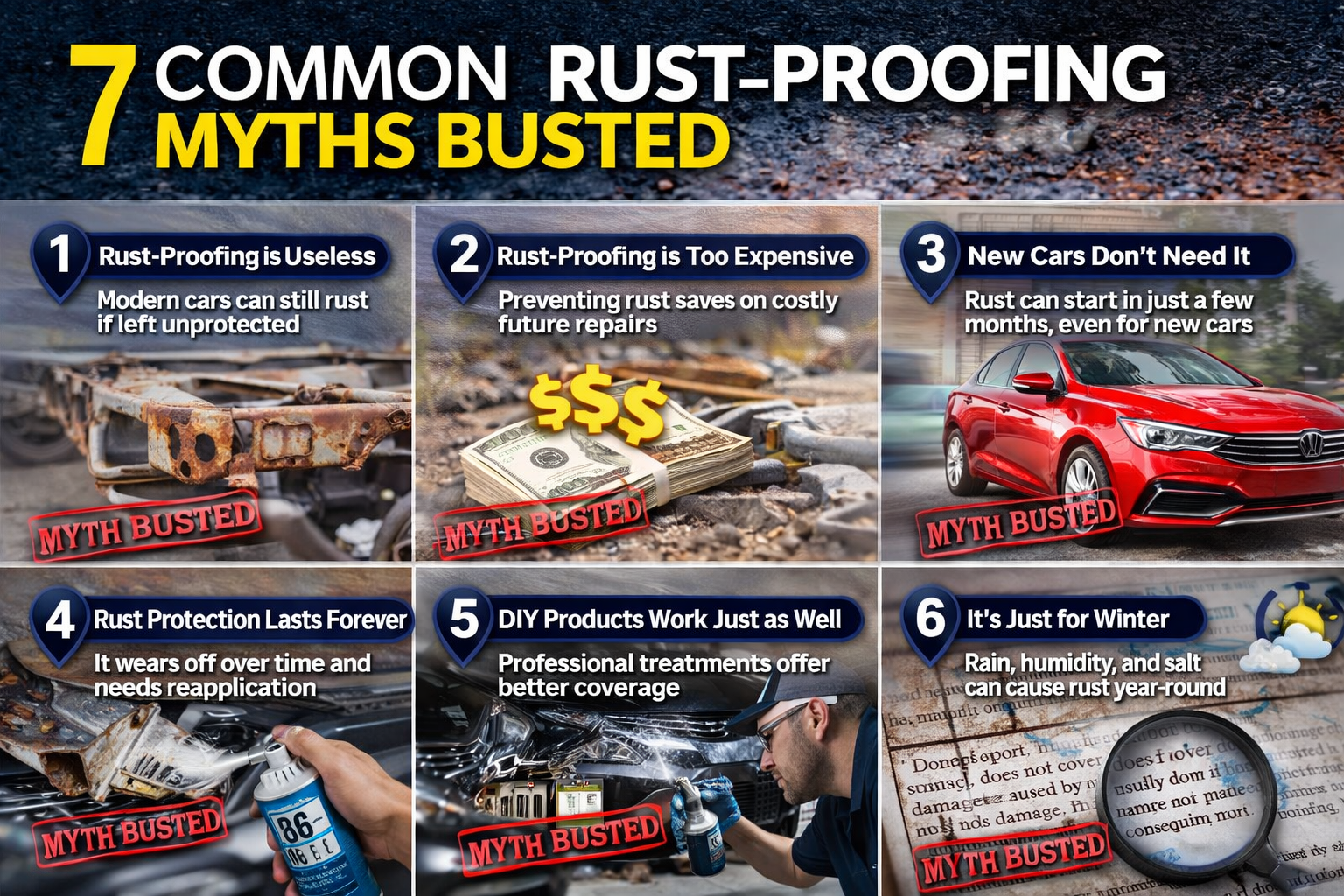
Modern vehicles do come with factory-applied corrosion protection, but it’s not always sufficient—especially in harsh environments.
Even new cars can benefit from additional rust-proofing, particularly if you live in coastal, humid, or high-rainfall areas or plan to keep your vehicle long-term.
Not all rust-proofing treatments are permanent. Many require maintenance to remain effective.
Rust-proofing is part of ongoing vehicle maintenance—not a “set and forget” solution.
Rust forms wherever moisture and oxygen are present—not just in snowy or icy regions.
You don’t need snow for rust to develop—moisture alone is enough to trigger corrosion.
Regular washing helps reduce corrosion risk, but it doesn’t eliminate it entirely.
Keeping your car clean is important, but it should be combined with inspections and protective treatments for effective rust prevention.
Rust can go far beyond surface damage and affect your vehicle’s safety.
Rust isn’t just about appearance—it can compromise safety and reliability.
Undercoating is effective—but only for specific areas.
A complete rust-prevention strategy includes multiple treatments, not just undercoating.
Preventive maintenance is almost always cheaper than repair.
Rust-proofing is a smart investment that helps avoid costly repairs and protects your vehicle’s long-term value.
Believing common myths about rust-proofing can lead to neglect or improper maintenance. The reality is that corrosion is gradual but persistent, and once it takes hold, it becomes much harder—and more expensive—to manage.
A proactive approach that combines:
can significantly reduce your risk of corrosion.
Yes, rust-proofing is worth it in Australia—especially in coastal, humid, or high-rainfall areas. Salt in the air, moisture, and environmental exposure can accelerate corrosion even without snow or road salt. Rust-proofing helps protect vulnerable areas like the undercarriage and seams, reducing long-term repair costs and preserving resale value.
The lifespan of rust-proofing depends on the type of treatment used:
Regular inspections are still recommended to ensure continued protection.
Yes, in many cases. While new cars come with factory corrosion protection, it may not fully cover all areas—especially seams, joints, and the underbody. Additional rust-proofing provides extra protection, particularly if you plan to keep the car long-term or drive in harsh conditions.
There is no single “best” option—it depends on your needs and environment:
A combination of treatments often provides the most complete protection.
Rust-proofing is designed to prevent rust, not reverse it. However, it can slow the spread of existing corrosion if applied after proper treatment.
For best results:
Costs vary depending on the method and vehicle size, but rust-proofing is generally affordable compared to repair costs.
In most cases, rust-proofing is far cheaper than repairing structural corrosion or replacing damaged panels.
Your car may benefit from rust-proofing if:
Preventive treatment is always more effective than waiting for visible rust to appear.
Rust-proofing isn’t about overprotecting your car—it’s about understanding where risks exist and taking practical steps to prevent long-term damage. By separating myths from facts, you can make better decisions that protect your vehicle’s condition, safety, and resale value.
In the end, rust prevention is not a one-time fix—it’s an ongoing habit that pays off over the life of your car.
Don’t let myths hold you back from protecting your vehicle. Professional rust-proofing can provide long-lasting defence against corrosion, especially in harsh driving conditions.
Visit https://supercool-southport.com.au/ to learn more about expert rust-proofing services and keep your car protected for years to come.
