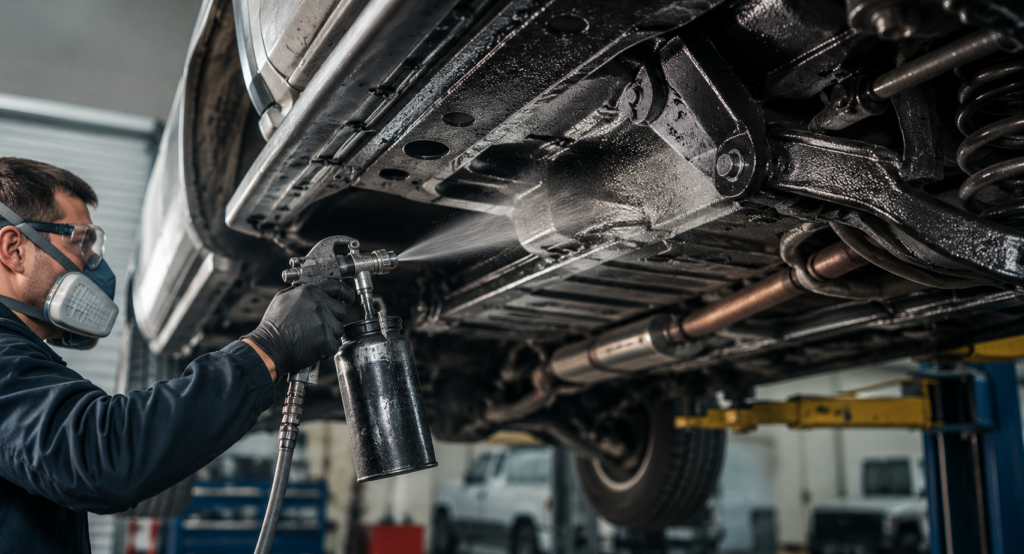
Rust is one of the most damaging long-term threats to a vehicle. What begins as a small patch of surface corrosion can eventually spread into body panels, mounting points, suspension components, seams, brackets, and other metal areas.
Over time, untreated corrosion may weaken components, reduce the vehicle’s appearance and resale value, and lead to expensive repairs. Vehicles regularly exposed to rain, humidity, mud, road salt, beach driving, or salty coastal air can face an even greater risk.
Professional rust-proofing helps protect vulnerable metal surfaces by creating a barrier against moisture, oxygen, salt, dirt, and other contaminants that contribute to corrosion.
This complete guide explains:
- What professional rust-proofing is
- How rust forms on a vehicle
- The main types of rust-protection treatments
- The difference between rust-proofing and undercoating
- What happens during a professional application
- Whether an older or already-rusted vehicle can be treated
- How often rust protection should be inspected or reapplied
- Common rust-proofing myths
- Frequently asked questions
Quick Answer
Professional rust-proofing protects a vehicle by applying a corrosion-resistant treatment to vulnerable metal areas such as the underbody, chassis, wheel arches, seams, doors, cavities, and frame rails. Common methods include oil- or wax-based cavity treatments, durable underbody coatings, and electronic rust-protection systems. The best treatment depends on the vehicle’s condition, construction, driving environment, and exposure to moisture, mud, road salt, or coastal air. Rust-proofing works best as a preventative measure and should be applied to properly cleaned, inspected, and prepared surfaces rather than simply sprayed over advanced corrosion.
What Is Professional Rust-Proofing?
Professional rust-proofing is a preventative vehicle treatment designed to reduce the risk of corrosion developing on metal surfaces.
Depending on the system used, rust protection may be applied to:
- The vehicle underbody
- Chassis rails
- Wheel arches
- Rocker panels and sills
- Door cavities
- Tailgate cavities
- Seams and joints
- Suspension mounting areas
- Exposed brackets and fasteners
- Other enclosed or moisture-prone sections
Unlike a basic aerosol spray applied at home, professional rust-proofing typically involves inspecting the vehicle, preparing the surfaces, using specialised application equipment, and directing the treatment into areas that are difficult to reach.
Professional application is particularly useful because corrosion often begins inside seams, cavities, drainage areas, and folded metal sections that may not be visible during a basic inspection.
Rust-proofing is most effective before extensive rust develops. Some treatments may help slow early surface corrosion, but they cannot restore metal that has already become severely weakened, perforated, or structurally damaged.
How Does Rust Form on a Vehicle?
Rust is a form of corrosion that develops when iron or steel reacts with oxygen and moisture.
A vehicle is constantly exposed to conditions that may encourage this reaction. Water can collect in seams, dirt can hold moisture against metal, and stone chips can expose previously protected surfaces.
Conditions That Can Accelerate Vehicle Corrosion
Rust may develop more quickly because of:
- Salty coastal air
- Beach driving
- Road salt and de-icing chemicals
- Frequent rain
- High humidity
- Floodwater exposure
- Mud trapped beneath the vehicle
- Sand lodged in seams and drainage areas
- Scratched or chipped paint
- Damaged factory coatings
- Blocked door or body drain holes
- Previous accident repairs
- Poorly repaired body damage
- Age-related deterioration
Modern vehicles generally receive corrosion protection during manufacturing. However, factory coatings are not invulnerable. They may be chipped, scraped, worn away, damaged during off-road driving, or compromised by repairs and modifications.
Which Parts of a Vehicle Are Most Vulnerable to Rust?
Rust does not always begin in an obvious location. Some of the most vulnerable areas are underneath the vehicle or inside enclosed sections.
Common Rust-Prone Areas
| Vehicle Area |
Why It Is Vulnerable |
| Wheel arches |
Frequently exposed to water, mud, stones and road debris |
| Underbody |
Constant exposure to moisture, dirt, sand and impact |
| Chassis rails |
Water and contaminants may enter seams or cavities |
| Rocker panels and sills |
Moisture can collect inside enclosed sections |
| Doors and tailgates |
Blocked drains can allow water to remain inside panels |
| Suspension mounting points |
Exposed to road spray and mechanical stress |
| Floor pan |
Vulnerable to water intrusion and damaged coatings |
| Exhaust mounts and brackets |
Exposed to heat, water and road contaminants |
| Bonnet and boot seams |
Folded edges can retain moisture |
| Tow bars and accessories |
Coatings may be scratched during installation or use |
Regular inspection is important because corrosion can spread beneath paint, sealant, undercoating, or accumulated dirt before it becomes clearly visible.
What Are the Benefits of Professional Rust-Proofing?
Rust-proofing cannot make a vehicle permanently immune to corrosion, but a properly selected and maintained system can offer valuable long-term protection.
Helps Protect Structural Components
Corrosion can affect chassis sections, crossmembers, mounting points, brackets, body panels, and other important metal components.
Rust protection helps reduce direct contact between the metal and corrosive elements such as moisture, oxygen, mud, sand, and salt.
May Extend the Vehicle’s Usable Life
Vehicles that experience less corrosion may remain in better condition for longer, particularly when rust protection is combined with regular washing, inspections, drainage maintenance, and prompt repairs.
Helps Preserve Resale Value
Visible rust, bubbling paint, corroded underbody components, and damaged body seams may make a vehicle less attractive to buyers.
A clean, regularly inspected and well-protected vehicle may be easier to sell than a comparable vehicle showing significant corrosion.
May Reduce Future Repair Costs
Preventative treatment is generally less disruptive than replacing corroded panels, repairing mounting points, restoring chassis sections, or addressing rust that has spread beneath paint.
Protects Difficult-to-Reach Areas
Professional application equipment can help place protective material inside seams, frame sections, door cavities, sills, and other areas that are difficult to reach with consumer aerosol products.
Provides Additional Protection for Harsh Driving Conditions
Rust-proofing may be particularly useful for:
- Coastal vehicles
- Four-wheel drives
- Beach-driving vehicles
- Work utes
- Farm vehicles
- Commercial vehicles
- Vehicles exposed to mud
- Cars regularly parked outdoors
- Older vehicles intended for long-term ownership
Common Types of Professional Rust-Proofing
There is no single rust-proofing method that is ideal for every vehicle. Products differ in consistency, application method, durability, coverage, and intended location.
1. Oil-Based Rust-Proofing
Oil-based rust inhibitors remain relatively soft after application. Their ability to move into seams and small gaps makes them suitable for cavities and enclosed sections.
Advantages
- Penetrates seams, joints and small gaps
- Can displace moisture from metal surfaces
- Remains flexible instead of becoming brittle
- May provide some self-healing coverage after minor surface disturbance
- Useful inside doors, chassis cavities and rocker panels
Considerations
- May require regular reapplication
- Some formulas may drip temporarily
- Can attract dust in exposed areas
- Coverage should be inspected periodically
Oil-based products are often used where penetration is more important than creating a hard external coating.
2. Wax-Based Cavity Protection
Wax-based rust-proofing creates a water-resistant film over treated metal. It is commonly applied inside cavities, seams, doors, frames, sills, and other enclosed sections.
Advantages
- Good protection for internal cavities
- Adheres to metal surfaces
- Helps seal out moisture
- Usually produces less ongoing dripping than some oil-based treatments
- Suitable for areas that do not receive heavy direct impact
Considerations
- Proper surface preparation remains essential
- Some products may become less flexible as they age
- Coverage may need to be renewed if disturbed during repairs
- It may not be suitable for every hot or high-impact component
3. Rubberised or Durable Underbody Coatings
Underbody coatings form a thicker physical layer designed to protect exposed sections underneath the vehicle.
They may be used on areas such as:
- Floor pans
- Wheel wells
- Chassis sections
- Lower body panels
- Underbody seams
- High-impact areas
Advantages
- Provides a physical moisture barrier
- Helps protect against gravel and light road debris
- Suitable for exposed underbody areas
- May reduce some road noise depending on the product
- Can provide longer-lasting coverage when properly maintained
Considerations
- The surface must be properly cleaned and prepared
- Loose or active rust should not simply be covered
- Damage, cracks or lifting edges can allow moisture underneath
- Periodic inspections are still necessary
- Drainage points and moving components must not be obstructed
A durable coating should only be applied after the technician has assessed the metal beneath it. Applying a thick coating over contaminated, wet, flaky, or advanced rust can conceal rather than solve the problem.
4. Electronic Rust Protection
Electronic rust-protection systems are designed to use an electrical process intended to help reduce corrosion activity on a vehicle’s metal body.
These systems are often marketed to drivers in coastal environments or owners of four-wheel drives and beach vehicles.
Potential Advantages
- Does not require coating every exterior metal surface
- Does not create a thick visible underbody layer
- May be used alongside other corrosion-prevention measures
- Requires minimal day-to-day driver involvement after installation
Important Considerations
Electronic rust-protection technology should not be treated as a substitute for regular washing, inspection, paint repair, drainage maintenance, or physical protection where needed.
Its suitability may depend on:
- Vehicle construction
- Installation method
- System design
- Electrical condition
- Exposure level
- Manufacturer instructions
- Whether physical underbody or cavity protection is also used
Vehicle owners should ask the installer to explain how the chosen system works, what areas it is designed to protect, what maintenance is required, and what warranty conditions apply.
SuperCool Southport currently offers two rust-protection approaches: electronic rust protection and underbody protection, with services available for vehicles including 4WDs.
Rust-Proofing vs Undercoating: What Is the Difference?
The terms are often used interchangeably, but they may refer to different treatments.
| Treatment |
Main Purpose |
Common Application Areas |
| Rust-proofing |
Prevents or slows corrosion |
Cavities, seams, doors, chassis rails and enclosed metal sections |
| Undercoating |
Creates a protective physical layer |
Exposed underside, wheel arches and floor pan |
| Rust converter |
Chemically treats suitable surface rust |
Localised prepared rusted metal |
| Paint or body coating |
Protects visible exterior surfaces |
Body panels, repaired areas and exposed paintwork |
| Electronic protection |
Intended to help reduce electrochemical corrosion |
Vehicle body, depending on system and installation |
A comprehensive protection plan may use more than one method. For example, a vehicle may receive cavity treatment inside enclosed sections and a more durable underbody coating underneath.
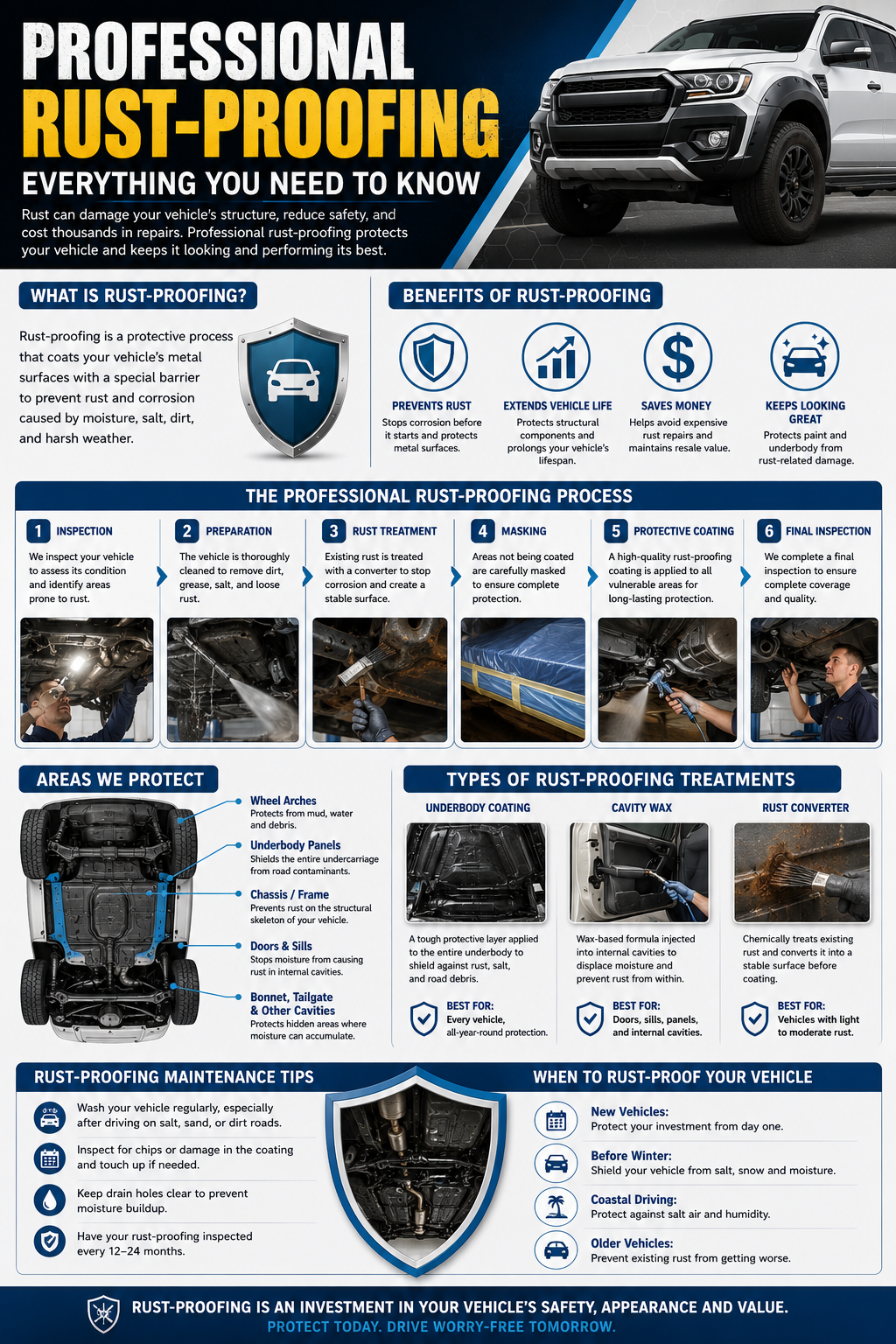
What Happens During Professional Rust-Proofing?
The exact process varies according to the vehicle and treatment system, but a professional service generally follows several important stages.
Step 1: Vehicle Inspection
The technician examines the vehicle for:
- Existing rust
- Flaking metal
- Previous coatings
- Underbody damage
- Blocked drainage points
- Oil or fluid leaks
- Mud and contamination
- Damaged paint
- Areas requiring repair before treatment
This inspection helps determine whether the vehicle can be treated immediately or needs cleaning, rust removal, repair, or further assessment.
Step 2: Surface Cleaning
Rust protection should not be applied over thick dirt, wet mud, loose scale, grease, or other contamination.
Depending on the treatment, preparation may involve:
- Underbody washing
- Removal of accumulated mud
- Degreasing
- Drying
- Removing loose rust
- Cleaning cavities or drainage points
Step 3: Surface Preparation
Early surface corrosion may need to be cleaned or treated before a protective product is applied.
Severely rusted areas may require:
- Panel repair
- Welding
- Component replacement
- Professional structural assessment
Rust-proofing cannot restore strength to metal that has already deteriorated.
Step 4: Masking Sensitive Areas
Certain components may need protection from overspray, including:
- Brakes
- Exhaust components
- Sensors
- Belts
- Electrical connectors
- Drain holes
- Moving parts
- Areas specified by the vehicle or product manufacturer
Step 5: Application
The chosen rust-protection product is applied to the appropriate areas using specialised spray equipment, extension wands, cavity probes, brushes, or other tools.
Application may include:
- Underbody surfaces
- Wheel arches
- Doors
- Sills
- Chassis cavities
- Tailgate
- Bonnet seams
- Frame rails
- Other moisture-prone areas
Step 6: Coverage Inspection
The technician checks the treated areas to confirm that coverage is consistent and that important drain holes, mechanical components, and service points remain functional.
Step 7: Drying or Curing
Some products remain soft, while others require drying or curing.
The service provider should explain:
- When the vehicle can be driven
- Whether slight dripping is expected
- How soon the vehicle can be washed
- Which cleaners should be avoided
- When the treatment should be inspected
How Long Does Professional Rust-Proofing Take?
The application time depends on:
- Vehicle size
- Vehicle condition
- Treatment method
- Cleaning requirements
- Existing rust
- Number of cavities treated
- Drying or curing requirements
- Previous underbody coatings
A straightforward preventative treatment may be completed within several hours. Vehicles requiring extensive preparation, removal of old coatings, rust repair, or curing may take longer.
The service provider should inspect the vehicle before giving a reliable time estimate.
How Often Should Rust-Proofing Be Applied?
There is no universal reapplication interval because rust-protection products and driving conditions vary.
As a general guide:
- Soft oil-based treatments may require annual or periodic reapplication.
- Cavity waxes should be inspected according to the product manufacturer’s instructions.
- Durable underbody coatings may last several years but should still be checked for chips, cracks, lifting, or abrasion.
- Electronic systems should be inspected and maintained according to the installer’s and manufacturer’s requirements.
- Vehicles used for beach driving, off-road travel, farm work, or regular coastal driving may need more frequent inspections.
The most reliable schedule is based on the product used, your vehicle’s condition, and how the vehicle is driven.
How Can You Tell Whether Rust Protection Needs Attention?
Inspect the vehicle or schedule a professional assessment if you notice:
- Exposed bare metal
- Scraped or missing underbody coating
- Cracks in an existing coating
- Bubbling paint
- Orange or brown staining
- Flaking metal
- Moisture trapped behind coating
- Blocked drain holes
- Corrosion around seams
- Rust around bolts or brackets
- Damage after off-road or beach driving
- Repairs that disturbed previously treated areas
Areas affected by collision repairs, accessory installation, welding, panel replacement, or underbody work may need to be retreated.
Is Professional Rust-Proofing Worth It?
Professional rust-proofing may be a worthwhile investment when the vehicle faces regular corrosion exposure or when the owner plans to keep it for many years.
It may be especially valuable for drivers who:
- Live near the coast
- Regularly drive on beaches
- Use a 4WD off-road
- Drive through mud or floodwater
- Keep vehicles outdoors
- Own a work ute or commercial vehicle
- Want to retain a new vehicle long term
- Are restoring an older vehicle
- Have already noticed early surface corrosion
The cost of rust protection should be compared with the potential cost of body repairs, chassis work, component replacement, repainting, or reduced resale value.
Rust-proofing is not a guarantee that corrosion will never occur. Its value comes from reducing exposure and making corrosion prevention part of an ongoing vehicle-maintenance plan.
Can You Rust-Proof a New Vehicle?
Yes. In many cases, a newer vehicle is an ideal candidate because the metal and factory coatings are likely to be in better condition.
Applying appropriate protection before corrosion develops can help protect:
- Factory seams
- Underbody surfaces
- Enclosed cavities
- High-impact areas
- Sections vulnerable to coastal exposure
Before adding aftermarket rust protection, check:
- Vehicle warranty requirements
- Product compatibility
- Drainage locations
- Manufacturer restrictions
- Installation warranty conditions
Can You Rust-Proof a Used Vehicle?
Yes. A used vehicle can often receive rust protection after it has been properly inspected and prepared.
The technician should assess:
- Surface rust
- Structural rust
- Previous undercoating
- Accident repairs
- Damaged paint
- Mud or contamination
- Corrosion inside cavities
- Areas requiring repair
If rust is minor and localised, the area may be cleaned or treated before protection is applied. Advanced corrosion may require panel repair, welding, replacement, or specialist assessment first.
Can Rust-Proofing Stop Existing Rust?
Rust-proofing is primarily preventative.
Some rust-inhibiting products may help slow suitable early surface corrosion by limiting exposure to oxygen and moisture. However, simply spraying over rust does not reverse metal loss.
Existing corrosion may require:
- Cleaning the affected surface
- Removing loose scale
- Treating suitable surface rust
- Repairing damaged metal
- Applying primer, paint, sealant, or protective coating
- Monitoring the area regularly
Rust that has perforated a panel or weakened a structural section usually requires repair rather than coating alone.
Can You Apply Rust-Proofing Yourself?
DIY products can help protect small, accessible areas, but they have limitations.
DIY Rust Protection May Be Suitable For
- Small exposed brackets
- Minor stone chips after proper repair
- Accessible seams
- Hinges and fasteners
- Basic maintenance between professional services
- Temporary protection of suitable exposed metal
Professional Treatment Is Better For
- Enclosed cavities
- Chassis rails
- Door interiors
- Full underbody coverage
- Existing corrosion assessment
- Four-wheel drives and beach vehicles
- Vehicles with old undercoating
- Areas requiring specialised preparation
DIY application can create problems when coatings are sprayed over moisture, dirt, advanced rust, brakes, sensors, exhaust components, or blocked drainage openings.
How Much Does Professional Rust-Proofing Cost?
Rust-proofing prices vary because vehicles and treatment systems differ.
The final cost may depend on:
- Vehicle size
- Car, ute, van or 4WD body style
- Treatment method
- Number of areas treated
- Existing rust
- Cleaning and preparation
- Previous coatings
- Cavity treatment requirements
- Underbody accessories
- Repairs needed before application
- Product and workmanship warranty
A small passenger car receiving preventative treatment will usually require less material and labour than a large four-wheel drive with underbody accessories, heavy mud contamination, or existing corrosion.
The best way to obtain an accurate price is to have the vehicle assessed by a rust-protection specialist.
Questions to Ask a Rust-Proofing Provider
Before booking a service, ask:
- Which rust-protection system do you recommend for my vehicle?
- Is the treatment suitable for coastal or beach-driving conditions?
- Will you inspect for existing rust first?
- How will the underbody be cleaned and dried?
- Are internal cavities included?
- Will drain holes remain open?
- Which components will be masked?
- How long does the treatment last?
- When should it be inspected or reapplied?
- Is there a product or workmanship warranty?
- What maintenance is required after application?
- Can the treatment be repaired after underbody damage?
Clear answers will help you compare services based on preparation, coverage, product suitability, and ongoing maintenance—not price alone.
Rust-Proofing Maintenance Tips
Professional rust protection performs best when supported by regular vehicle care.
Wash the Vehicle Regularly
Remove salt, sand, mud, and other corrosive contaminants before they remain on the vehicle for extended periods.
Rinse After Beach Driving
Pay particular attention to:
- Wheel arches
- Chassis rails
- Suspension components
- Underbody guards
- Brackets
- Tow bars
- Areas behind wheels
Follow appropriate beach-driving and vehicle-manufacturer cleaning recommendations.
Keep Drain Holes Clear
Doors, tailgates, body cavities, and other panels may contain drainage openings. Blocking these holes can trap water and increase corrosion risk.
Repair Paint Chips Promptly
Stone chips and scratches expose metal to moisture and oxygen. Small damaged areas should be cleaned and repaired before rust spreads beneath the surrounding paint.
Inspect After Off-Road Driving
Rocks, branches, sand, and rough tracks can scrape protective coatings from the underside.
Check After Mechanical or Body Repairs
Welding, accessory installation, panel replacement, or mechanical work may disturb the existing rust protection.
Schedule Periodic Inspections
Routine inspection allows damaged coating, early corrosion, drainage issues, or exposed metal to be addressed before the problem becomes more serious.
Common Rust-Proofing Myths
Myth 1: New Cars Cannot Rust
Newer vehicles generally have factory corrosion protection, but they can still develop rust after paint damage, underbody impact, poor repairs, blocked drainage, coastal exposure, or prolonged contact with moisture and contaminants.
Myth 2: One Application Permanently Stops Rust
Rust-proofing is not permanent. Treatments can wear, crack, become damaged, or require reapplication.
Myth 3: Thick Undercoating Can Be Applied Over Any Rust
Covering active rust without correct preparation can conceal ongoing corrosion and may trap contamination or moisture beneath the coating.
Myth 4: Washing Removes the Need for Rust Protection
Regular washing is important, but it may not reach every cavity, seam, overlap, or enclosed section.
Myth 5: Rust Is Only a Cosmetic Problem
Rust can affect appearance, but it may also damage brackets, brake or fuel-line supports, mounting areas, floor sections, body seams, and structural components.
Myth 6: Electronic Protection Eliminates All Maintenance
Electronic systems should be treated as part of a wider corrosion-protection strategy. Washing, inspections, paint repairs, drainage maintenance, and appropriate physical protection may still be required.
Frequently Asked Questions
What is the best type of rust-proofing for a car?
The best system depends on the vehicle, its existing condition, where it is driven, and which areas need protection. Cavity treatments are useful inside seams and enclosed panels, while durable underbody coatings are intended for exposed lower surfaces. Some vehicle owners may also consider electronic rust protection after discussing suitability with a professional installer.
Is rust-proofing necessary in a coastal area?
Coastal air contains salt that can settle on vehicle surfaces and contribute to corrosion when combined with moisture. Vehicles regularly driven or parked near the ocean may benefit from more frequent washing, inspections, and a professionally selected rust-protection system.
Should I rust-proof my four-wheel drive?
Rust protection may be especially useful for 4WDs exposed to beach driving, mud, water crossings, gravel, sand, and coastal conditions. The underside should be thoroughly cleaned, dried, and inspected before treatment.
How often should rust-proofing be reapplied?
Reapplication intervals vary by product. Some oil-based systems may need periodic or annual renewal, while durable coatings may last several years if they remain intact. Follow the manufacturer’s and installer’s recommendations.
Does rust-proofing stop rust that has already started?
Rust-proofing may help slow suitable early surface corrosion after proper preparation, but it does not rebuild damaged metal. Advanced corrosion should be repaired before protective coatings are applied.
Can you rust-proof over surface rust?
Only after the surface has been assessed and correctly prepared. Loose scale, dirt, moisture, and unstable corrosion should be removed or treated before applying a protective product.
Can undercoating trap moisture?
Yes, if it is applied over wet, dirty, contaminated, or actively rusting surfaces. Cracked or poorly bonded coatings may also allow moisture to enter and remain underneath.
Does rust-proofing void a vehicle warranty?
It depends on the vehicle manufacturer, treatment, application method, and affected component. Review the warranty documentation and ask the installer about product compatibility before proceeding.
How long does rust-proofing take to dry?
Drying time depends on the product. Oil-based treatments may remain soft, while wax, bitumen, or rubberised coatings may require a defined curing period. Follow the installer’s instructions before washing or exposing the vehicle to severe conditions.
Does rust-proofing make a car quieter?
Some thicker underbody coatings may help reduce a degree of road noise or vibration, but noise reduction should be considered a secondary benefit rather than the treatment’s primary purpose.
Is factory rust protection enough?
Factory protection may be adequate for many normal driving conditions. Additional treatment may be considered when a vehicle is regularly exposed to coastal air, beach driving, mud, standing water, road salt, or harsh work environments.
Can rust-proofing be removed?
Some coatings can be removed using specialised solvents, scraping, steam cleaning, blasting, or other preparation methods. Removal can be time-consuming and should be performed carefully to avoid damaging the metal or factory finish.
Should an older car be rust-proofed?
An older vehicle may still benefit if the metal remains structurally sound. A professional inspection is essential because existing rust, old coatings, trapped contamination, and previous repairs must be assessed first.
What is the difference between rust-proofing and rust repair?
Rust-proofing is intended to prevent or slow future corrosion. Rust repair removes, treats, replaces, or rebuilds metal that has already been damaged.
Can I wash my car after rust-proofing?
The required waiting period depends on the product. Ask the installer when the vehicle can be washed and whether high-pressure cleaning or specific chemicals should be avoided.
Final Thoughts
Professional rust-proofing is a preventative investment that can help protect a vehicle from moisture, salt, mud, sand, road debris, and other conditions that contribute to corrosion.
The quality of the application depends on more than the product itself. Proper inspection, cleaning, drying, surface preparation, coverage, drainage protection, and ongoing maintenance all influence the result.
Rust protection is generally most effective when applied before significant corrosion develops. Vehicles with existing rust should be carefully assessed so that damaged areas can be treated or repaired rather than simply concealed beneath a new coating.
By combining professional rust protection with regular washing, paint-chip repair, underbody inspections, clear drainage points, and timely maintenance, vehicle owners can reduce corrosion risk, protect resale value, and help keep their vehicles in better condition for longer.
Professional Rust Protection on the Gold Coast
If your car, ute, commercial vehicle, or 4WD is regularly exposed to coastal air, rain, mud, sand, or beach-driving conditions, SuperCool Southport can assess your vehicle and recommend an appropriate rust-protection solution. The Southport workshop offers both electronic rust protection and underbody protection, with particular experience servicing 4WDs. SuperCool has operated on the Gold Coast for more than 40 years and is located at 51 High Street, Southport. Call
07 5532 8133 or visit
SuperCool Southport to request advice, a quote, or a booking.