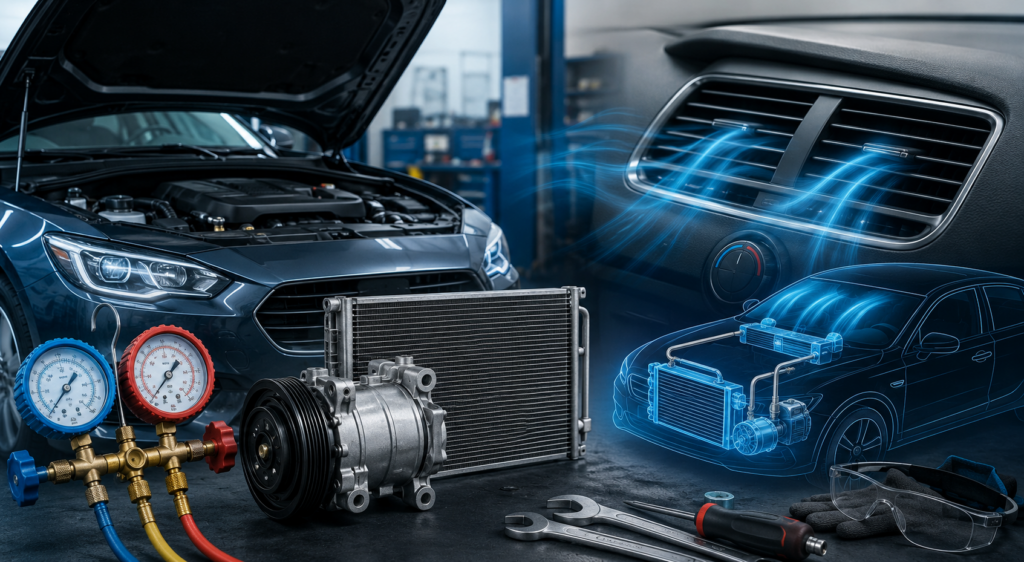
Understanding how your
vehicle’s air conditioning system works can help you identify problems early, prevent expensive repairs, and know whether the issue is something you can fix yourself or requires professional diagnosis.
This complete beginner’s guide explains:
- How a car AC system works
- The most common causes of AC failure
- Step-by-step troubleshooting
- Easy DIY maintenance you can safely perform
- Repairs that require professional equipment
- Preventative maintenance tips
- Frequently asked questions about automotive air conditioning
Whether you drive a small hatchback, family SUV, ute, or commercial vehicle, this guide will help you better understand your vehicle’s air conditioning system. You can also read these
car AC repair tips for vehicle owners for additional maintenance advice.
Quick Answer
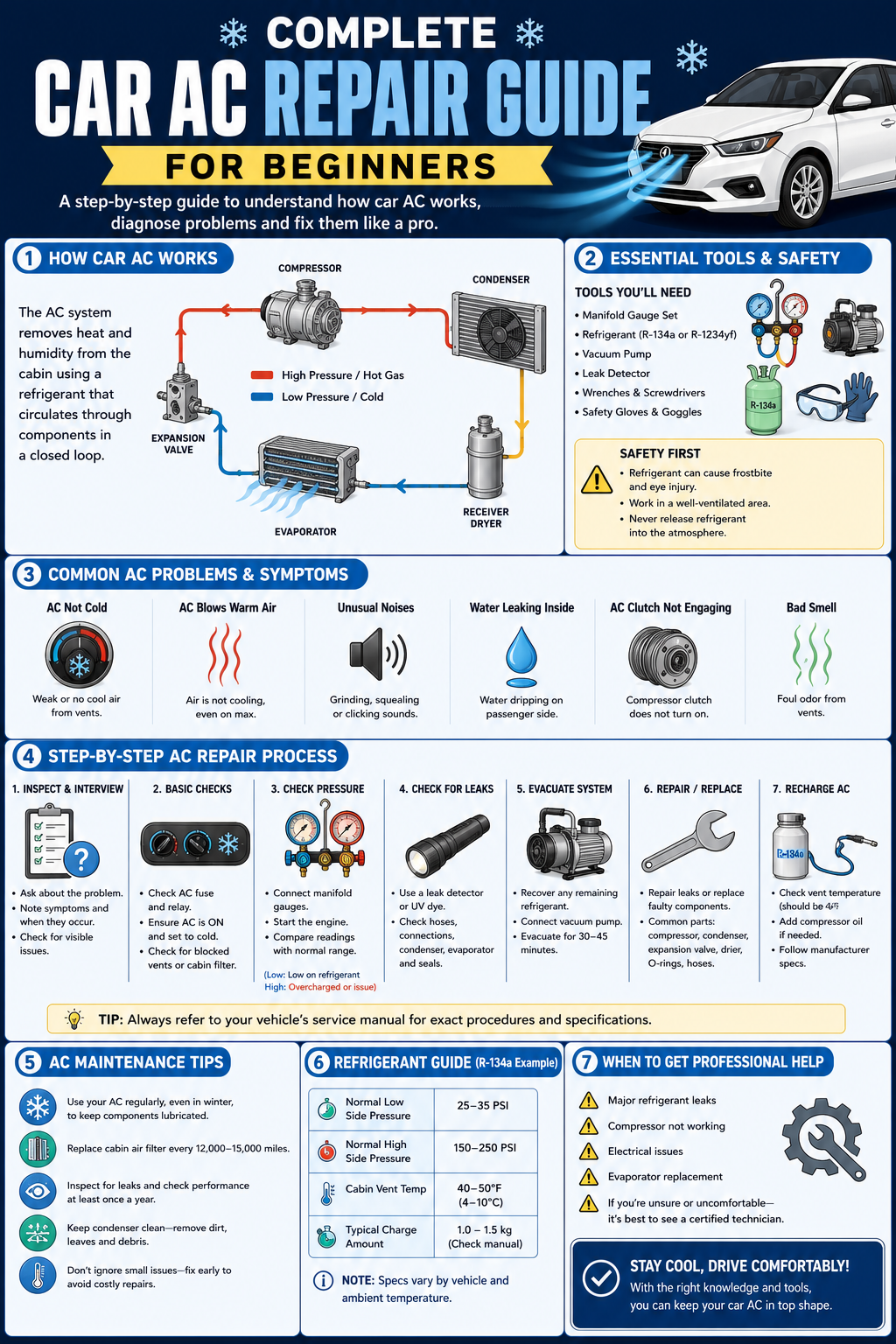
A car air conditioning system cools your vehicle by circulating refrigerant through five main components: the compressor, condenser, receiver-drier or accumulator, expansion valve, and evaporator. If your AC is blowing warm air, has weak airflow, makes unusual noises, or smells musty, common causes include low refrigerant, refrigerant leaks, a clogged cabin air filter, a faulty compressor, or electrical problems.
Beginners can safely replace cabin air filters, inspect fuses, and clean the condenser. However, refrigerant leaks, compressor replacement, and professional car AC regassing should be handled by a qualified technician using specialised equipment.
What Is a Car Air Conditioning System?
A car air conditioning system is a sealed climate-control system designed to remove heat and humidity from inside your vehicle. Rather than creating cold air, it transfers heat from the cabin to the outside using refrigerant.
Besides improving comfort, a properly functioning AC system also helps:
- Defog windshields during wet or humid weather
- Reduce driver fatigue during hot days
- Improve passenger comfort on long trips
- Protect electronic components from excessive cabin temperatures
- Improve visibility by reducing window condensation
Unlike a home’s air conditioner, an automotive AC system must operate while enduring vibration, engine heat, changing weather conditions, and constant movement. This makes regular
car air conditioning servicing especially important.
Common Signs Your Car AC Needs Repair
Recognising symptoms early often prevents larger, more expensive repairs. For a more detailed overview, read SuperCool Southport’s guide to
finding reliable car AC repair services near you.
1. AC Blows Warm Air
Warm air is one of the most common complaints.
Possible causes include:
- Low refrigerant
- Refrigerant leak
- Failed compressor
- Faulty compressor clutch
- Blocked condenser
- Expansion valve failure
If the air is only slightly cool, the system may be low on refrigerant. If it is completely warm, a mechanical or electrical failure may be present.
2. Weak Airflow From the Vents
Poor airflow usually points to an airflow restriction rather than a refrigerant problem.
Common causes include:
- Dirty cabin air filter
- Worn blower motor
- Faulty blower motor resistor
- Blocked evaporator
- Damaged ventilation ducts
3. Strange AC Noises
Different noises often indicate different problems.
| Noise |
Possible Cause |
| Squealing |
Worn belt or pulley |
| Grinding |
Compressor bearings |
| Clicking |
Compressor clutch |
| Rattling |
Loose mounting hardware |
| Whistling |
Air leaks in ventilation ducts |
Ignoring unusual noises can result in more extensive damage over time. SuperCool Southport provides professional diagnosis for
noisy and underperforming car air conditioning systems.
Why Does Car Air Conditioning Stop Working?
Several issues can cause your AC to stop cooling properly.
Low Refrigerant
Refrigerant does not normally get “used up.” If the refrigerant level is low, the system likely has a leak.
Common leak locations include:
- Compressor shaft seals
- Rubber hoses
- O-rings
- Condenser
- Evaporator
Learn more about refrigerant types, warning signs, refilling risks, and professional servicing in this guide to
car AC refrigerant refills.
Compressor Failure
The compressor may fail because of:
- Internal wear
- Lack of lubrication
- Overheating
- Contaminated refrigerant
- Electrical failure
Electrical Problems
Modern AC systems rely on multiple sensors and electrical components.
Potential failures include:
- Blown fuse
- Faulty relay
- Pressure switch failure
- Damaged wiring
- Failed climate control module
Condenser Damage
Road debris, insects, leaves, and stones can damage the condenser or block airflow.
Reduced airflow causes higher system pressures and reduced cooling. If cleaning does not restore performance, arrange a professional
car AC inspection and repair.
Step-by-Step Car AC Troubleshooting
Before replacing expensive components, perform these beginner-friendly inspections. You can also review these
five practical car AC repair tips before beginning.
Step 1: Check AC Settings
Confirm:
- The AC button is switched on
- The temperature is set to maximum cooling
- Recirculation mode is enabled
- The fan is operating at the selected speed
Sometimes incorrect climate-control settings are mistaken for mechanical faults.
Step 2: Inspect the Cabin Air Filter
Replace the filter if:
- It looks dirty
- Airflow is weak
- It has not been replaced according to the manufacturer’s maintenance schedule
- You notice musty odours
Step 3: Check AC Fuses
Using the owner’s manual:
- Locate the fuse box.
- Find the AC fuse.
- Inspect it for damage.
- Replace it only with a fuse of the correct amperage.
If the new fuse immediately blows, professional diagnosis is recommended.
Step 4: Observe Compressor Operation
Start the engine, turn the AC to maximum cooling, open the bonnet, and observe the compressor clutch.
If it never engages, possible causes include:
- Low refrigerant
- Faulty pressure switch
- Compressor clutch failure
- Electrical faults
Step 5: Inspect the Condenser
Look for:
- Leaves
- Dirt
- Insects
- Bent fins
- Physical damage
Cleaning the condenser can improve cooling performance, but suspected leaks or physical damage should be examined by an
automotive air conditioning technician.
Repairs Best Left to Professionals
Certain repairs require specialised tools, training, and refrigerant-handling certification.
These include:
- Compressor replacement
- Refrigerant recovery
- AC regassing or recharging
- Leak detection using nitrogen or UV dye
- Expansion valve replacement
- Evaporator replacement
- Condenser replacement
- Vacuum evacuation
- System pressure testing
Improper refrigerant charging can damage the compressor and reduce cooling performance. SuperCool Southport provides professional
car air conditioning diagnostics, leak detection, regassing, and repairs for cars, 4WDs, utes, vans, light trucks, buses, machinery, and refrigerated transport.
Can You Recharge Your Car AC Yourself?
DIY recharge kits are available, but they should be approached with caution.
While adding refrigerant may temporarily restore cooling, it does not fix the underlying cause if the system has a leak.
Potential risks include:
- Overcharging the system
- Using the incorrect refrigerant
- Compressor damage
- Reduced cooling efficiency
- Environmental harm if refrigerant escapes
For the best long-term results, refrigerant leaks should be diagnosed and repaired before the system is recharged. Read
everything you need to know about car AC refrigerant refills before deciding whether a recharge is appropriate.
When Should You Visit a Professional AC Repair Shop?
Schedule professional service if:
- The compressor has failed
- Refrigerant is leaking
- The AC clutch will not engage
- Cooling remains poor after basic maintenance
- The system needs refrigerant recovery or evacuation
- Electrical faults are suspected
- Warning lights indicate HVAC system issues
Professional technicians use manifold gauges, vacuum pumps, electronic leak detectors, UV dye, and manufacturer-approved refrigerants to diagnose and repair the system safely.
When comparing workshops, look for qualified technicians, proper leak testing, transparent recommendations, suitable refrigerant-handling equipment, and experience with modern automotive systems. SuperCool Southport’s guide to
choosing a reliable car AC repair service explains what to check before booking.
How to Prevent Car AC Problems
Routine maintenance helps maximise cooling performance and extend component life.
Best practices include:
- Run the AC for 10–15 minutes every week, even during winter.
- Replace the cabin air filter at the recommended interval.
- Keep the condenser clean and free from debris.
- Repair refrigerant leaks promptly.
- Park in shaded areas when possible to reduce cabin heat.
- Use recirculation mode during very hot weather to reduce system load.
- Have the AC inspected during routine vehicle servicing.
Drivers in the Gold Coast’s hot and humid conditions may benefit from regular
car air conditioning servicing in Southport to identify leaks, worn components, electrical faults, and declining cooling performance before they result in complete failure.
Frequently Asked Questions
How often should a car AC be serviced?
Most manufacturers recommend inspecting the air conditioning system during scheduled vehicle servicing. If cooling performance decreases, unusual noises develop, or the AC begins blowing warm air, have it inspected sooner.
SuperCool Southport recommends servicing vehicle air conditioning approximately every second year, particularly in Queensland conditions where systems are used heavily for much of the year.
Why is my car AC blowing warm air?
Warm air can be caused by low refrigerant, refrigerant leaks, a failing compressor, a faulty compressor clutch, electrical problems, or restricted airflow through the condenser. A professional
car AC diagnostic inspection can identify the underlying cause before refrigerant or components are replaced.
Why is my car AC cold while driving but warm when stopped?
This commonly indicates insufficient airflow through the condenser due to a failing radiator cooling fan, a dirty condenser, low refrigerant, or a worn compressor that struggles at idle.
Can low refrigerant damage the compressor?
Yes. Refrigerant carries lubricating oil throughout the AC system. Operating with low refrigerant reduces lubrication, increases friction, and can contribute to premature compressor failure.
Is it normal for water to drip under my car when the AC is on?
Yes. Water dripping underneath the vehicle is usually condensation from the evaporator and is completely normal. Water leaking inside the cabin, however, often indicates a clogged evaporator drain.
Final Thoughts
A vehicle’s air conditioning system is more than a comfort feature—it also improves visibility, reduces driver fatigue, and enhances overall driving safety. Understanding the basics of how the system works makes it easier to recognise warning signs such as warm air, weak airflow, unusual noises, or musty odours before they develop into expensive repairs.
Simple maintenance tasks such as replacing the cabin air filter, cleaning the condenser, and checking fuses are suitable for most beginners. However, repairs involving refrigerant handling, leak detection, compressor replacement, or system evacuation require specialised tools and should be performed by qualified technicians.
For more beginner maintenance advice, see these
car AC repair tips every vehicle owner should know.
Need Professional Car AC Repairs on the Gold Coast?
If your car’s air conditioner is blowing warm air, making unusual noises, producing weak airflow, or giving off unpleasant odours,
SuperCool Southport’s car air conditioning specialists can help.
The team provides professional diagnostics, leak detection, regassing, compressor repairs, electrical troubleshooting, and complete AC servicing for passenger vehicles, 4WDs, utes, commercial vehicles, vans, light trucks, buses, machinery, and refrigerated transport.
Motorists near Bundall can learn more about
car air conditioning repairs near Bundall, while drivers in the surrounding area can visit the
Broadbeach Waters car air conditioning service page.
Request a car AC quote or book an inspection online, or call
07 5532 8133 to arrange a service at
51 High Street, Southport QLD 4215.