

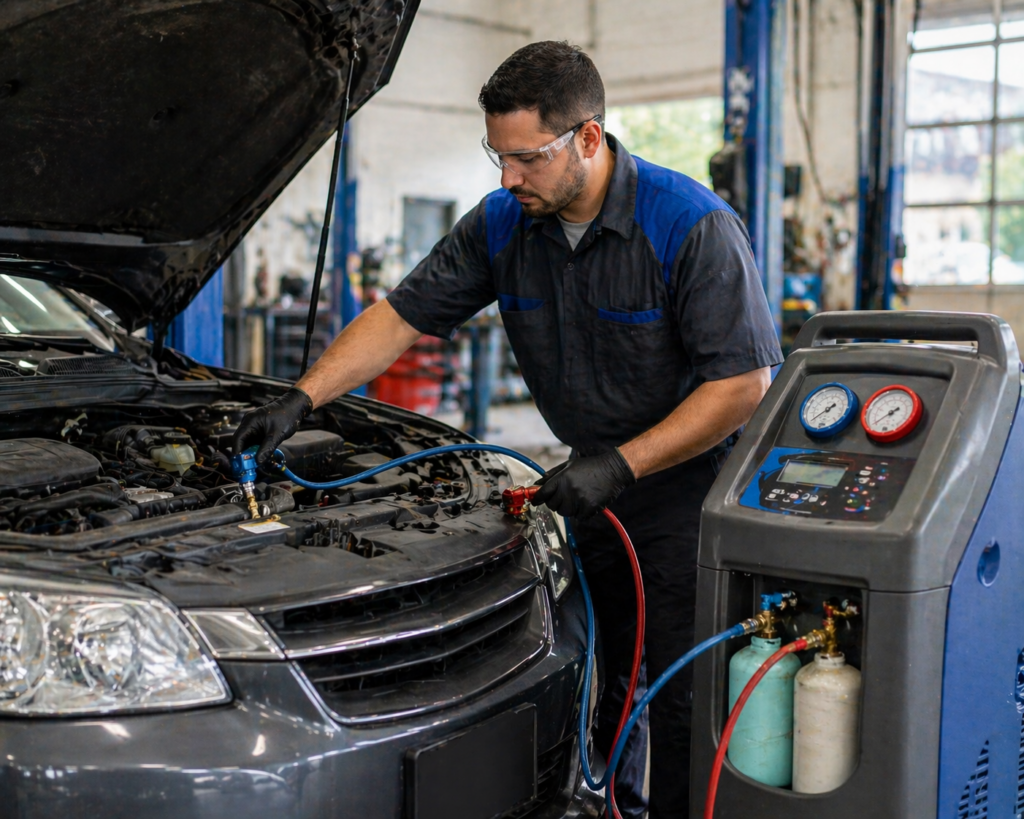
A properly functioning car air conditioning system is essential for comfort, especially in hot climates where driving without cool air can quickly become uncomfortable. At the centre of this system is refrigerant, the substance responsible for cooling the air inside your vehicle. When refrigerant levels drop or the system develops a problem, your air conditioner may stop performing as it should.
If your car’s AC is no longer blowing cold air, is taking longer to cool the cabin, or seems less effective than before, a refrigerant refill may be part of the solution. In this guide, we’ll cover what car AC refrigerant is, how it works, and why refills are sometimes needed.
Car AC refrigerant is a specialised chemical compound that absorbs heat from inside your vehicle and releases it outside, allowing the cabin to cool down. It moves through the air conditioning system in a sealed loop, changing between a gas and a liquid as it cycles through different components.
This process is what makes it possible for your AC system to remove heat from the air inside your car and replace it with cooler air. Without enough refrigerant, the system cannot cool properly, no matter how well the other components are working.
Different vehicles use different types of refrigerant depending on the year they were manufactured and the system design.
R-134a was widely used in vehicles manufactured between 1994 and 2015. It became the standard replacement for older refrigerants and is still found in many cars on the road today.
R-1234yf is a newer, more environmentally friendly refrigerant now used in many modern vehicles. It was introduced to reduce the environmental impact of automotive air conditioning systems and has become increasingly common in newer models.
Because these refrigerants are not interchangeable in most systems, it is important to know which type your vehicle requires before attempting any AC service or refill.
Your car’s air conditioning system relies on refrigerant circulating through several key components. While the process may sound technical, it follows a simple cooling cycle that repeats continuously whenever the AC is turned on.
The main components include:
Here’s how the process works:
The cycle begins with the compressor, which pressurises the refrigerant and moves it through the system. This step increases the refrigerant’s temperature and pressure.
The hot, pressurised refrigerant then moves into the condenser, where it releases heat to the outside air. As it cools, it changes from a gas into a liquid.
Next, the refrigerant passes through the expansion valve, which rapidly lowers its pressure. This causes the refrigerant to cool significantly before it enters the evaporator.
Inside the evaporator, the refrigerant absorbs heat from the air inside the car. As warm cabin air blows across the evaporator, the refrigerant pulls the heat out, leaving the air cooler before it is sent back into the cabin through the vents.
This cycle repeats continuously while your AC is running, keeping the interior of your vehicle cool and comfortable.
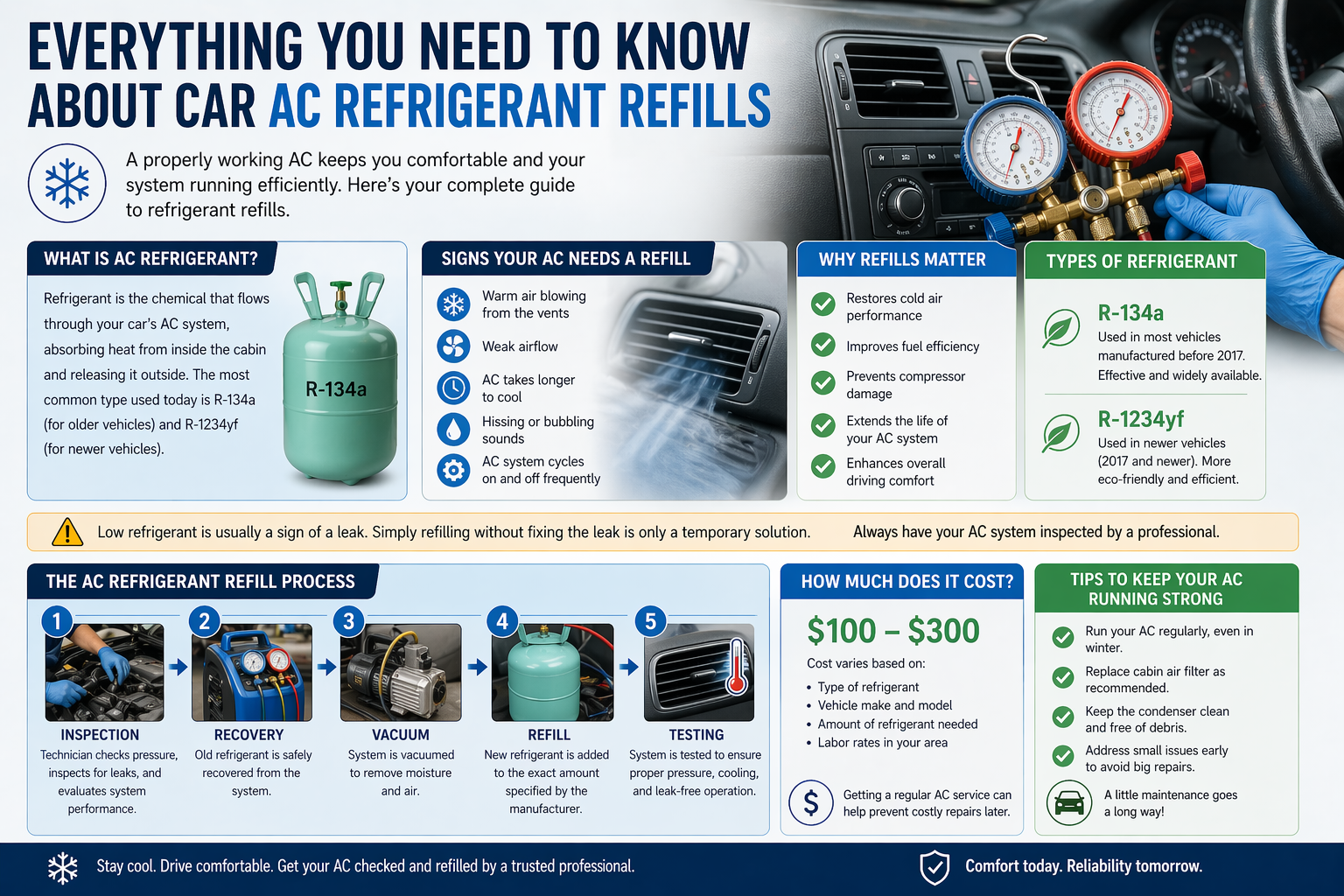
Car AC refrigerant doesn’t get “used up” under normal conditions, so if levels are low, it usually means there’s a leak or system issue. Recognising the warning signs early can help prevent bigger (and more expensive) problems.
Common signs include:
If you notice one or more of these symptoms, it’s a good idea to have your system checked.
There’s no fixed schedule for refrigerant refills. In a properly sealed system, refrigerant should last the lifetime of the vehicle. However, due to small leaks or natural wear over time, many vehicles require a recharge every 2 to 5 years.
If your car needs frequent refills, it’s likely there’s a leak that should be professionally inspected and repaired.
When it comes to refilling your car’s AC refrigerant, you have two main options: doing it yourself or having it serviced by a professional.
AC recharge kits are available from auto parts stores and typically include a refrigerant can and pressure gauge.
Pros:
Cons:
A certified technician will perform a full system check and recharge.
What’s included:
Pros:
Cons:
⚠️ Always follow safety instructions and wear protective gear.
Keep in mind that this method is best for minor top-ups and not a replacement for proper system servicing.
The cost of refilling your car’s AC depends on whether you choose DIY or professional service, as well as the type of refrigerant used.
Newer refrigerants like R-1234yf are generally more expensive, which can increase service costs.
Car AC refrigerants need to be handled with care. Improper use or disposal can harm the environment and pose safety risks to both you and others.
To ensure safe handling:
Responsible handling not only protects the environment but also helps ensure your AC system operates safely and efficiently.
Regular maintenance is key to keeping your car’s air conditioning system running smoothly and reducing the need for frequent refrigerant refills.
Simple steps you can take include:
These small but important habits can help extend the lifespan of your AC system and keep it performing efficiently all year round.
Car AC refrigerant refills are an important part of maintaining a comfortable driving experience. While DIY kits can offer a quick and affordable solution, they are often temporary fixes and may not address the root cause of the problem.
If your AC isn’t performing as it should, a professional inspection is usually the best option to ensure there are no leaks or deeper system issues. Keeping your AC system in good condition not only improves comfort but also helps extend the lifespan of key components.
Need a professional refrigerant refill or AC system check? Trust experienced technicians to diagnose and restore your vehicle’s cooling performance quickly and safely.
Book your car AC service today with Supercool Southport:
👉 https://supercool-southport.com.au/
