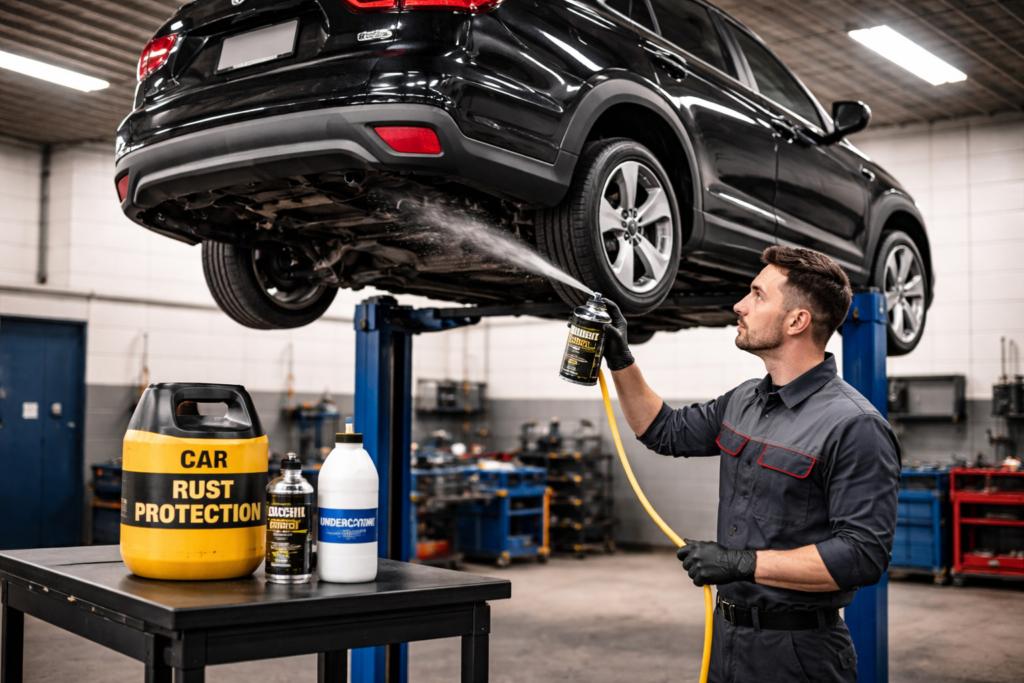
Rust rarely appears at random. It usually develops in places where water, mud, road grime, salt, and debris collect over time. These vulnerable areas often go unnoticed until corrosion has already started, which is why early prevention is so important.
Knowing where rust is most likely to form can help you stay ahead of costly damage. With regular cleaning, inspections, and protective treatments, you can reduce the risk of corrosion, protect your vehicle’s appearance, and maintain its long-term resale value.
Here are the top five rust-prone areas on your car and how to protect them effectively.
1. Undercarriage: The Most Vulnerable Area
The undercarriage is one of the most rust-prone parts of any vehicle. It is constantly exposed to moisture, mud, road grime, gravel, and in some environments, salt residue. Because this area is out of sight, it is also one of the most commonly neglected during routine car care.
Over time, dirt and moisture can build up around metal components underneath the car, creating the perfect conditions for rust to develop. If left untreated, underbody corrosion can affect important structural and mechanical parts, leading to expensive repairs and reduced vehicle safety.
Why the Undercarriage Rusts
- direct exposure to water, mud, and road debris
- build-up of grime in hard-to-clean areas
- limited visibility, which means rust often goes unnoticed
- often missed during standard exterior washes
How to Protect the Undercarriage
- wash the underbody regularly, especially after rain, beach trips, or muddy drives
- apply undercoating or professional rust-proofing treatment
- inspect the underside periodically for early signs of corrosion
- remove packed dirt and debris before they hold moisture against the metal
Why it matters: Rust underneath the vehicle can spread quietly and affect major components before you even see visible signs on the outside.
2. Wheel Wells and Arches
Wheel wells and arches are another major rust hotspot because they are constantly hit by water, gravel, dirt, and road spray thrown up by the tyres. These areas deal with repeated impact during normal driving, which makes them especially vulnerable to paint damage and corrosion.
When stones and debris chip the paint inside the wheel arches, bare metal can become exposed. Once that metal comes into contact with moisture, rust can begin to form quickly.
Why Wheel Wells and Arches Rust
- constant spray from tyres during wet or dirty driving conditions
- stone chips and gravel impact that damage paint
- trapped mud and grime that hold moisture in place
- difficult-to-reach surfaces that may not be cleaned thoroughly
How to Protect Wheel Wells and Arches
- clean the wheel wells during every wash, not just the visible body panels
- remove caked mud and debris promptly
- use protective liners, coatings, or arch treatments where appropriate
- repair chipped paint as soon as possible to prevent exposed metal from corroding
Extra tip: After driving on rough, wet, or gravel roads, it is a good idea to rinse out the wheel arches before dirt hardens and becomes harder to remove.
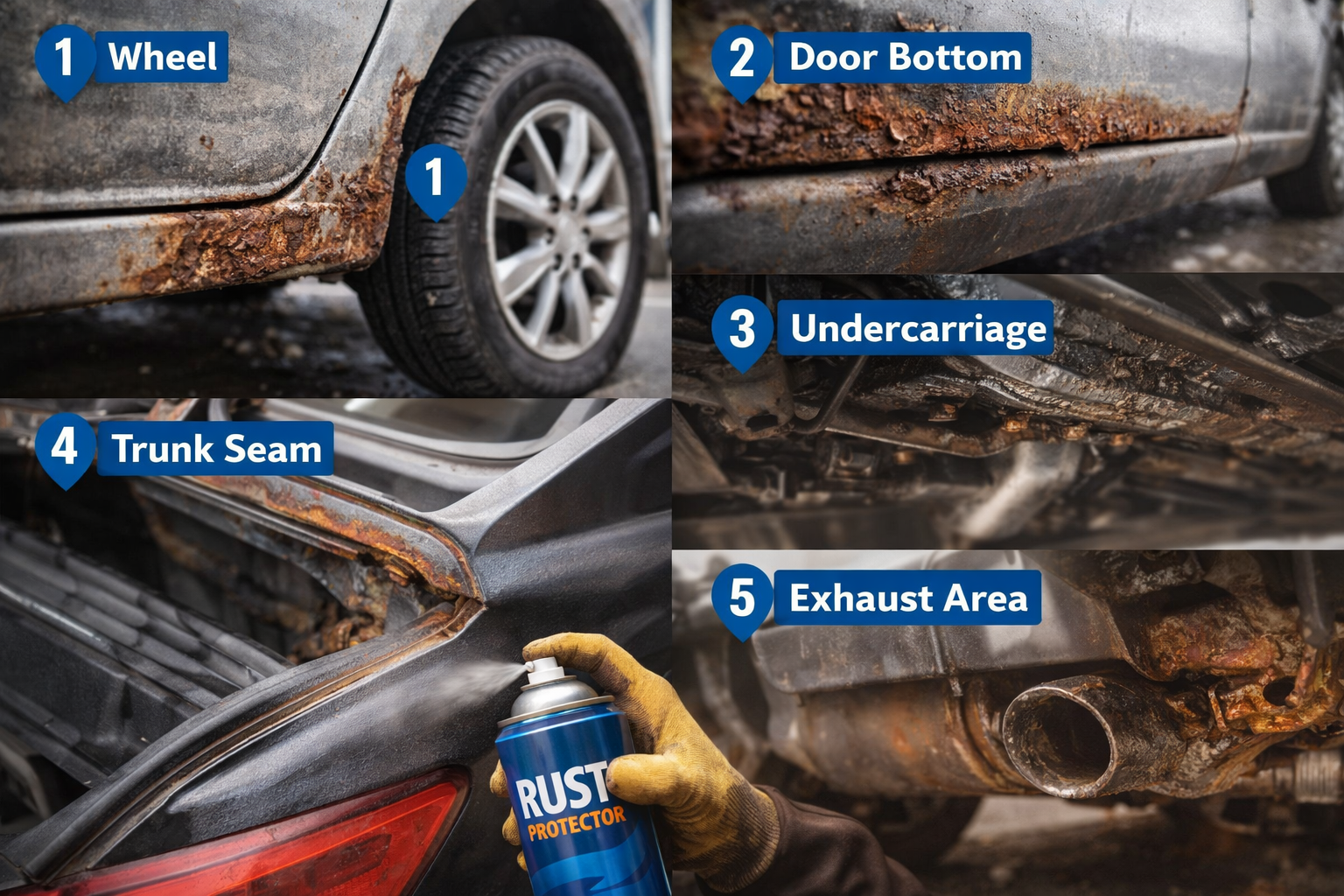
3. Door Edges and Bottom Seals
Door edges and lower door sections are common places for hidden rust because water can collect inside the doors and along the seals. If drainage holes become blocked or moisture lingers around the edges, corrosion can begin from the inside out.
This area is especially vulnerable because it often looks clean on the outside while moisture is sitting inside the panel or behind the seal.
Why Door Edges and Bottom Seals Rust
- moisture buildup inside the door panels
- blocked or clogged drain holes preventing water from escaping
- trapped dirt around seals and edges
- repeated exposure to rainwater and wash water
How to Protect Door Edges and Bottom Seals
- check and clear door drain holes regularly
- dry the door edges and jambs after washing or heavy rain
- apply anti-rust spray or protective sealant to vulnerable areas
- inspect around rubber seals for trapped dirt, moisture, or bubbling paint
Why it matters: Rust in doors can spread quietly and may not be obvious until bubbling paint or corrosion appears along the edges.
4. Boot and Bonnet Edges
The edges of the boot and bonnet are often exposed to water during rain, washing, and normal driving. Moisture can collect around seams, seals, and lip edges, particularly if rubber seals begin to wear out or if dirt prevents water from draining properly.
These areas are easy to overlook because they do not face as much road spray as the undercarriage or wheel arches, but they can still develop corrosion over time if left unprotected.
Why Boot and Bonnet Edges Rust
- water collects along seams, edges, and seals
- worn or damaged rubber seals allow moisture to sit in place
- dirt and debris trap water in tight spaces
- repeated wetting and drying gradually breaks down protection
How to Protect Boot and Bonnet Edges
- inspect seals regularly and replace worn rubber where needed
- wipe these areas dry after rain or washing the car
- clean out any debris that collects along the edges
- apply wax or protective sealant to help create a moisture barrier
Extra note: The boot area is especially important because water leaks or trapped moisture can sometimes go unnoticed until rust has already started around the edges or beneath trim.
5. Paint Chips and Scratches Anywhere on the Body
Not all rust starts in obvious problem zones. Sometimes it begins with something as small as a stone chip or surface scratch. Once paint is broken, bare metal is exposed to oxygen and moisture, which creates the ideal conditions for rust to form.
This is why even minor cosmetic damage should never be ignored. What starts as a small chip can spread into bubbling paint, surface rust, and eventually deeper corrosion if left untreated.
Why Paint Chips and Scratches Rust
- exposed metal reacts with moisture and air
- minor damage is often ignored until rust becomes visible
- repeated exposure to sun, rain, and contaminants worsens the area over time
How to Protect Against Rust from Paint Damage
- repair chips and scratches as soon as possible
- use touch-up paint for minor areas of damage
- keep the paint protected with wax, sealant, or ceramic coating
- inspect your car regularly for small marks, especially on the bonnet, lower panels, and around the doors
Why it matters: Small cosmetic damage is one of the easiest rust risks to fix early—and one of the most expensive if neglected for too long.
Bonus: Other Areas to Watch Closely
While the five areas above are among the most common rust hotspots, there are several other places where corrosion can also develop.
Additional Rust-Prone Areas Include:
- around the fuel cap, where moisture and dirt can collect
- under rubber seals and trim, where trapped water may go unnoticed
- exhaust system components, which are exposed to heat, condensation, and road grime
- suspension joints, bolts, and brackets underneath the vehicle
- around windscreens or rear windows if seals begin to fail
These areas may not always show visible rust immediately, but they are worth checking during routine inspections.
How to Stay Ahead of Rust
The best defence against rust is prevention. Regular washing, quick repairs, and routine inspections can make a major difference in protecting your vehicle over time.
A simple rust-prevention routine should include:
- washing the car regularly, including the underbody
- checking high-risk areas for moisture, grime, or paint damage
- keeping seals and drainage points clean
- fixing chips and scratches before rust starts
- applying rust-proofing or protective coatings where needed
The earlier you catch a rust issue, the easier and more affordable it is to manage.
Signs of Rust You Shouldn’t Ignore
Catching rust early can make a significant difference in preventing costly repairs and long-term damage. What starts as a small surface issue can quickly spread beneath the paint and into deeper metal layers if left untreated.
Watch Out for These Early Warning Signs
- Bubbling or peeling paint
This often indicates moisture trapped beneath the paint surface, which is a common early stage of corrosion.
- Orange or brown discoloration
Visible rust spots are a clear sign that oxidation has already begun and should be addressed immediately.
- Rough or flaky metal surfaces
When metal starts to feel uneven, brittle, or crumbly, it usually means rust has progressed beyond the surface.
Tip: Even minor signs of rust should not be ignored—early treatment is always easier and more affordable than repairing advanced corrosion.
Final Thoughts
Rust may begin as a small, almost unnoticeable issue, but it can spread quickly and cause serious damage if left unchecked. The key to protecting your vehicle is regular inspection, early detection, and consistent maintenance.
By paying attention to high-risk areas, fixing small issues promptly, and following a proper cleaning and protection routine, you can significantly extend your car’s lifespan and preserve its resale value.
A little attention today can save you from major repairs—and major costs—tomorrow.
Protect Your Car Before Rust Becomes a Problem
Don’t wait until rust starts to spread. Professional rust-proofing and inspections can help safeguard your vehicle’s most vulnerable areas and keep it in top condition for years to come.
Visit https://supercool-southport.com.au/ to learn more about expert rust prevention services and keep your car protected.