Top 5 Signs Your Car AC Needs Repair and How to Fix It Fast
Key Takeaways
Weak airflow or warm air is usually caused by low refrigerant or clogged filters.
Strange noises indicate compressor or fan issues—avoid running the AC until checked.
Bad smells usually come from mould buildup and require a system clean.
Leaking water inside often means a blocked drain hose.
Rapid cycling signals electrical or refrigerant problems that shouldn’t be ignored.
Early diagnosis prevents bigger, more expensive repairs.
Gold Coast workshops often offer same-day service—don’t wait for the issue to worsen
A functional car air conditioner is essential—especially during the sweltering Gold Coast summers. When your vehicle’s AC starts acting up, it’s more than just uncomfortable. It could indicate an underlying mechanical or electrical issue that, if ignored, may lead to costly repairs.Whether you’re in Labrador, Broadbeach, Southport, or anywhere across the Gold Coast, knowing the early warning signs can save you time, money, and stress.Below, we break down the top 5 signs your car’s AC needs repair, what they mean, and how to fix them quickly.
1. Weak or Warm Airflow
What it Means
If your AC is struggling to blow cold air—or the airflow feels weak, patchy, or noticeably warm—your system is signaling that something isn’t working as it should. This issue can develop gradually or appear suddenly, depending on the cause. Here are the most common reasons:
Low Refrigerant Levels
Refrigerant is essential for cooling the air in your AC system. Over time, refrigerant can naturally dissipate or leak through worn seals, hoses, or tiny cracks in the lines. When levels drop too low:
The system can’t cool the air effectively
You may hear the compressor cycling more often
The air might start cold but quickly turn warm
This is the #1 cause of warm airflow, especially in older cars or vehicles that haven’t had an AC service for several years.
Clogged Cabin Air Filter
Your cabin filter traps dust, pollen, leaves, and debris before air enters the car. When it becomes clogged:
Airflow becomes noticeably weakThe blower motor must work harder
The air may feel warmer because not enough passes through the evaporator
Filters can become dirty quickly if you drive on dusty roads, park under trees, or live in high-humidity areas like the Gold Coast.
Failing or Weak Compressor
The compressor is the “engine” of your AC system. When it fails or begins to weaken:
Refrigerant cannot circulate properly
Cooling becomes inconsistent or stops entirely
You may hear unusual noises, like clicking or grinding
A slipping compressor clutch can also cause intermittent cooling, where the air cycles between cold and warm.
Dirty or Blocked Condenser
The condenser sits at the front of your vehicle and cools hot refrigerant. Because of its position, it often catches:
Leaves
Road dirt
Sand
Insects
Plastic debris kicked up from the road
A dirty condenser can’t release heat efficiently, leading to warm air even when the system is properly charged.How to Fix It Fast
Inspect and replace the cabin air filter. This is a quick and simple DIY task and often fixes weak airflow immediately.
Check the front grille and condenser area for debris. Use a gentle brush or compressed air—never high-pressure water, as it can bend the fins.
If airflow is still weak or warm, get a professional AC inspection, which typically includes:
Accurate refrigerant pressure testing
Leak detection using UV dye or electronic tools
Compressor and clutch performance checks
Condenser and evaporator health evaluation
Same-day re-gassing services are widely available in Broadbeach, Surfers Paradise, and surrounding Gold Coast suburbs, making restoration of cool air fast and convenient.
2. Unusual Noises When AC is On
What it Means
Any unusual sound coming from your AC system is a sign that something mechanical is out of balance, loose, or failing. The AC is part of a complex network of moving parts, so early detection is crucial to prevent a minor issue from becoming a costly repair.Here’s what the most common noises indicate:
Rattling or Clunking Noises
These sounds often occur when:
Bolts or brackets have come loose
The blower motor housing is vibrating
The AC fan has debris caught inside
A plastic part in the vents has cracked
Rattling usually starts small and becomes louder over time if ignored.
Hissing Sounds
A hissing noise usually means one thing: a refrigerant leak. This sound may come from:
The evaporator
The compressor
Refrigerant lines
The expansion valve
Hissing immediately after turning off the AC can also indicate pressure equalization, but if the noise is loud or frequent, a leak is likely.
Grinding Noises
This is the most serious sound. Grinding typically points to:
Worn compressor bearings
Internal compressor damage
A failing clutch assembly
If grinding is ignored, the entire compressor can seize—one of the most expensive AC repairs.
Debris in the Blower Fan
Because the fan draws in outside air, it’s common for debris to get stuck inside. When this happens, you’ll hear:
Whirring
Flapping
Light tapping noises
This can also restrict airflow and cause overheating of the blower motor.How to Fix It Fast
Turn off the AC immediately if you hear grinding or loud clunking. Running the system can cause further damage.
Book a quick inspection with a trusted Labrador technician. Professionals can quickly identify whether the noise is caused by debris, belt issues, or failing components.
Common repairs include:
Cleaning the blower fan
Tightening or replacing loose brackets
Replacing worn bearings or belts
Servicing or replacing the compressor
Most noise-related issues are manageable if caught early; delaying inspection often leads to bigger mechanical problems.
3. Foul Odours Coming from Vents
What it Means
If you notice unpleasant smells—such as musty, mouldy, sour, or damp odours—when switching on your AC, you’re dealing with moisture contamination inside the system. Because AC systems naturally generate condensation, they create the perfect environment for odour-causing organisms to thrive when airflow is blocked or filters are dirty.Here are the main causes:
Mould Growth in the Evaporator Core
The evaporator sits deep inside your dashboard, where it becomes cold and covered in condensation during AC operation. The combination of:
Moisture
Warm air after the car is parked
Limited airflow
creates a breeding ground for mould and bacteria. This often produces a musty or “wet dog” smell that worsens over time.
Dirty or Untreated Cabin Air Filters
Cabin filters accumulate:
Dust
Pollen
Moisture
Road grime
Tiny organic particles
Over time, these contaminants create stale, earthy, or sour smells. A neglected filter can even spread mould spores through the vents.
Clogged Drainage Lines
When the drain line becomes blocked by dirt, leaves, insects, or debris, water cannot drain out properly. This leads to:
Standing water in the evaporator box
Bacterial growth
Damp, mildew-like odours
This is especially common in humid areas like the Gold Coast.
Bacterial Contamination in Ducts
If the AC system has never been sanitized, bacteria can gradually coat the inside of your vents and ducts, creating persistent odours that return even after the AC is off.How to Fix It Fast
Book a deep AC cleaning service. Technicians use specialized solutions to clean and disinfect the evaporator, ductwork, and ventilation system.
Replace the cabin air filter. Choosing an antibacterial or activated carbon filter helps kill bacteria, trap smells, and improve future airflow.
Flush and clear drainage lines. This prevents water buildup and stops mould from returning.
Many Gold Coast AC repair specialists offer anti-bacterial fogging treatments, deodorising sprays, and deep cleaning packages that eliminate odours at the source—and prevent rapid regrowth.
Water Leaking Inside the Cabin
What it Means
Finding water on the passenger-side floor is a clear sign that the AC system’s moisture management is failing. While the AC naturally produces condensation, this water should always drain outside the vehicle. When it doesn’t, the issue typically stems from one of the following:
Blocked Evaporator Drain Hose
This hose is responsible for carrying condensation out of the car. When it gets clogged with:
Dirt
Leaves
Dust
Mould buildup
Insects
water backs up and spills into the cabin instead.
Damaged or Loose Seals
Rubber seals around the AC components can:
Crack
Shrink
Become brittle
Shift out of alignment
When this happens, moisture leaks inside instead of being routed outside the vehicle.
Overwhelmed Evaporator Box
If the evaporator collects too much condensation (often due to humidity or poor airflow), it can overflow into the cabin.
Excess Humidity
Gold Coast’s warm, humid climate increases condensation inside vehicles. If the AC system is even slightly compromised, water buildup is more likely.How to Fix It Fast
Have a technician clear the evaporator drain hose. This simple, affordable fix often resolves the problem immediately.
Inspect carpets and underlay for moisture. Wet carpet can lead to mould, mildew, and lingering odours, so drying may be necessary.
Replace any worn or cracked seals. This prevents future leaks and ensures correct moisture drainage.
Most Gold Coast workshops offer same-day moisture and leak repairs, preventing long-term interior damage.
AC Cycles On and Off Rapidly
What it Means
If your AC turns on and off repeatedly in short bursts—known as short-cycling—your system is struggling to maintain consistent pressure or airflow. This is a major warning sign of underlying issues that can lead to compressor failure if ignored.Here’s what causes it:
Low Refrigerant Levels
Insufficient refrigerant means the system can’t maintain the pressure needed for stable cooling. As a result:
The compressor switches on and off rapidly
Cooling performance becomes inconsistent
The system may overheat
Electrical Problems or Relay Faults
Issues with wiring, relays, or control modules interrupt communication between AC components. This can cause the compressor to engage and disengage erratically.
Bad Compressor Clutch
The clutch controls when the compressor turns on. If it’s worn or failing:
Cooling may start and stop suddenly
You may hear clicking sounds
The AC will feel unreliable
Faulty Thermostats or Sensors
Bad temperature sensors can send incorrect readings, causing the AC to react improperly.
Frozen Evaporator Coil
A low refrigerant level or restricted airflow (often from a dirty filter) can cause the coil to freeze, triggering rapid cycling to protect the system.How to Fix It Fast
Do not run the AC until it’s checked. Short-cycling can burn out your compressor—one of the costliest AC components.
Visit a workshop for diagnostics, including:
Refrigerant pressure testing
Electrical and relay scans
Compressor clutch inspection
Coil and airflow evaluation
Most Gold Coast technicians offer quick, accurate diagnostics that pinpoint the exact cause and restore stable cooling fast.
When to Call the Pros
If you’ve noticed any of the warning signs—weak airflow, strange noises, musty odours, water leakage, or rapid on/off cycling—it’s time to take action. Car AC issues don’t resolve themselves, and ignoring them can lead to far more serious (and costly) mechanical problems.Here’s what delaying repairs can cause:
Lead to Compressor Failure
The compressor is one of the most expensive AC components. Running your AC with low refrigerant, restricted airflow, or internal blockages can cause the compressor to seize or burn out—resulting in a major repair bill.
Cause Mould Growth in Your Cabin
Moisture trapped inside the evaporator or ductwork can spread mould throughout the system. This not only creates bad smells but can also impact your air quality and trigger allergies.
Increase Repair Costs Over Time
What starts as a simple clogged filter or minor leak can quickly escalate into a full-system breakdown if ignored. Early intervention always saves money.
Reduce Fuel Efficiency
A struggling AC system works harder, which forces your engine to expend more energy. This can lead to increased fuel consumption—especially during hot Gold Coast summers.
Make Your Drive Uncomfortable and Unsafe
Poor cooling affects visibility (foggy windows), driver comfort, and even concentration. A fully working AC system is a safety feature, not just a luxury.
What to Expect During a Car AC Repair Service
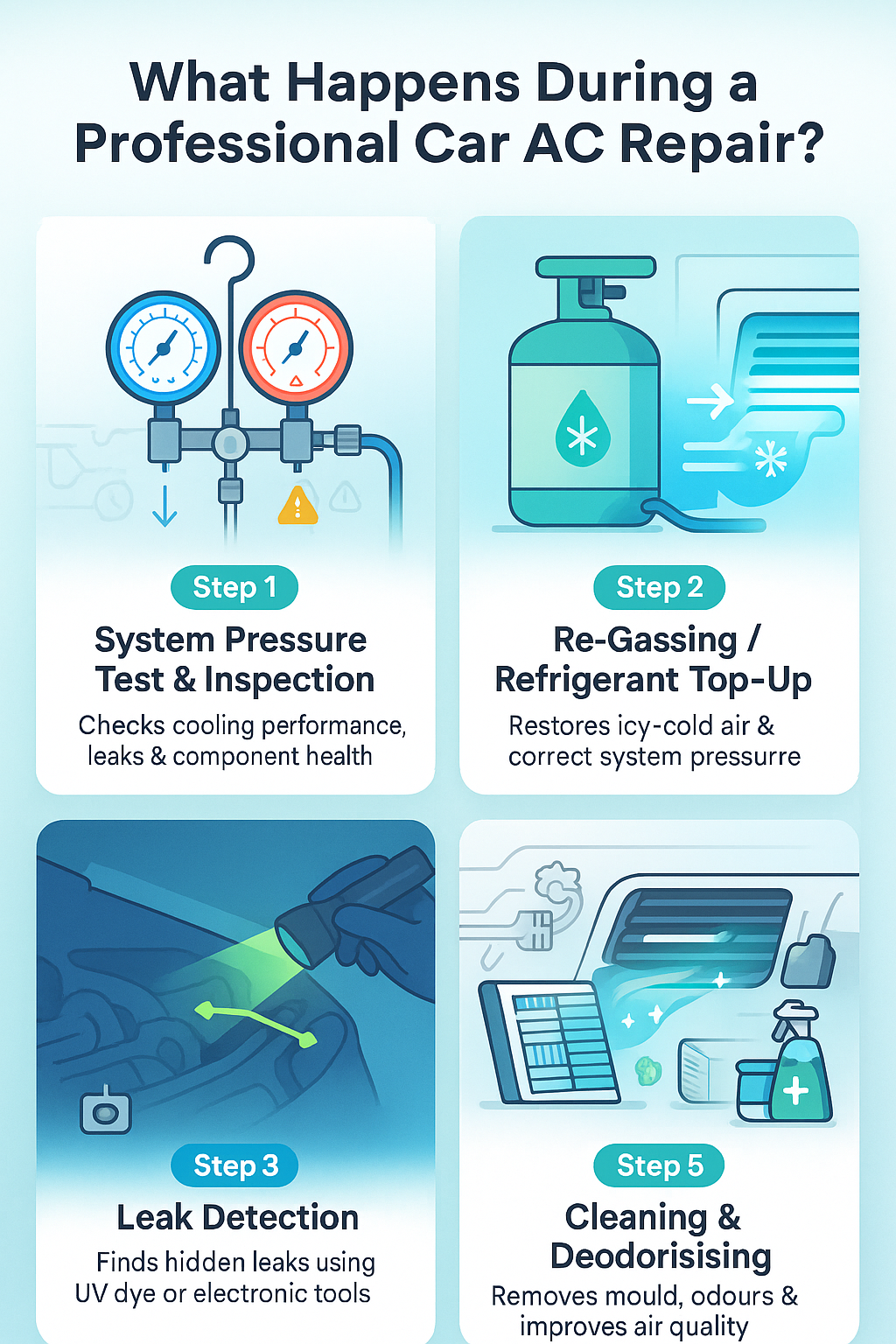
A professional car air-conditioning service is a comprehensive, multi-step process that goes far beyond simply “re-gassing the system.” Qualified technicians use specialised tools to identify hidden faults, restore cooling performance, and ensure your AC system runs safely and efficiently. Here’s what you can expect during a full AC service:
1. System Pressure Test and Full Inspection
This is the first—and arguably most important—stage of AC diagnostics. The technician will:
Measure high and low system pressure to determine refrigerant health and flow
Inspect refrigerant lines and fittings for signs of wear, cracking, oil residue, or damage
Check the compressor, condenser, and evaporator for proper operation
Assess airflow strength and vent performance
Ensure the thermostat and sensors are responding correctly
This pressure test helps determine whether the AC is undercharged, overcharged, or struggling with internal restrictions. It quickly reveals whether the issue is caused by a leak, mechanical failure, or airflow problem.
2. Refrigerant Top-Up (Re-Gassing)
Re-gassing is one of the most common—and quickest—ways to restore icy-cold air. During this step, the technician will:
Remove any old refrigerant (if necessary)
Refill the system with the correct amount of refrigerant according to manufacturer specifications
Rebalance system pressure to ensure optimal cooling
Check performance immediately after filling to confirm the improvement
Once completed, most drivers notice a significant difference in cooling power, especially if the system was low on refrigerant.
3. Leak Detection
If refrigerant loss is detected, technicians perform leak testing to stop the issue at the source. This may involve:
UV dye testing – dye is added to the refrigerant, making leaks visible under UV light
Electronic leak detectors – sensitive tools that identify even tiny refrigerant escapes
Visual inspection of seals, hoses, valves, condensers, and connections
Pressure testing to confirm system integrity
Early leak detection not only prevents repeated re-gassing but also protects the compressor—the most expensive part of the AC system.
Component Repair or Replacement (If Necessary)
If the inspection reveals damaged or failing components, the technician may recommend replacing:
The compressor or compressor clutch (if it’s failing or seizing)
The condenser (common in cars driven on coastal roads)
Valves, seals, or O-rings
Damaged or leaking hoses
The blower motor or fan if airflow is weak
Cabin air filters, especially if they’re dirty or clogged
Replacing worn parts ensures long-term reliability and prevents breakdowns that could leave you without cooling on a hot day.
Cleaning and Deodorising
Keeping your AC system clean is essential for both performance and air quality. A thorough AC clean typically includes:
Cleaning the evaporator core, where mould often grows
Clearing and flushing drainage lines to prevent water leakage
Sanitising AC ducts and vents
Replacing cabin filters (often with antibacterial or carbon-activated options)
Applying anti-bacterial solutions to remove germs and mould
Using deodorising or fogging treatments to eliminate lingering odours
This step is especially important if you’ve noticed musty smells, fogging windows, or allergy symptoms while driving.ConclusionYour car’s air conditioning system is more than just a luxury — it’s a key part of driving comfort and safety, especially during hot Gold Coast days. By recognising the early warning signs of AC trouble and booking repairs promptly, you’ll:
Prevent costly damage
Maintain cool, clean airflow
Improve fuel efficiency
Enjoy a more comfortable driving experience
Find Trusted Car AC Repair Near You
Living on the Gold Coast means you’re only a short drive away from excellent automotive air-conditioning specialists. When choosing a workshop, look for:
Licensed and experienced technicians
Great customer reviews
Same-day or mobile service options
Transparent pricing
Modern diagnostic equipment
AC-specific expertise
For a reliable, highly reviewed local option, check out:👉 Supercool SouthportThey offer comprehensive AC diagnostics, re-gassing, cleaning, and repairs — plus fast turnaround times for drivers across the Gold Coast.